
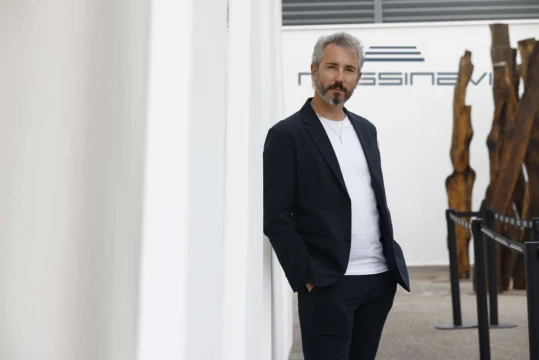
Federico Rossi
Rossinavi: order book secured through 2030 and strong focus on innovation


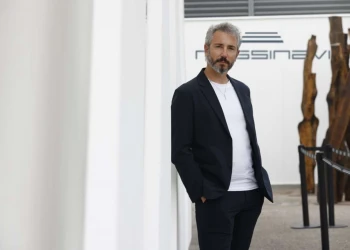
LA SPEZIA – During the latest edition of the Blue Design Summit, Rossinavi chief operating officer Federico Rossi outlined the company’s vision regarding design, technologies and sustainability. PressMare interviewed him.
PM - What is your view of the current yachting scenario regarding these topics?
FR - Honestly, the real challenge is understanding it, because we take many innovations and inspirations from other industries. Pleasure boating does not really create innovation, nor does it create trends. It is the commercial shipping industry that truly introduces new technologies, especially regarding fuel consumption, followed by the automotive and industrial sectors.
PM - Where does Rossinavi position itself within this context?
FR - The area where we have invested the most since 2016, developing three yachts with this technology, is power management. We have yachts where Artificial Intelligence monitors everything happening onboard and reduces consumption. And this has already been a major achievement because, to give some figures, a 500 GT yacht usually crosses the Atlantic using around 55,000 to 60,000 litres of diesel fuel, whereas our latest yacht, which optimised these parameters to the highest level, used only 15,000 litres — roughly one quarter. Using more standard technologies instead, such as new hull shapes and a well-structured power management system, we are still able to achieve fuel savings of around 50%.
PM – What are you working on now?
FR – Mainly on new fuels, because that is the real challenge. We hear all kinds of ideas, including concepts that until a few years ago would have sounded unbelievable, such as nuclear-powered yachts, which is actually one of the options being discussed. However, I believe the first practical steps will come from more manageable fuels used with fuel cells, where energy is generated through chemical transformation rather than combustion. I think this is the future, and one of the possible solutions could be methanol.
PM - It has often been said that yachting will follow the choices made by the shipping industry regarding fuels. Do you agree?
FR - As an industry we are somewhat waiting and observing, because this is not a decision the yachting sector can impose by itself, especially the superyacht segment, simply because the numbers are too small. It is easier for something new to emerge first in smaller boats, where production volumes are much higher. Shipping provides many interesting ideas, but ships are enormous industrial machines. Miniaturising those technologies for yachting is extremely complicated. We had a negative experience in this field last year: we tried to miniaturise a fuel cell, but it did not work. To make it functional, it needed to operate at excessively high temperatures, so in the end it remained one of many experiments. But that is normal — anyone working in innovation is more accustomed to failure than to success.
PM – Can you give us a snapshot of the shipyard today?
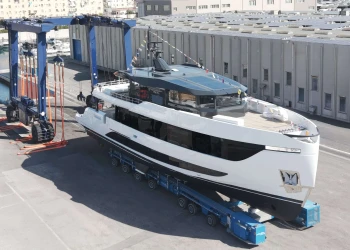
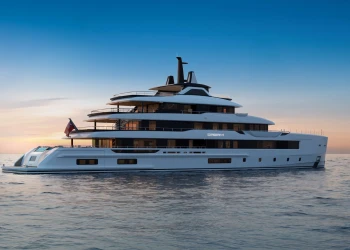
FR – In January we delivered the 53-metre Heed. We are now moving forward and planning to maintain a pace of two deliveries per year, with orders secured through 2030, which means we will have a constant production schedule. One of the next yachts will be truly revolutionary, but we will talk about it once it is in the water.
Riccardo Masnata
©PressMare - riproduzione riservata