
Una seconda vita per una supply vessel del Mare del Nord: un explorer da 30 a 36 ospiti
From offshore supply vessel to explorer yacht: a second life for 30 to 36 guests
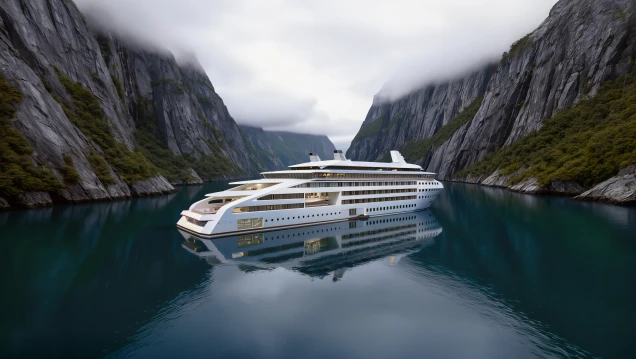
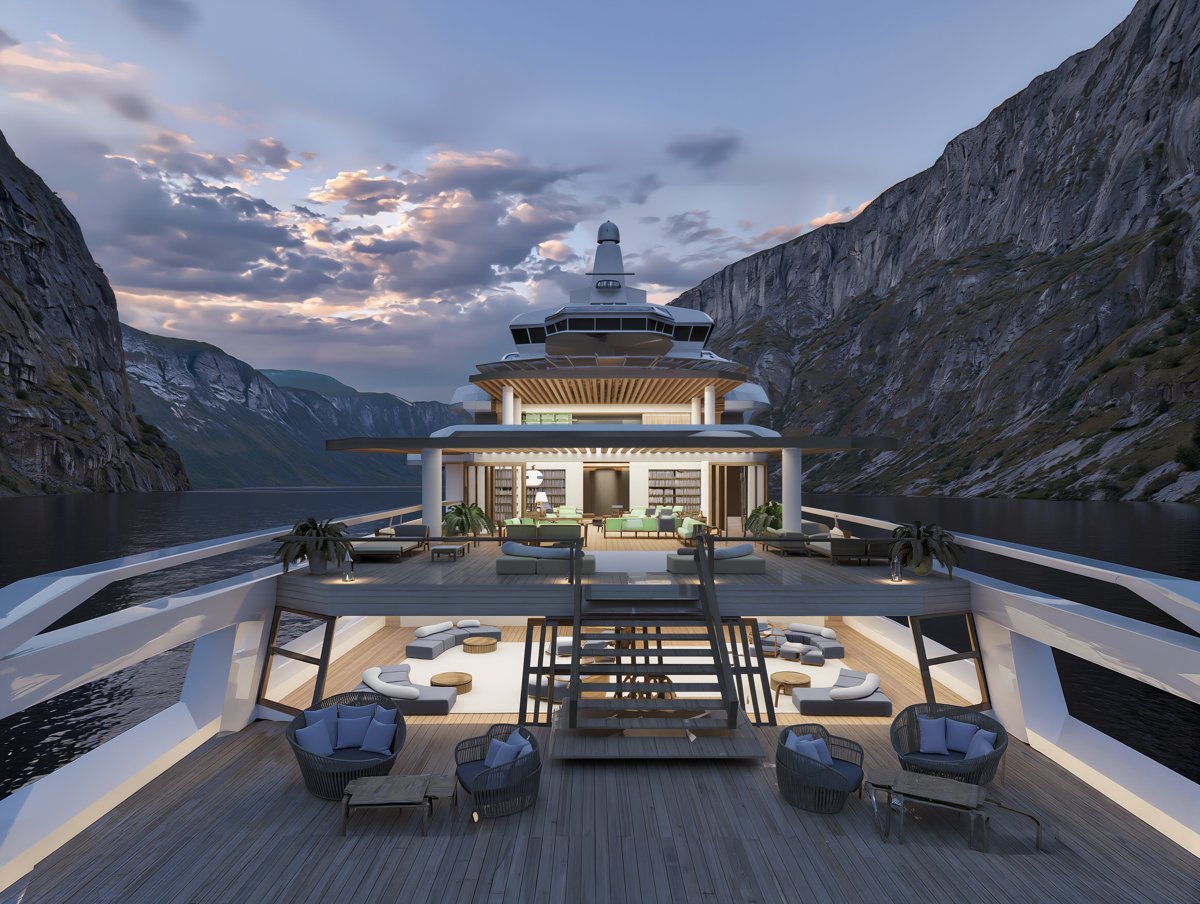
In 2015 a Norwegian shipowner asked Italian designer Stefano Pastrovich to give a second life to his two 88-metre (289-foot) Platform Supply Vessels. These are the ships that carry supplies to offshore oil rigs and wind farms, and the oil downturn had left them without work: technically sound, commercially idle. Pastrovich Studio, Monaco, now opens its Explorer PSV Conversion Studies to a wider readership, with a new focus on the configuration that started them: the 88-metre explorer yacht, designed for 30 guests in 15 suites, with a 36-guest version of 18 suites to the Passenger Yacht Code, for one large family or for pure charter.
"The project started from a real owner, a real platform and a real market problem," says Stefano Pastrovich. "That is precisely why its logic remains so relevant today."
Not a styling exercise: an industrial study
The brief was concrete: keep the range, reliability and redundancy of a North Sea working vessel, and give the people on board the experience of a superyacht. The answer became one platform adapted to three uses. The 88-metre study set the design principles that the larger configurations follow: 30 guests in 15 suites on the platform as she is, or 36 in 18 suites; 64 guests for boutique expedition charter and 116 passengers for boutique expedition cruise on the same platform lengthened to 100 metres (328 feet).
30 to 36 guests: an explorer to share
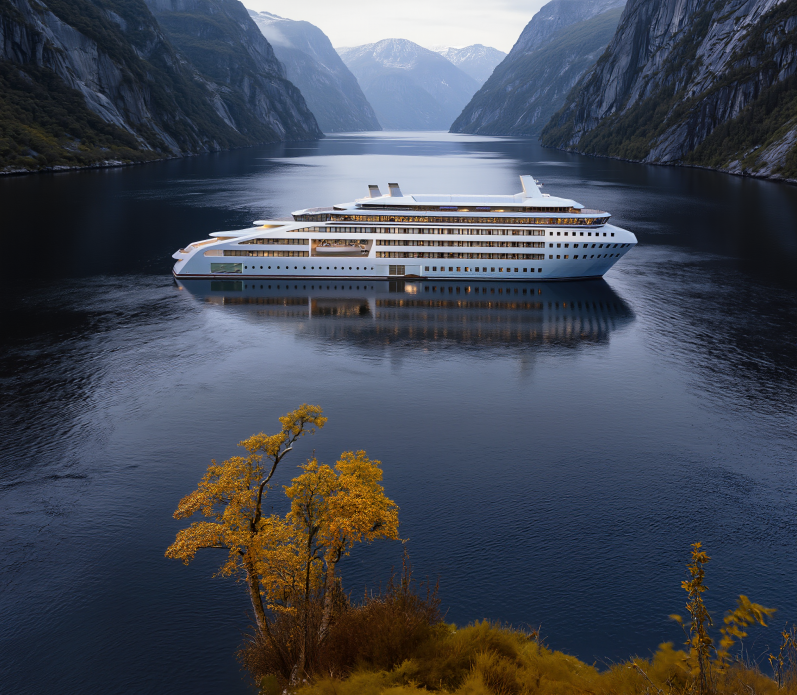
A private yacht carries twelve guests. The 88 m, designed for 30 guests and with a 36-guest version to the Passenger Yacht Code, takes the explorer beyond that limit in two directions. For a large family it is a ship to share: several generations, several families of the same tribe, the same seasons at sea, every guest in a suite. For a charter operation it is the vessel the expedition market asks for: small groups, a high crew-to-guest ratio, an experience that feels personal rather than programmed. Inside, the refinement of a superyacht; outside, a hull built to work in the North Sea, with DP2 dynamic positioning, four engines and DNV worldwide classification, ready for Antarctica, the Arctic, Svalbard, Greenland, Patagonia and Papua New Guinea, where the vessel is the only means of access.
Why a supply vessel
Every second-hand hull is a one-off: an icebreaker, a research ship, an old ferry, each conversion starts from zero. A Platform Supply Vessel does not. Wherever it was built, a PSV has crew accommodation and engines forward and about two thirds of its length left as an open working deck aft. The front is engineered and fixed; the back is available. The conversion is therefore designed once for the whole class. The new guest superstructure is built off-ship, in parallel with the preparation of the hull, and landed on the deck as an assembly, while the original hull, propulsion, navigation and dynamic positioning remain intact. The study estimates 14 to 20 months from yard entry to delivery, with less capital exposed and less technical risk than a new build.
"The objective is not cosmetic refit," says Stefano Pastrovich, "but a coherent fusion of engineering, architecture, hospitality and operations."
Designed for passengers
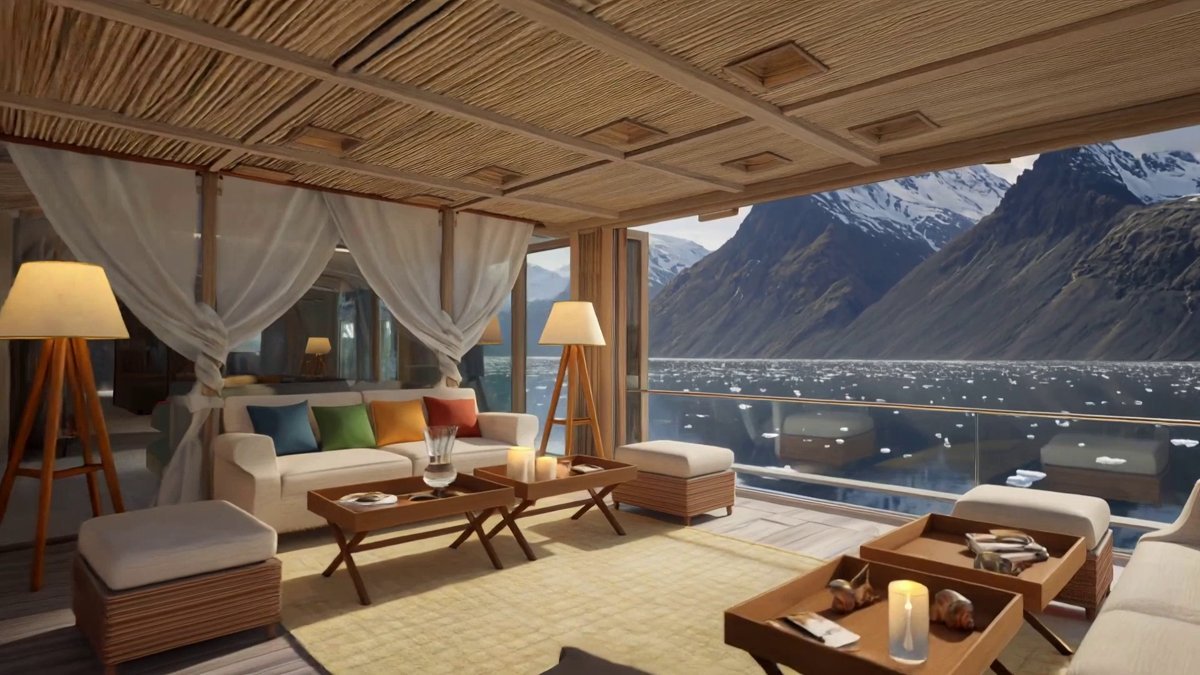
For the 36-guest version the studio worked to the Passenger Yacht Code; for 64 and 116 guests, to the SOLAS Convention and the Passenger Ship Safety Code. The layout was informed by benchmarking the operating models of Ponant, EYOS Expeditions, Pelorus and Aqua Expeditions, and by talking with the operators themselves: restaurants in the zones of minimum ship motion, all guest cabins in one vertical block away from the service areas, panoramic lounges at the key positions, and embarkation platforms for Zodiacs and diving equipment.
The partners of the 116-passenger configuration
For the 116-passenger configuration Pastrovich Studio worked with Meccano Engineering S.R.L., naval architects experienced in cruise vessels, to bring the requirements of passenger ships into the offshore platform. The 100-metre expedition cruise new build that followed, presented at Nor-Shipping in 2017, was developed with Wärtsilä around the HY hybrid system: a green mode with zero emissions, no noise and no vibration at anchor and on shorter passages, where the ecosystems are most fragile.
Why now
The expedition yacht charter market reached 9.2 billion dollars in 2025 and grows at over nine per cent a year; expedition cruise grows at seventeen per cent, the fastest segment of the cruise industry; fifty-eight new explorer yachts were launched in 2025 alone. With the oil market still volatile, the logic of giving supply vessels a second life is as current as it was in 2015. None of the three configurations has been built yet; the studies are ready.
Design is not about shapes. It is about decisions.
One working hull, three lives
The three configurations share one working hull. The 88-metre (289-foot) platform stays as she was built for the North Sea and takes 30 guests in 15 suites, or 36 in 18. Lengthened by twelve metres to 100 metres (328 feet), she becomes a boutique expedition charter vessel for 64 guests, with more space for each of them, or a boutique expedition cruise ship for 116 passengers in three layouts (116, 108 or 60), every suite with its own balcony and one crew member for every guest. Underneath, the range, reliability and redundancy of the reference platform stay intact: DP2 dynamic positioning, four engines, DNV worldwide class and a thousand square metres of open working deck aft, where the new superstructure lands as an assembly, 14 to 20 months from yard entry to delivery.
Reference platform
M/V Brage Supplier, PSV 09 Clean Design. Length overall 86.6 m, beam 19.0 m, depth 8.0 m, summer draught 6.6 m, deadweight 4,800 t, deck space 1,000 m², deck strength 10 t/m². Main engines 4 x Wärtsilä 9L20; propulsion 2 x Rolls-Royce Azimuth Aquamaster; dynamic positioning Kongsberg K-Pos DP21; classification DNV +1A1 Supply Vessel, SF, E0, DYNPOS-AUTR, Clean Design, NAUT OSV; built 2011, Cochin, India; certification worldwide.
Quotes from Stefano Pastrovich
"The project started from a real owner, a real platform and a real market problem. That is precisely why its logic remains so relevant today."
"Why a supply vessel? Because a PSV is a pickup truck. The front is engineered and fixed. The back is yours."
"The objective is not cosmetic refit, but a coherent fusion of engineering, architecture, hospitality and operations."
Partners and contributors
Concept, exterior and interior design, market strategy: Pastrovich Studio, Monaco. Naval architecture (116-passenger configuration): Meccano Engineering S.R.L. Hybrid propulsion (100-metre expedition cruise new build): Wärtsilä.