
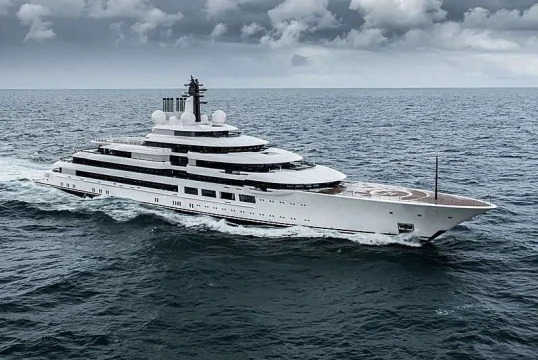
Scheherazade, "The Putin's Yacht"
Frozen Yachts and EU Sanctions: The System is Starting to Creak


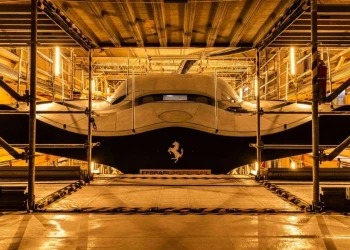
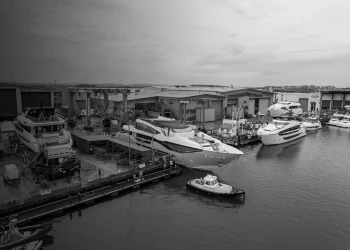
Last week, Scheherazade temporarily left her berth in Marina di Carrara to carry out a series of sea trials before returning to the facilities of NCA, The Italian Sea Group’s refit brand. Under normal circumstances, a superyacht heading out to sea after undergoing work at a shipyard would hardly make the news. In this case, however, the 140-metre yacht had remained inactive for around four years following the measures introduced in the wake of Russia’s invasion of Ukraine. Scheherazade is also one of the best-known yachts caught up in the sanctions regime: several international media outlets, including The New York Times, have linked her ownership to Russian President Vladimir Putin. This has never been officially confirmed, but has nevertheless earned her the media nickname “Putin’s yacht”.
Scheherazade’s return to sea, albeit limited to a series of trials, provides an opportunity to revisit an issue that, more than four years after the first measures were introduced, is becoming increasingly complex. The freezing of yachts linked to individuals subject to European sanctions has resulted in prolonged periods of inactivity, rising management and maintenance costs, and considerable uncertainty for shipyards and other operators. The picture has become even more complicated following two recent court rulings, one by the Court of Justice of the European Union and the other by the Frankfurt Administrative Court, which have reignited the debate over the limits and responsibilities involved in enforcing sanctions.
To understand what is actually changing and what consequences these decisions could have for the yachting industry, we spoke with Ezio Dal Maso, partner at international law firm Stephenson Harwood and head of its Superyachts practice, who closely follows the legal and financial aspects of transactions in the yachting sector. With him, we examine the Dilbar case, the role of trusts and special-purpose vehicles, the growing exposure faced by shipyards and, more broadly, the potential consequences of a system that risks turning the freezing of assets from a temporary measure into an indefinite situation.

Lawyer Ezio Dal Maso
PressMare – Mr Dal Maso, here we are again. Two new European court rulings concerning frozen yachts, and this time they appear to point in opposite directions. Can you help us understand what is happening?
Ezio Dal Maso – Certainly. Just before the summer, between May and June 2026, two very important rulings for the large-yacht sector were issued. The first was the judgment of the Court of Justice of the European Union (CJEU) of 21 May in joined cases C-428/24 and C-476/24, which, incidentally, concern an Italian case. The second was the decision of the Frankfurt Administrative Court (VG Frankfurt) of 11 June concerning M/Y Dilbar. On paper, they address the same legal question: can a yacht held through a trust be frozen when the beneficiary is subject to sanctions? In practice, they reach opposite operational conclusions.
PM – Let’s start with the Court in Luxembourg. What did it establish?
EDM – In essence, the Court said that exclusion clauses contained in trust deeds – in other words, clauses that automatically exclude sanctioned individuals from their position as beneficiaries – are not decisive when determining the beneficial owner of a corporate vehicle. Put simply, these clauses alone are not sufficient to prevent assets from being frozen. What matters is the substance: if the sanctioned individual retains the effective ability to benefit from the assets, influence the trustee’s decisions or exercise control over those assets in some way, then they must remain frozen. It is the classic principle of substance over form. And it has a direct impact on virtually the entire superyacht sector.
PM – And what about the Dilbar case? The German court appears to have said exactly the opposite.
EDM – It may appear that way, but that is not exactly the case. VG Frankfurt did not contradict the legal principle established by the Court of Justice. It said something different: in the specific case of Dilbar, the court found that there was no longer any individual sanctioned by the EU who was a beneficiary of the trust. The court stated that the alleged original beneficiary had transferred his rights in the trust in 2017. His sister, who subsequently became the beneficiary, was placed on the sanctions list in 2022 but was removed from it in March 2025. And none of the German authorities – neither BAFA, the Federal Office for Economic Affairs and Export Control, nor ZfS, the Federal Central Office for Sanctions Enforcement, the new sanctions enforcement agency – was able to demonstrate that the original beneficiary still controlled the trust. The court therefore faced what lawyers call a non liquet: an absence of sufficient evidence. And without evidence, there can be no freezing.
PM – But is it credible that such a prominent individual as Usmanov no longer has anything to do with a $600 million yacht named after his mother?
EDM – On this point, I can only refer to the court’s findings. It simply stated that it was not the court’s role to investigate. That is an intelligence and enforcement activity which falls within the remit of the national authorities. The problem is that there was a lack of institutional coordination in Germany: BAFA said responsibility lay with ZfS, ZfS did not intervene in the proceedings, and the shipyard was left caught in the middle, with the yacht at its berth, costs continuing to rise and the risk of criminal liability whatever it did. In the end, the court released the shipyard from this impossible situation.
PM – Let’s talk about costs. What does it actually mean to have a yacht such as Dilbar frozen for more than four years?
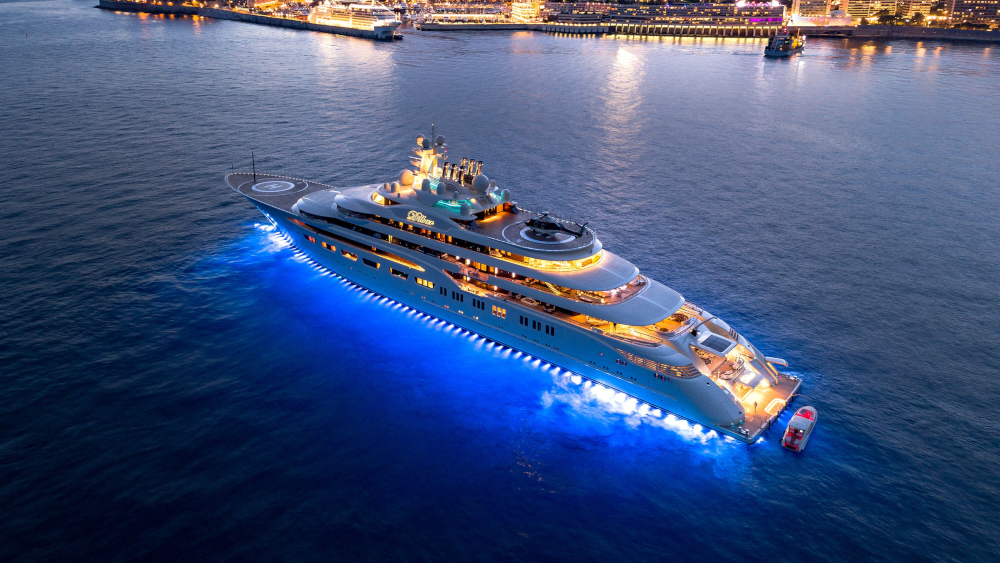
EDM – The figures are striking. Dilbar is a 156-metre yacht. Custody, routine maintenance, insurance, security and a reduced crew amount to millions of euros every year. And she is not the only one. There are frozen yachts in Italy, France and Spain. The combined value of yachts frozen in the EU probably exceeds two billion euros, and that value is deteriorating every day. A superyacht is like an aircraft: if it is not actively maintained, it loses value at an accelerated rate. The shipyards hosting these vessels are not being paid, they have berths and facilities occupied that could otherwise generate revenue, and they can neither release the yacht nor demand payment because the contractual counterparty is itself paralysed by the sanctions.
PM – Is this already generating litigation?
EDM – Absolutely. The Frankfurt decision is the first case in which a European court has explicitly stated that a shipyard has the right to know whether or not a vessel must remain frozen. But the next step, which is already being prepared in several cases we are handling, is claims for damages. If an authority freezes an asset without a sufficient legal basis, or fails to demonstrate the link with a sanctioned individual, who pays for four years of custody? Who compensates the shipyard? These are real, quantifiable damages, and European courts will have to address them.
PM – Meanwhile, the Americans have taken a different approach. Can you explain?
EDM – The United States has adopted a radically different approach. The US Department of Justice obtained the judicial forfeiture of Amadea and put her up for auction. Problem solved: no further custody costs, no further deterioration, and the proceeds can be allocated as the US government decides. In Europe, by contrast, we freeze assets that we can neither use, sell nor return. They simply remain where they are. From an economic perspective, it is the worst possible solution, although legally there is a rationale behind it: freezing is a precautionary measure, not confiscation. But after four years, that distinction becomes increasingly difficult to sustain.
PM – There is a broader issue behind all this, isn’t there?
EDM – Certainly. The EU sanctions regime affecting yachts, like the measures targeting Russia’s “shadow fleet”, forms part of the systematic use of law as an instrument of geopolitical conflict. We are fighting an economic war with Russia without calling it a war. And this has profound legal consequences. Sanctioned individuals are not belligerents, nor are they enemy combatants: they are individuals who, however questionable their affiliations may be, enjoy fundamental rights. Property rights, the right to an effective judicial remedy and procedural safeguards. The EU Charter of Fundamental Rights, the ECHR (European Convention on Human Rights) and national constitutions are all instruments that these individuals are using with increasing success before European courts. The Usmanov case before the EU’s General Court is a perfect example.
PM – And are the sanctions working? Have they achieved their objective?
EDM – That is the question nobody wants to address openly. The stated objective of the sanctions was to exert pressure on Russia to end its military aggression against Ukraine. More than four years later, the war continues. I am not saying that the sanctions are useless, because they have certainly had an impact on the Russian economy and have sent a strong political signal. But the stated objective has not been achieved. Meanwhile, the economic, legal and reputational cost for the EU and industry operators is enormous. The yachting sector is having to deal with an unprecedented level of regulatory complexity, increasingly burdensome due diligence requirements and no clear exit strategy.
PM – What should we expect in the coming months?
EDM – Several things. First, the Frankfurt decision concerning Dilbar can be appealed, and the court expressly granted leave to appeal. I expect the German authorities to challenge it, particularly because the issue of jurisdiction between BAFA and ZfS has systemic relevance for German sanctions law as a whole.
Second, the Court of Justice’s judgment in cases C-428/24 and C-476/24, together with the parallel C-483/23 case concerning the settlor, will have a cascading effect: national authorities across Europe will now have a much broader interpretative tool for freezing assets held through trusts. This will increase pressure on industry operators – shipyards, agents, insurers and yacht registries – to conduct more thorough checks on beneficial ownership.
Third, and perhaps most importantly, the debate over confiscation will intensify. The EU has already adopted Directive 2024/1260 concerning the confiscation of assets resulting from sanctions violations, which must be transposed by Member States. Once this happens, we may finally see a legal route out of the current freezing limbo, albeit with all the procedural safeguards required under European law.
In the meantime, my advice to industry operators is clear: compliance is no longer optional. Every yacht entering a shipyard, every refit contract and every relationship with an SPV (special-purpose vehicle) registered in an offshore jurisdiction must be assessed in light of the evolving case law. The potential cost of failing to do so can be devastating.
Filippo Ceragioli
©PressMare - All rights reserved