
Superyachts and new owners: how marina models are evolving according to D-Marin
Superyachts and new owners: how marina models are evolving according to D-Marin


The superyacht market is undergoing a transformation that goes beyond vessel size and volumes, increasingly affecting the profile of owners and the way they access the sector. This evolution is having a direct impact on the operational and strategic models of marinas.
According to Dean Smith, Chief Commercial Officer of D-Marin, the traditional pathway into boating—based on gradual progression and technical experience—is being progressively replaced.
Today, the sector is seeing direct entry into large yachts, with a growing share of new owners choosing superyachts as their first purchase. First-time buyers now account for 31% of new builds and 37% of the brokerage market, contributing to a 35% increase in new owners.
This shift is also reflected in vessel size: it is no longer uncommon for first-time buyers to enter the market with yachts ranging from 40 to 70 metres, seen less as technical assets and more as lifestyle platforms.
At the same time, the average age of owners has dropped from around 65 to below 55 over the past decade.
For this new generation, the superyacht serves multiple purposes: a temporary residence, an entertainment platform and a statement of lifestyle.
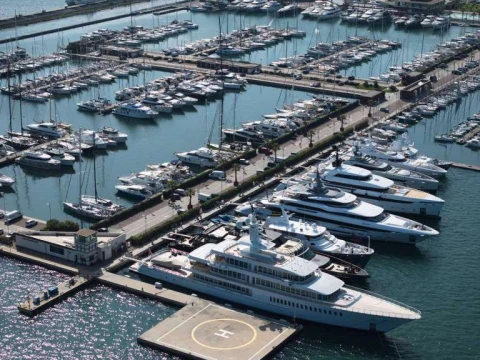
This evolution is placing increasing pressure on marina infrastructure. Demand for large berths is one of the fastest-growing segments, in line with the expansion of the global superyacht fleet.
Within the D-Marin network, there are over 14,000 berths, including more than 1,000 dedicated to superyachts, across 26 marinas in nine countries.
However, the transformation is not only about physical infrastructure, but also about its role. The marina is increasingly becoming an integral part of the ownership experience, moving beyond its traditional function as a mooring facility.
In key hubs across the Mediterranean and the Gulf, demand is rising for services aligned with high-end hospitality standards, including concierge services, fine dining, luxury retail, wellness facilities and social spaces. These features are no longer optional, but expected.
At the same time, digitalisation is becoming essential. Owners manage their activities via smartphones and expect the same level of efficiency from marinas, from berth booking to real-time vessel monitoring through smart sensors.
Speed, simplicity and service integration are therefore becoming decisive factors in marina selection, as tolerance for operational inefficiencies continues to decline.
Sustainability represents another key driver. A growing share of new builds incorporates hybrid or electric propulsion systems, requiring marinas to adapt their infrastructure accordingly.
In a global market valued at over $10 billion and continuing to expand, marina operators are under increasing pressure to develop more integrated models.
For D-Marin, recent growth has included the opening of new marinas and entry into new markets, with the aim of delivering consistent standards across its network.
This transformation highlights a structural shift: the value of a marina is no longer defined solely by infrastructure, but by its ability to deliver an integrated ecosystem combining services, technology and overall experience.
In this context, marinas that adapt to these evolving expectations will be better positioned to attract a new generation of clients, while less advanced models risk losing competitiveness in an increasingly selective market.
©PressMare - All rights reserved