
Beneteau: CEO Gianguido Girotti on the Group’s overall strategy
The Beneteau Group is one of the world’s leading players in recreational boating, with a multi-brand portfolio covering sail and power, monohulls and multihulls, supported by an international industrial footprint. The organization integrates design, engineering and production across multiple sites, with ranges spanning cruising and performance sailing yachts, catamarans and motoryachts.
Gianguido Girotti, currently CEO of the Beneteau brand within the Group, graduated in Yacht Design from the University of Southampton and built his professional path across yacht design, product strategy and brand management. After working with German Frers and Cantiere del Pardo, he joined Beneteau in 2015 as Head of Sailing Marketing, later becoming Marketing Director for sail and power, then General Manager of the Beneteau brand and Deputy CEO with responsibility for brand and product strategy for the boating division.
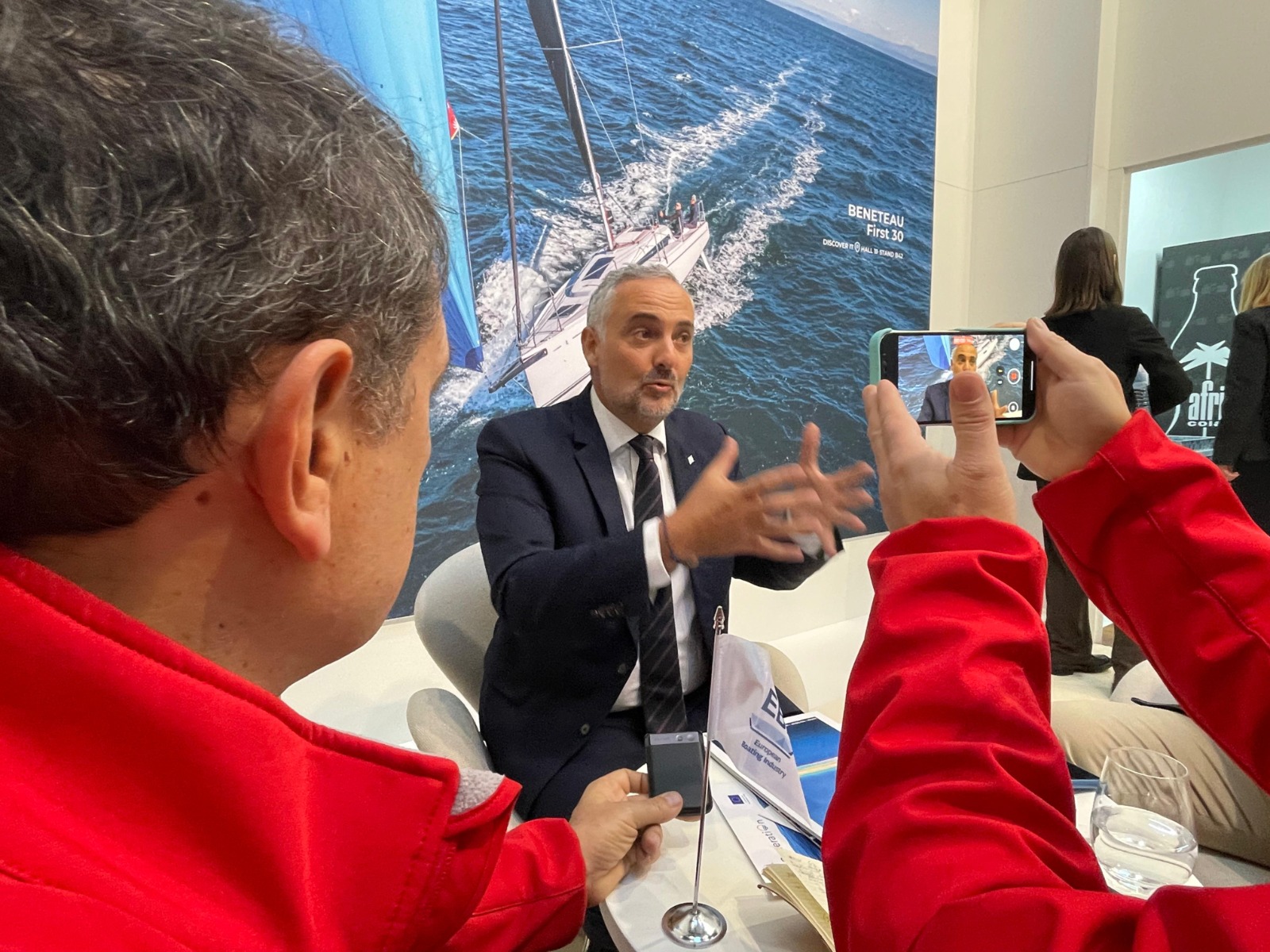
This exclusive interview was conducted by Giuliano Luzzatto at the end of January during boot Düsseldorf — Germany’s leading boat show and the largest indoor boat show in the world — and covered range development, multihull architecture, composite material sustainability, charter models and the Group’s industrial planning.
Readers can also find the full interview in video format on YouTube.
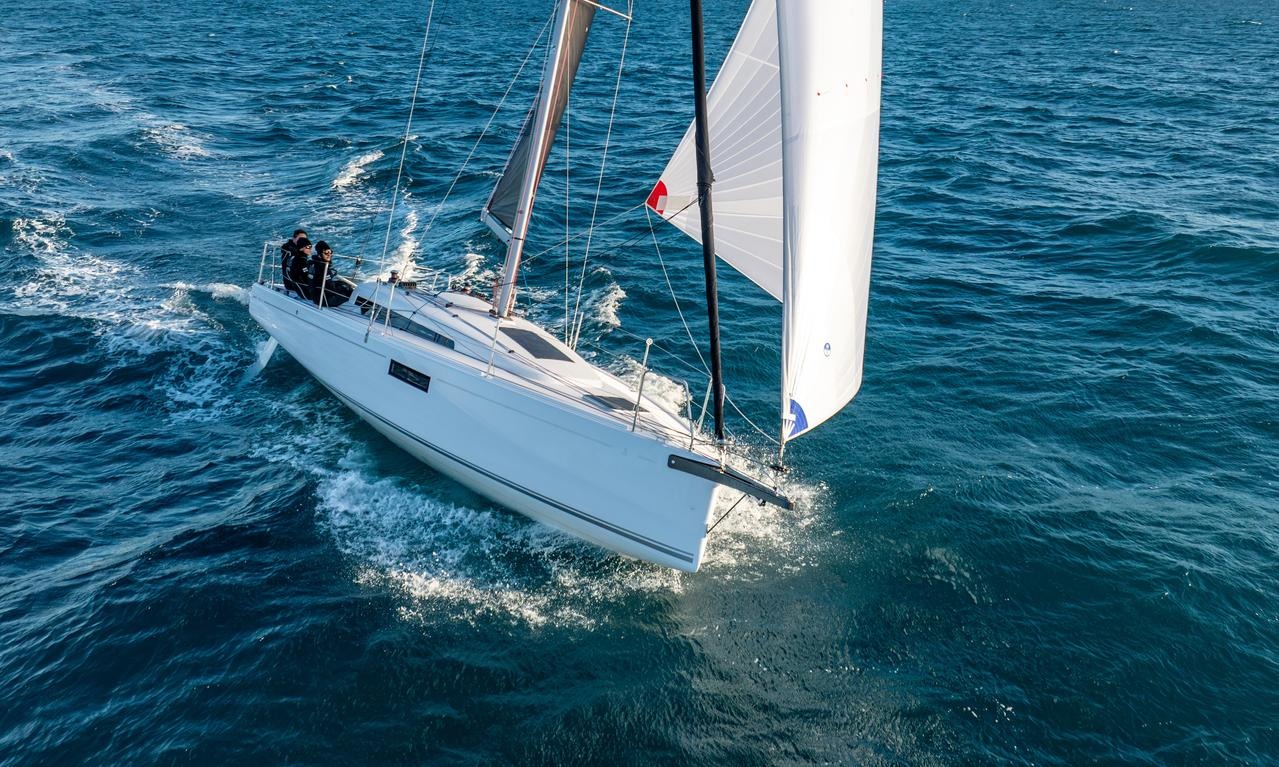
PressMare – Let’s start with sailing. In recent years the First range has been deeply renewed. What role does it play today for Beneteau?
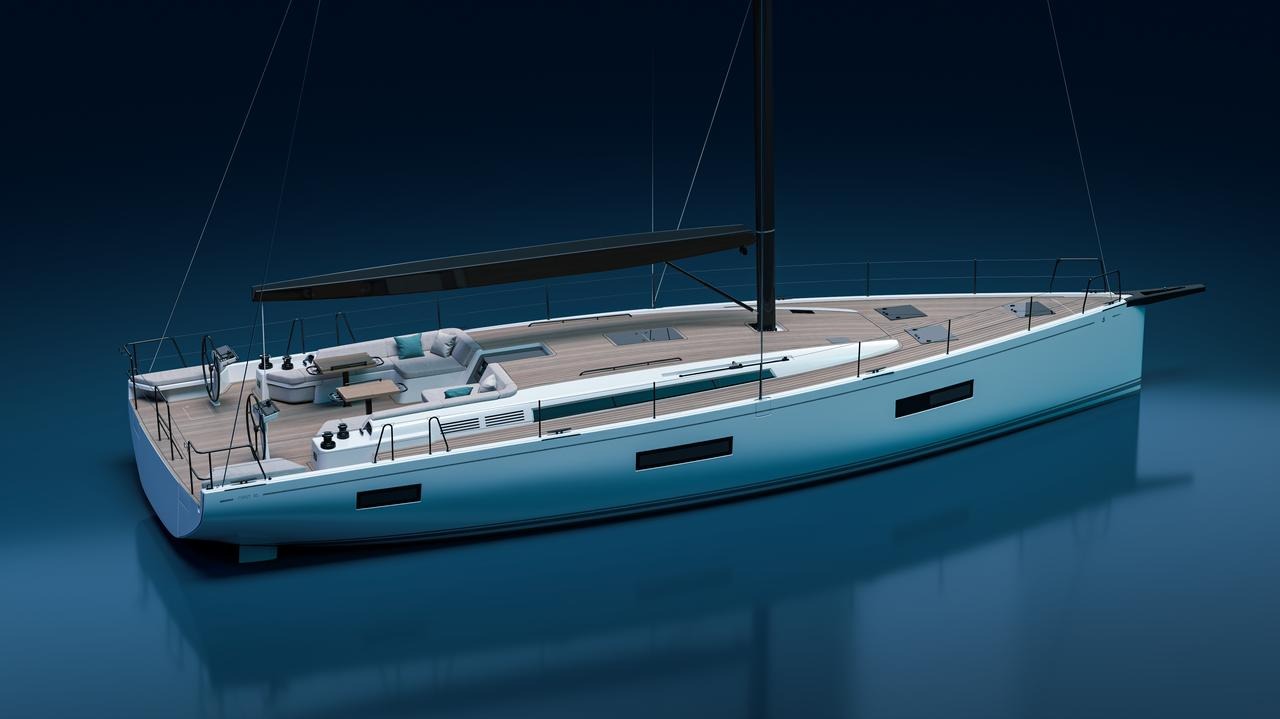
Gianguido Girotti – First is part of the brand’s historical identity. If Beneteau is the name, First is the surname. The line was launched in 1977 with the First 30 and has now been reinterpreted with a platform focused on ease of handling, planing performance and cost accessibility. The new First 30 was designed to deliver reaching speeds in the 14–16 knot range with a small crew, while maintaining interior volumes and comfort consistent with cruising use. The goal is to make performance sailing easier to manage and accessible to a broader user base.
PM – The First 36 SE has also achieved significant racing results.
GG – The SE version is oriented toward pure performance, still with attention to ease of handling. A second place overall behind a maxi racer in the Transpac — a 2,500-mile ocean race from California to Hawaii — sailed by a non-professional crew of just two people, shows that the design direction is correct: combining speed with simplified management. Hull architecture and sail plan come from cooperation with offshore specialists, including Sam Manuard.
PM – Moving to multihulls, the Group is active with several brands. How are they positioned?
GG – The catamaran market has grown structurally. We have differentiated the offer. Lagoon is focused on long-range cruising, prioritizing volume, autonomy and onboard living. Excess is aimed at owners coming from monohulls who want more direct helm feel and dynamic response, while remaining on a multihull platform. Two clearly different technical and usage interpretations.
PM – And power catamarans?
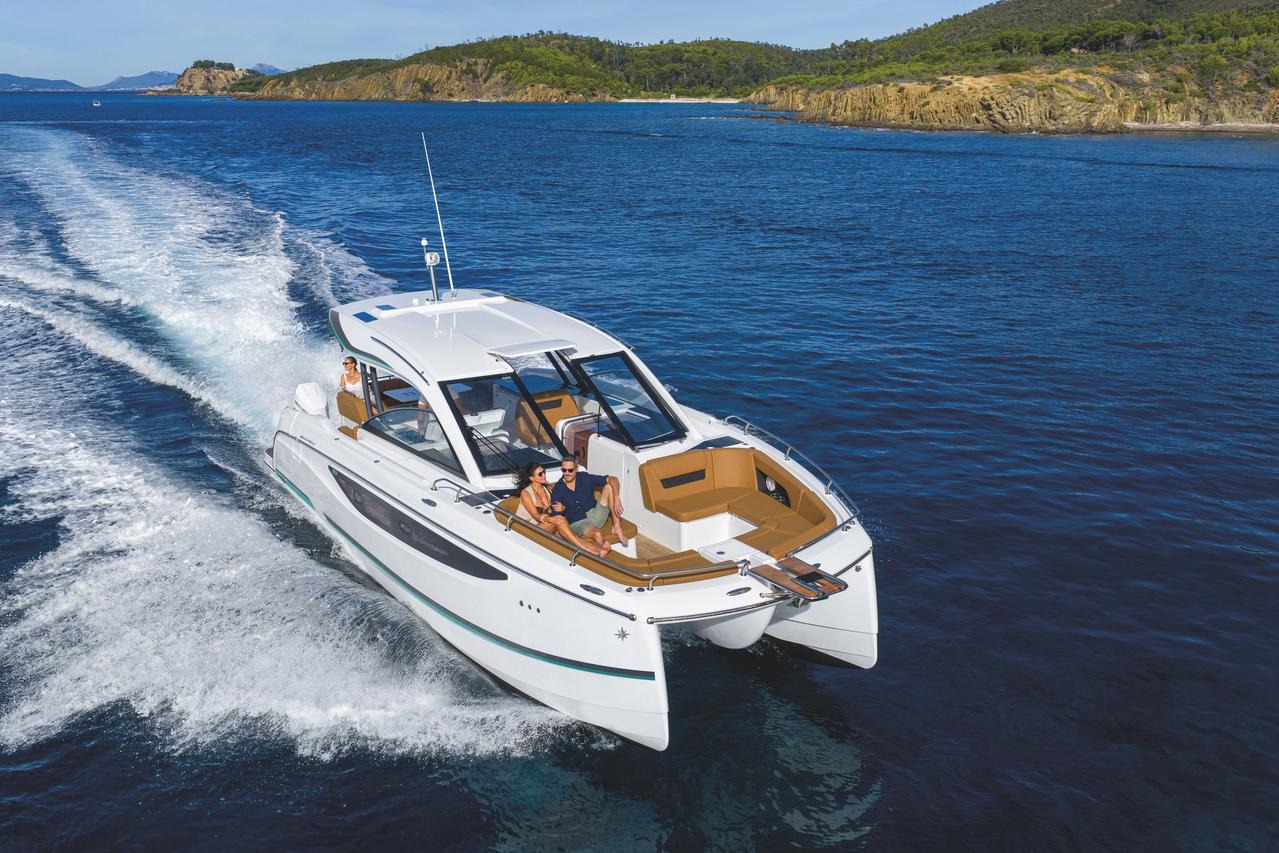
GG – We have been active in powered multihulls for some time. The drivers are technical: form stability, usable surface on a single level and energy efficiency. For the same length, a multihull can significantly reduce consumption compared to a monohull. We are also working on foil-assisted configurations for outboard-powered units, with reductions around 30% in required power and consumption. Emissions should mainly be evaluated in the operational phase.
PM – Sustainability is a recurring pillar in your strategy. What are the operational directions on materials?
GG – We are working on several levels. One is the introduction of recyclable resins such as Elium, developed with chemical partners, which allows separation of fiber and matrix at end of life and reuse of the resin. We already integrate it in components and some complete boats, including units around 60 feet and models in the First range. Another level is bio-sourced materials, where a significant share of the polymer matrix comes from non-petrochemical sources, reducing upstream environmental impact.
PM – You have also invested in composite recycling technologies. How does the chain work?
GG – We funded a startup that developed an advanced electrolysis process to treat composites, separating dry fiber and regenerated resin. We are testing it on production waste to create a circular chain starting from yard scrap. The industrial objective is to install treatment units at our facilities. In parallel we are studying recyclable molds, so that at end of life the material can re-enter the cycle.
PM – Why can’t a large group wait for regulation?
GG – Because of industrial scale and complexity. A group with thousands of employees cannot adapt overnight. Change must be integrated progressively into processes, skills and supply chain. Sustainability will also affect credit and finance conditions.
PM – Is the America’s Cup part of the Group’s plans?
GG – Not as an industrial project today. There have been ecosystem collaborations with the French team and partners. It remains a management challenge I find interesting on a personal level.
PM – What role do boat sharing and charter play?
GG – Boat sharing is mainly a US phenomenon and limited in Europe. We maintain dealer-based boat club models with franchise formulas and dedicated software. Charter is different: it is a strategic axis. We work with operators on financial models, renewal cycles and product specs, including major players such as Dream Yacht Charter.
PM – Does refit fit into this strategy?
GG – Yes. We acquired a refit company in southern France and are working with charter operators on upgrade programs. Refit extends technical life, stabilizes residual value and supports resale cycles.
PM – Financially, why divest the mobile home division?
GG – Not to fund new models. The product plan is self-financed. It was a strategic focus decision. Part of the proceeds was distributed, part will support the medium-term strategic plan to be presented in 2026.
PM – What is the Group’s current development capacity?
GG – The technical organization includes hundreds of engineers and industrialization specialists. Many parallel projects are active. Minimum development time for a new boat is around two years, with the most critical phase at the start, when positioning is defined.
PM – Are boat shows still central?
GG – Yes. Especially indoor shows allow each brand to express identity and full range, reaching owners who may not attend Mediterranean shows. The logic is to go where the customer is.
PM – What does “House of Brands” mean operationally?
GG – A brand architecture where each brand keeps technical authenticity and positioning, with recurring design and functional markers across the range.
PM – Market outlook for the next 24 months?
GG – A leader must drive the market through innovation and competitiveness: design-to-cost, onboard solutions and improved user experience to support demand and stabilize the order book.
©PressMare - All rights reserved