
ISA GTO 70, the sports yacht according to Carlo Galeazzi
ISA GTO 70, the sports yacht according to Carlo Galeazzi
At the 2026 Cannes Yachting Festival, PressMare stepped aboard the new ISA GTO 70 together with Carlo Galeazzi, a designer who has contributed to establishing Italian yacht design on international markets. A 22-metre yacht capable of 50 knots, where a low profile, lightweight construction, Arneson propulsion and spatial continuity define a distinctive interpretation of the contemporary sports yacht.
To understand the ISA GTO 70, it is worth starting with the designer behind it. Carlo Galeazzi is one of the yacht designers who have contributed to the international success of Made in Italy in the yachting industry, having designed numerous yachts for some of the most prestigious Italian and international shipyards throughout his career, while developing particular expertise in the field of sports yachts. His professional background includes a long-standing collaboration with Cantieri di Baia, for which he worked on several models with a strong sporting character. This experience forms part of the design heritage Galeazzi brought to the new GTO 70, without the yacht attempting to reproduce shapes or models from the past.
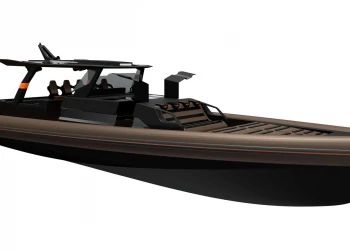
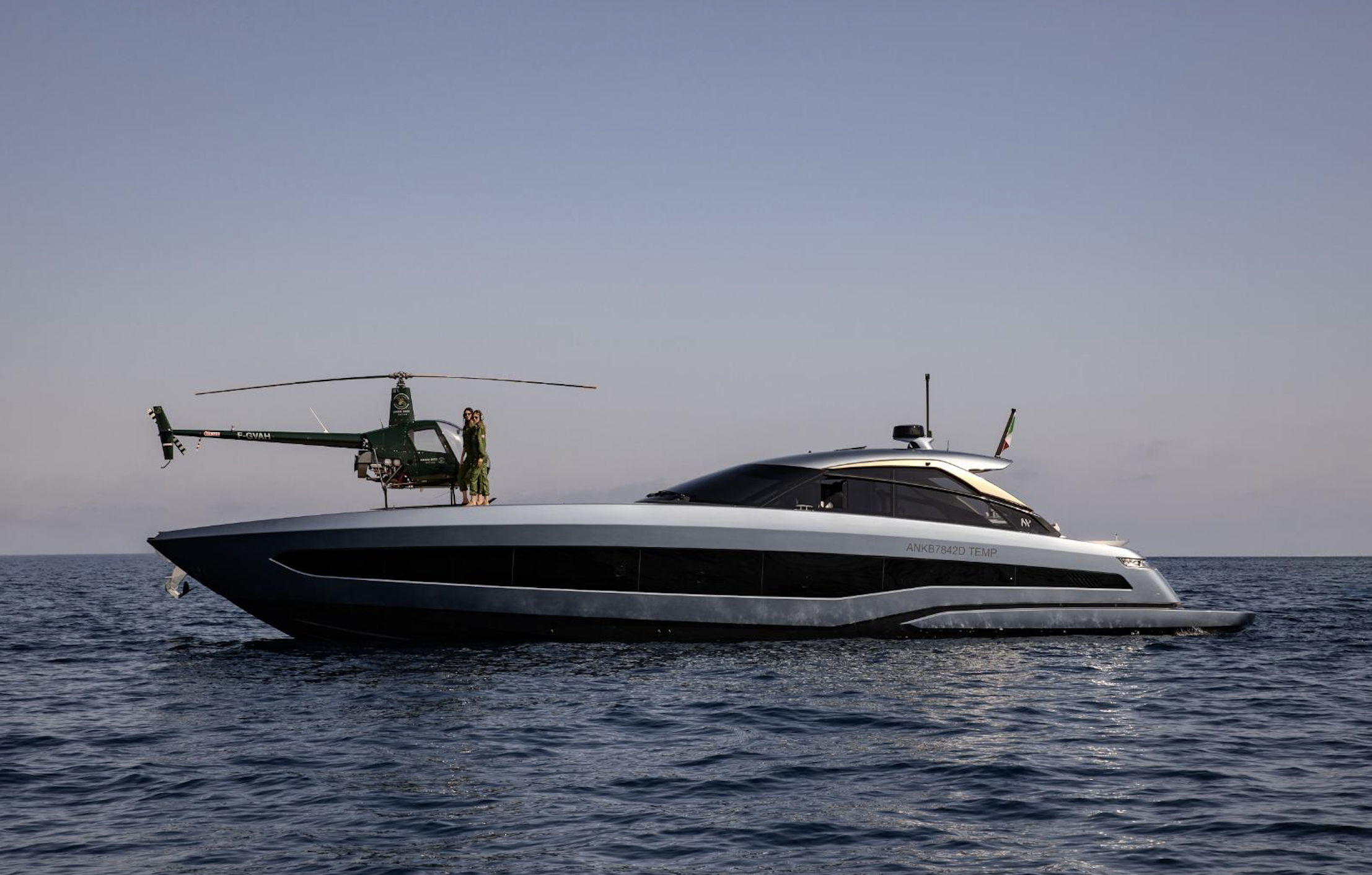
Touring the yacht with the designer at the Cannes Yachting Festival reveals a project with an identity of its own, built around deliberately sporting proportions. At 22 metres in length, the GTO 70 is characterised first and foremost by its pronounced reverse sheer, which adds dynamism to the side profile and gives personality to a silhouette that is difficult to mistake for anything else. Equally distinctive is the hard top, visually integrated with the windscreen and shaped by ribs that sculpt its surface, forming a NACA intake at the aft end of the roof, complete with a spoiler. These styling elements clearly express the yacht’s performance-oriented character without appearing separate from its overall architecture.
At the stern, the design choice is equally clear. There are no doors or glazed panels separating the cockpit from the more enclosed section of the main deck: Galeazzi Design opted to leave the longitudinal connection completely open, creating a continuous environment and reinforcing the relationship between interior and exterior. During the visit with PressMare, Galeazzi himself relates this solution directly to the nature of the project, explaining that dispensing with an aft door creates a single space that is “more in keeping with a sports yacht”.
The GTO 70 was, after all, conceived as a luxury speed yacht, and the pursuit of performance influenced not only its technical platform but also its overall architecture. Carbon fibre is extensively used in both the hull and superstructure to reduce weight, while the planing hull was developed by the ISA Yachts naval engineering team using computational fluid dynamics (CFD) studies aimed at optimising stability, efficiency and control at high speeds.
Propulsion is provided by two MAN V12 engines rated at 1,650 hp each, for a total output of 3,300 hp, coupled to an Arneson surface-drive propulsion system. The declared maximum speed is 50 knots. These figures immediately place the GTO 70 in high-performance yacht territory, but they tell only part of the story: touring the yacht with Galeazzi makes it clear how deeply the pursuit of performance has influenced its proportions, volume distribution and numerous apparently secondary details.
One of the objectives on which the designer was unwilling to compromise was keeping the yacht’s profile low. “The yacht had to be very low,” Galeazzi explains, recalling that this was one of the key elements they did not want to lose during development. This decision also had direct consequences for the lower-deck layout: positioning the owner’s cabin amidships would have required raising the cockpit and, consequently, the entire structure. The owner’s suite was therefore positioned forward, essentially reversing the arrangement most commonly used today for the owner’s and VIP cabins.
The result is a less conventional layout, but one that is consistent with the nature of the yacht. The owner’s cabin benefits from large glazed surfaces, several storage volumes and a 50-inch television. The VIP cabin, meanwhile, takes advantage of the available beam amidships: only the passage leading to the bed runs through an area of reduced headroom, while the wardrobes, bathroom and other functions remain fully usable at standing height. All cabin bathrooms also feature separate showers.
Particular attention has also been paid to the crew. Galeazzi explains that he wanted to adopt an approach conceptually closer to that of a larger yacht: the crew area provides two berths and its own bathroom and is connected to the galley, while an additional access point is provided through a hatch beneath the sofa. The finishes have also been kept consistent with those of the guest areas, avoiding any treatment of the crew quarters as a residual element of the project.
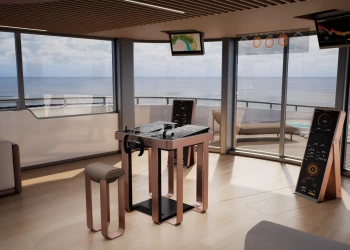
On the main deck, the configuration selected for the first unit features a bar alongside the galley located on the lower level, although the design allows for different interpretations of this area. Alternatives described by Galeazzi include a version without the bar, featuring a larger, symmetrical sofa, as well as other furniture arrangements. Some galley functions can also be moved outside, with the option, for example, of installing a cooktop. The ability to modify the arrangement therefore allows the living area to be personalised without altering the fundamental concept of the GTO 70.
Air management on board was also addressed with the characteristics of a fast yacht, predominantly intended for use during the warmer seasons, in mind. In addition to the air-conditioning system, the GTO 70 features a central inlet for natural airflow coming from forward, equipped with a closure system to prevent water ingress. At 50 knots, Galeazzi observes, dynamic pressure provides a substantial airflow without necessarily requiring forced ventilation. The side openings have also been developed with flush glazing, with an effort to integrate and conceal the associated tracks as much as possible.
It was precisely while discussing ventilation that PressMare asked the designer whether rising temperatures and the gradual extension of the boating season could influence the way yachts are designed. Galeazzi’s answer was affirmative. Beyond the GTO 70 itself, this observation introduces an issue likely to become increasingly significant in yacht design: finding a new balance between solar protection, natural ventilation, air conditioning and the ability to use outdoor spaces even on the hottest days.
The collaboration between design and engineering is also apparent in less conspicuous elements. One example is the glazing mullions, whose cross-section was developed to reduce their perceived bulk from inside while retaining the external dimensions required for structural purposes and glass bonding. Galeazzi emphasises that this type of solution stems directly from the dialogue between designers and engineers. Construction using moulded and counter-moulded components has also allowed these structures to be integrated more closely into the interior design, avoiding more traditional additional coverings.
The same attention to detail can be found at the stern. The service lockers have been rationally organised to accommodate water filling, showers and the electrical connection, while the diesel filling point has been moved to the side to make it easier to use. A “transformer” aft platform system allows a jet ski or tender to be handled and launched. Beneath the sunpad, however, there is no conventional garage: the space is dedicated to storing water toys, including dedicated compartments for Seabobs.
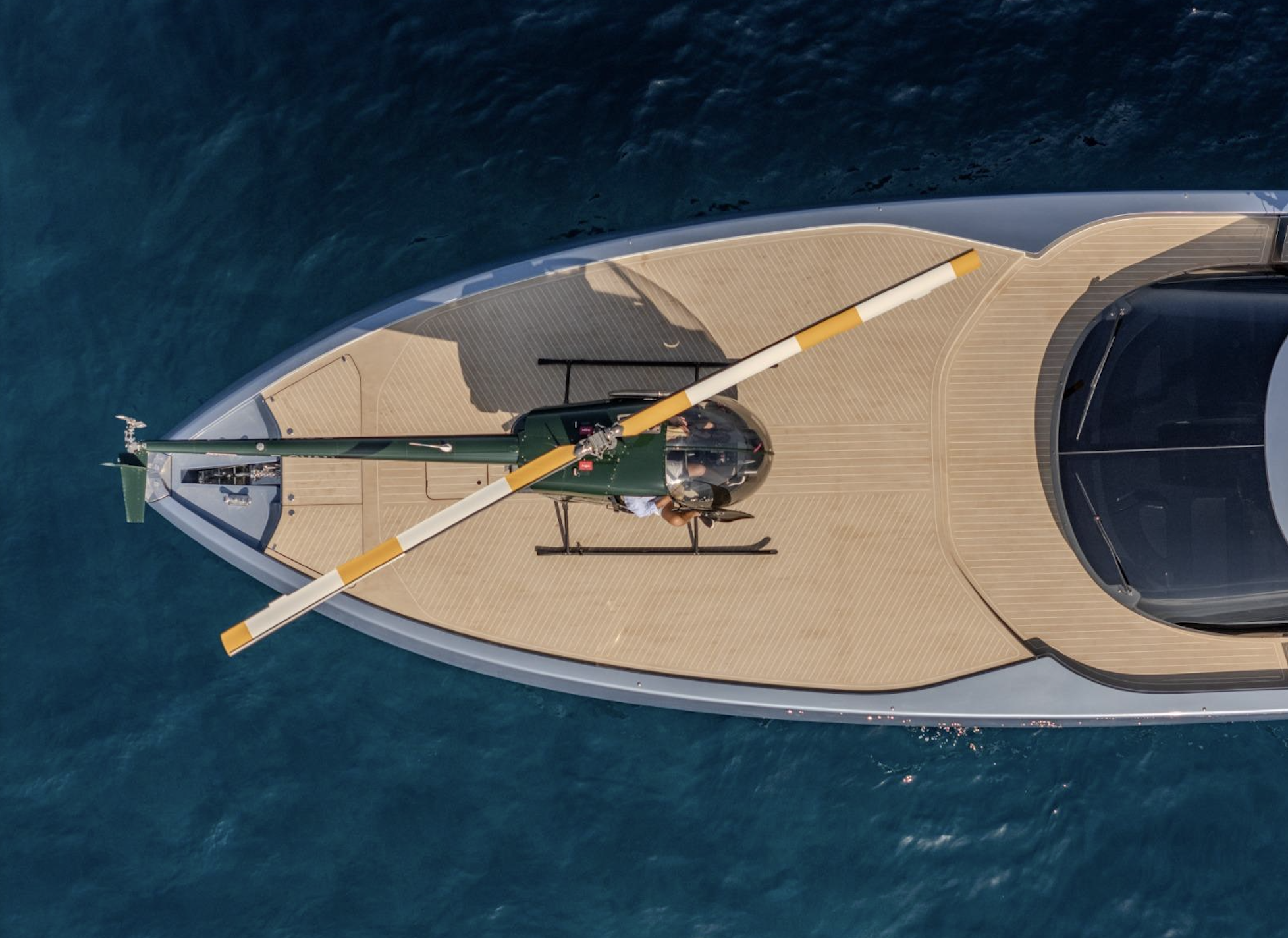
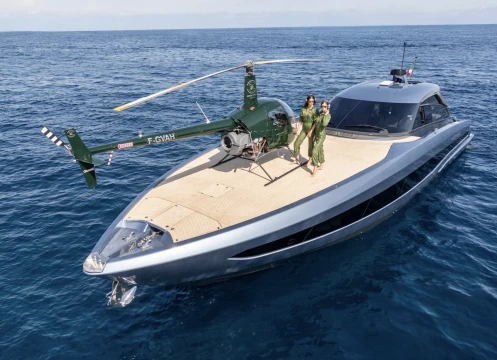
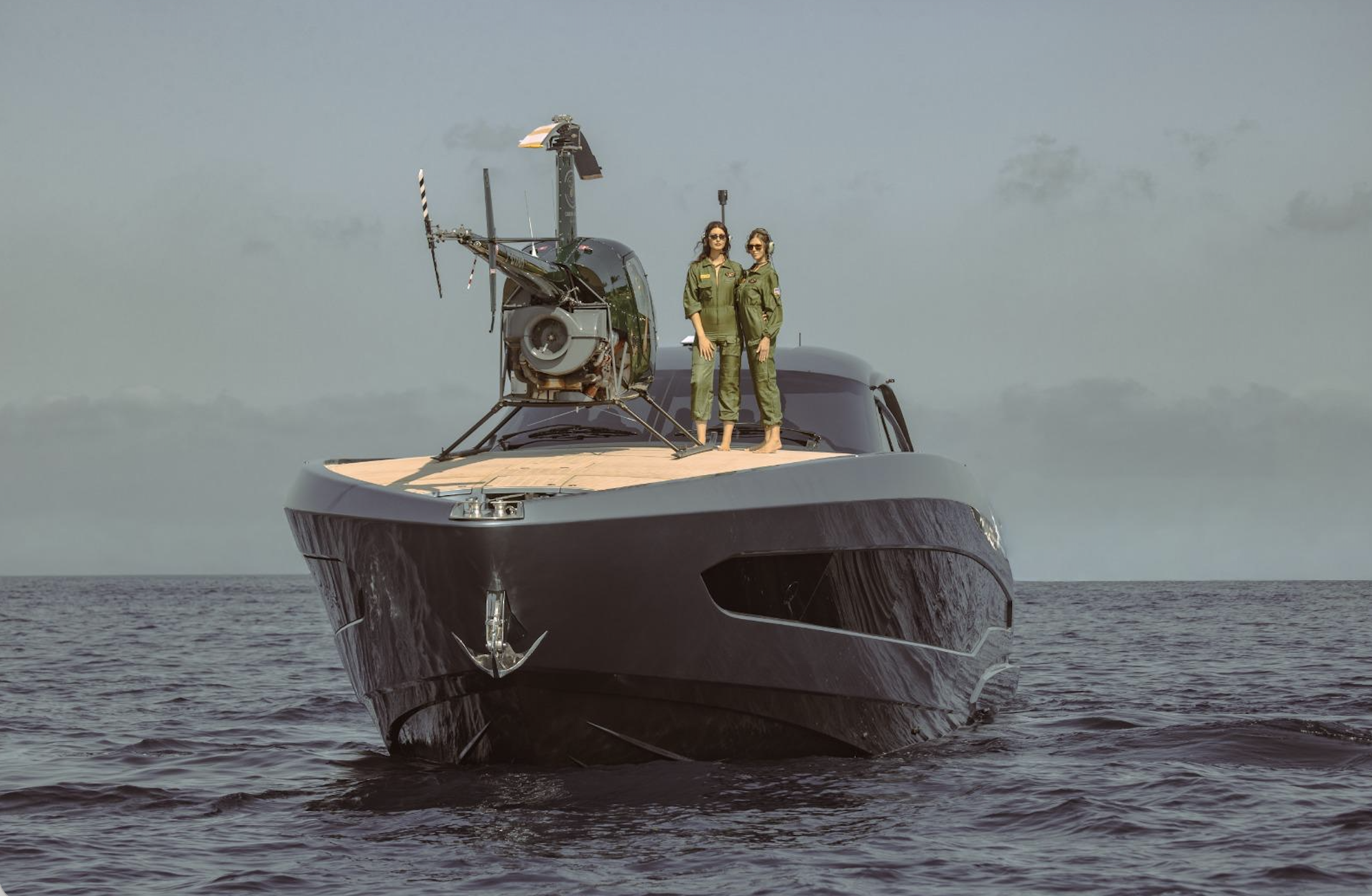
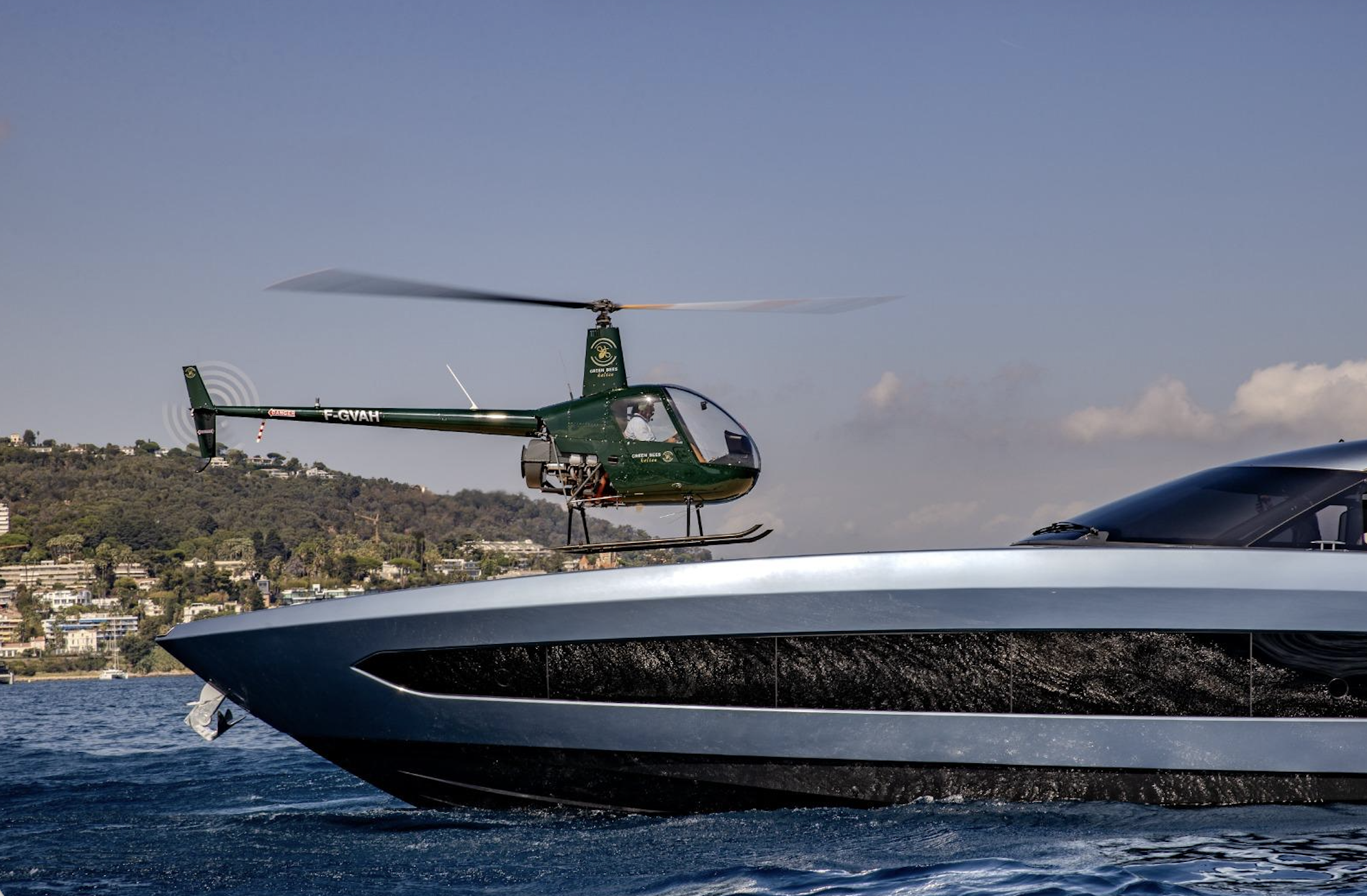
On the yacht presented at Cannes, another element inevitably attracts attention: the helicopter positioned on the foredeck. The conversation with Galeazzi reveals that this was not an idea added after the project had been completed. It was envisaged before the yacht had even begun to take shape on paper and, as development progressed, accommodating the helicopter required specific structural reinforcements.
The first ISA GTO 70 was sold through French dealer Ocean Drive, headed by Renaud Canivet.
©PressMare - All rights reserved