
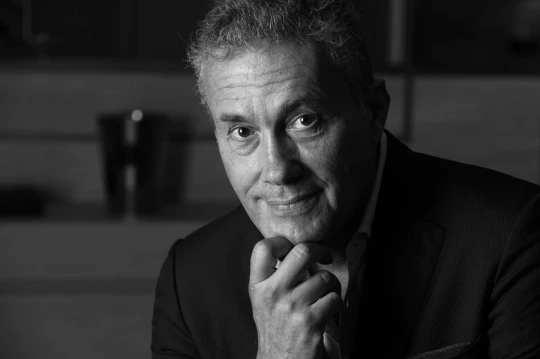
Francesco Guida, photo © Giovanni Malgarini/Top Yacht Design
Francesco Guida: True luxury? Living the sea well, not impressing the dock
In the heart of Boot Düsseldorf, the world’s largest indoor boat show — where visions, trends and strategic directions of the international yachting industry converge each year — we met Francesco Guida, author of countless projects for some of the most prestigious Made in Italy yacht brands.
Amid theatrical stands, technological innovation and a strong push toward ever more eye-catching solutions, his approach appears almost countercultural. No race for the surprise effect, no gratuitous ostentation. Rather, a clear reflection on what a boat should be first and foremost: seaworthy.
In a context where the market seems to oscillate between spectacle and stylistic experimentation, Guida brings the focus back to three keywords: balance, functionality and real-life experience at sea. The project presented in Düsseldorf stems from an idea both simple and radical: creating mini powerboats capable of offering genuinely livable and protected spaces, without yielding to the temptation of gadgets or ephemeral solutions.
What followed was a frank, at times provocative conversation that goes beyond a single model and touches broader themes: the meaning of luxury, the responsibility of the designer, the relationship between form and seaworthiness, and the ability of design to remain relevant over time.
“Seaworthiness before gadgets"
PressMare – Francesco, let’s start from the concept behind the project. What guided the development of this new line of powerboats?
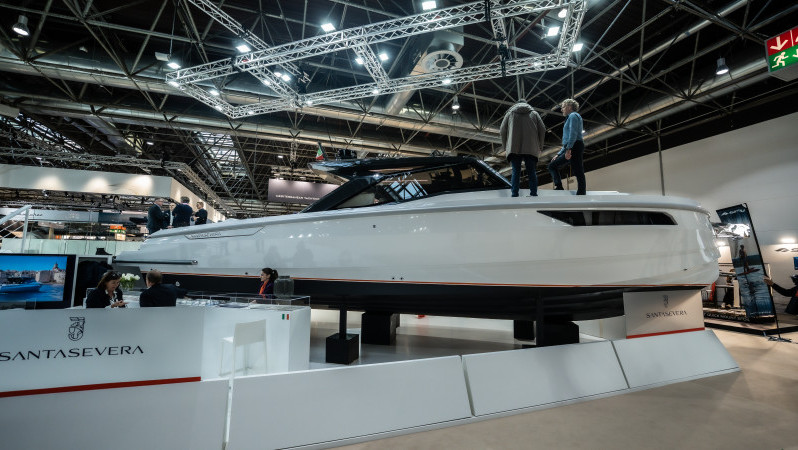
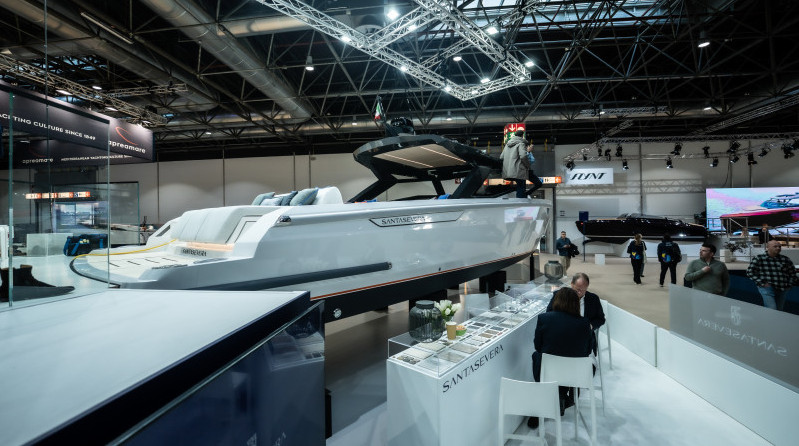
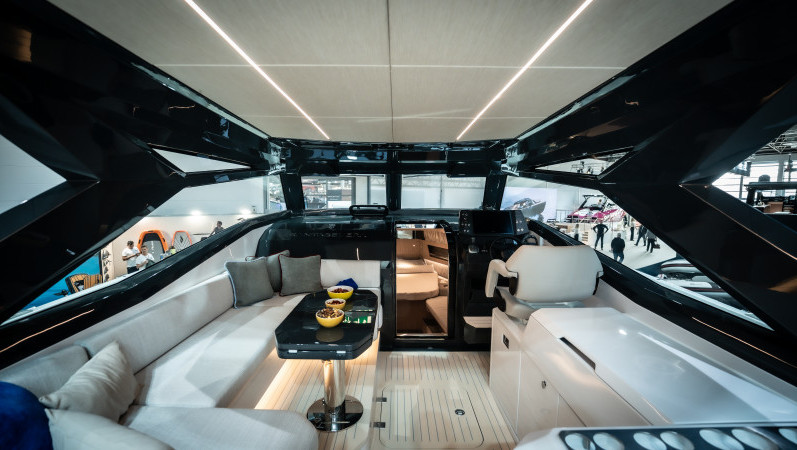
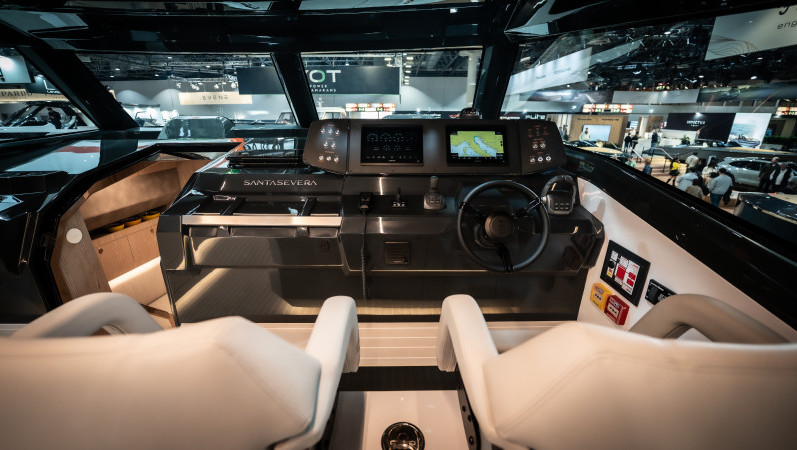
Francesco Guida – The idea is actually very simple. Today the market demands generous daytime living spaces, but at the same time protected ones. Center consoles, however popular, do not offer truly sheltered areas. We therefore chose to return to a more classic layout: windshield, hardtop and a raised bow. Especially because, with a very forward helm position, the remaining space forward is limited — it makes little sense to force a walkaround just to reach a minimal sunpad.
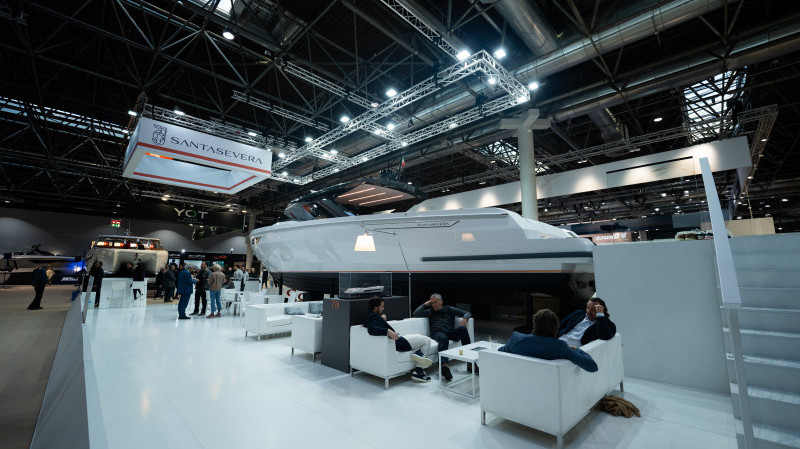
This allowed us to design highly usable cockpits with multiple functional areas: sunbathing, relaxation, a protected dining space, entertainment — even watching summer sporting events. A layout conceived to truly live the boat.
PM – Beyond the layout, what were the other design pillars?
FG – Today many are caught up in adding gadgets: fold-out terraces, scenic solutions… often not very seaworthy. We wanted to build a truly seaworthy boat above all. Deep-V hull, no steps — which many insert without fully understanding why. A monohedral hull with 22 degrees at the stern: a serious, well-balanced hull made for navigation.
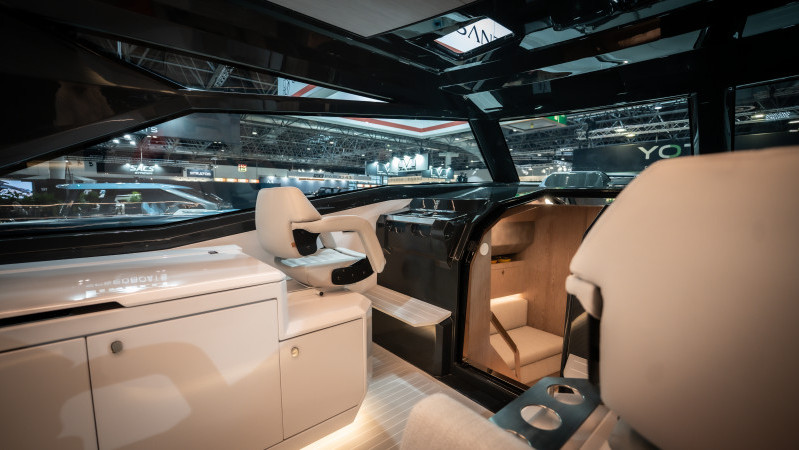
But seaworthiness also means technical accessibility: spacious engine rooms, ease of maintenance, inspectable pumps and generators. A seaworthy boat is not only about how it performs underway, but also how it is maintained. All this with a modern yet clean look, without chasing trends. The balance of forms is worth more than unusual glazing or special effects.
“Those who go to sea design differently”
PM – In your work, how often must an initial idea change to become truly buildable?
FG – I have 39 years of experience. I grew up in a family with boats; I’ve spent my life at sea. For me, the process is immediate: I cannot draw a shape without thinking about how water will flow, how people will live onboard, what happens at anchor with a bit of chop.
I see many beautiful boats, but fanciful ones. Clearly designed by those who have never passed a mooring buoy from the bow or heard waves slapping under an excessively long swim platform. My platforms are short; the hull extends aft. From experience: I’ve owned boats that made unbearable noise at anchor because of poor design choices. Real experience at sea changes everything.
“Luxury is not showing off, it’s enjoying life”
PM – Today, is true luxury in a yacht image or quality of onboard experience?
FG – There are two concepts of luxury. One is about appearance, often linked to the newly wealthy. The other is about enjoying life. For me, luxury is owning something that gives you personal satisfaction, not something that proves something to others.
On a boat, luxury means real space, genuine comfort, no useless frills that steal livability. Simple, clean lines. Authentic comfort. That is luxury.
“A project must be timeless”
PM – When you design a yacht, do you already think about how it will age in 10 or 20 years?
FG – Absolutely. There are two paths: you either create something to impress today, or something that lasts. To last, you need balanced forms. When an object is over-designed or overloaded, it dates immediately. If it has clean lines and harmonious proportions, it becomes timeless.
A Magnum from 1986 is still beautiful today. Because it is simple and balanced. Other, more elaborate boats are immediately recognizable as products of a specific era. Simplicity is what makes a project eternal.
“Countercurrent? Perhaps. But the sea doesn’t lie.”
PM – Do you feel countercurrent compared to certain market trends?
FG – Probably yes. But sometimes going against the current pays off. The sea doesn’t lie. If a boat works, it always works. If it is only appearance, sooner or later it shows.
Filippo Ceragioli
©PressMare - All rights reserved