
“Lucietta”, the electric taxi redesigning a Venetian icon
Some objects have a design that seems untouchable, and the Venetian taxi is one of them. Its shape has been defined over time less by aesthetics than by the city itself: narrow canals, low bridges, quaysides and landing stages impose strict proportions, and these have turned a constraint into a distinctive feature. “Lucietta” is the first taxi designed from the outset as an electric boat. The project has been rethought without distorting its essence, while keeping pace with the times.
Repower is the promoter of the project and defined its vision from the start. It brought in Nauta for the design and Cantiere Serenella for the construction, with the aim of combining top-level expertise to build an innovative and refined boat. Each partner made a distinctive contribution. Repower is a point of reference in sustainable mobility and technological innovation. Cantiere Serenella, drawing on its long Venetian tradition, ensured excellence in construction, reliability and craftsmanship. Nauta is recognised for its versatility in adapting its design signature to very different types of boat, avoiding the excesses of overdesign in favour of timeless beauty. This collective effort brought together design, technological and craft skills with a precise goal: to show that even a symbol of Venetian tradition can evolve without losing its identity.
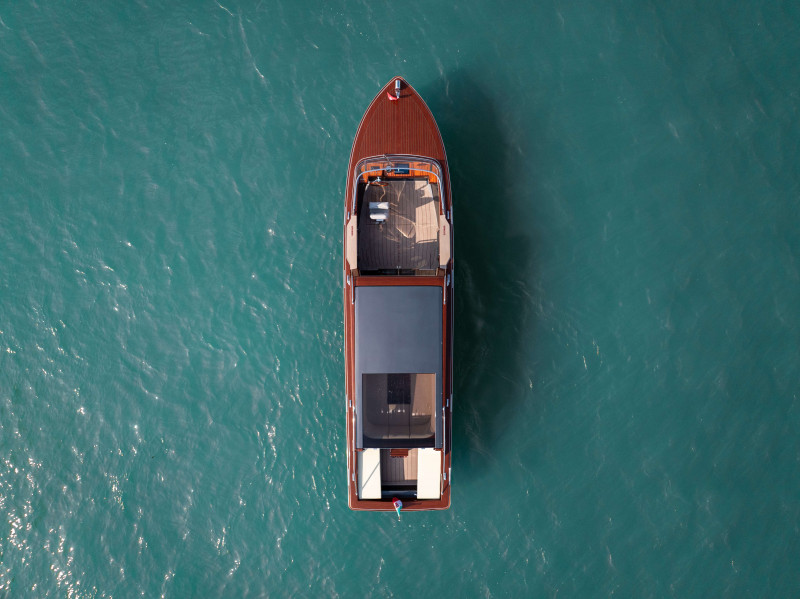
“Lucietta” is not the conversion of an existing boat but a project conceived around electric propulsion. It is the third generation of electric boats developed by Repower, and it is also a way of presenting the company’s charging system and its solutions for sustainable mobility.
The name recalls a character from the comedies of Giacinto Gallina, a 19th-century Venetian author and heir to the tradition of Goldoni, and underlines the link with the city’s culture. The reference is reflected in the approach of Nauta, which was asked to reinterpret a nautical type with a strong identity without resorting to solutions foreign to its history.
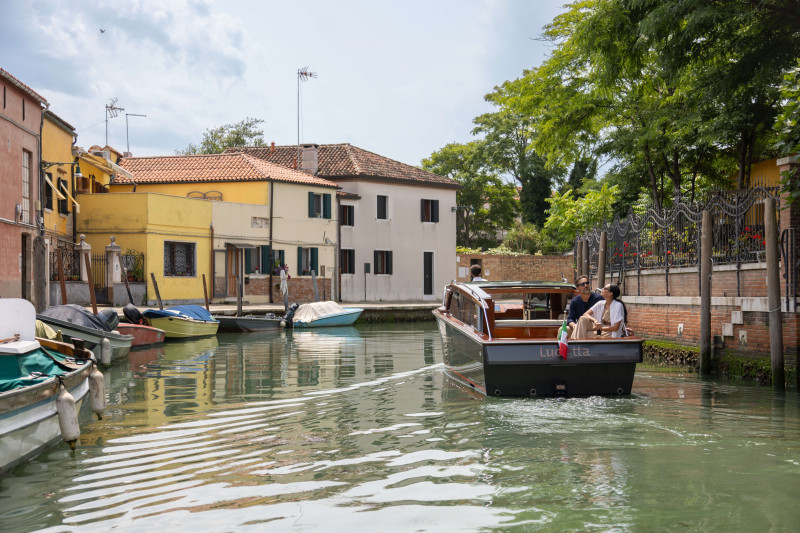
Nauta’s work started with an analysis of drawings of historic taxis and direct discussions with Venetian taxi drivers, to understand operational needs, proportions and the characteristics to be preserved. This research led to a design that keeps the dimensions imposed by the lagoon but uses the different architecture of the propulsion system to improve the organisation of space and introduce a contemporary formal language.
Form follows function
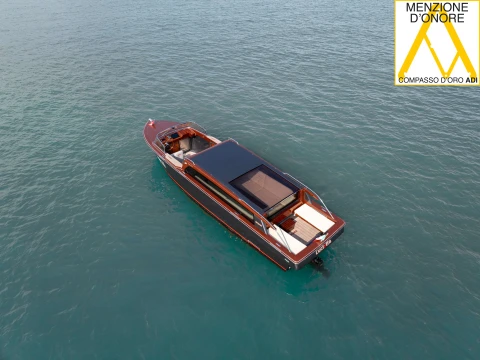
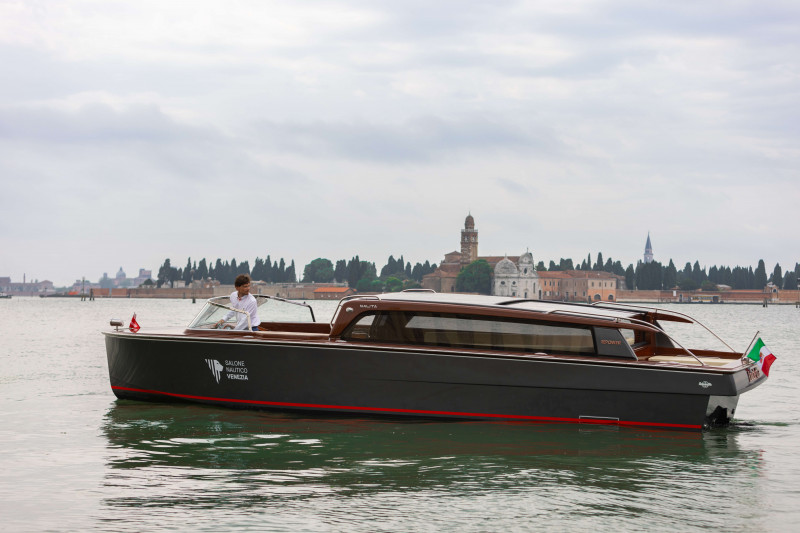
In Venice, the dimensions of a water taxi are determined by the layout of the city: canals, bridges and moorings set precise limits on length, beam and height. “Lucietta” is 9.30 metres long, 2.25 metres wide and 2.10 metres high, proportions that make it agile and compatible with the urban setting.
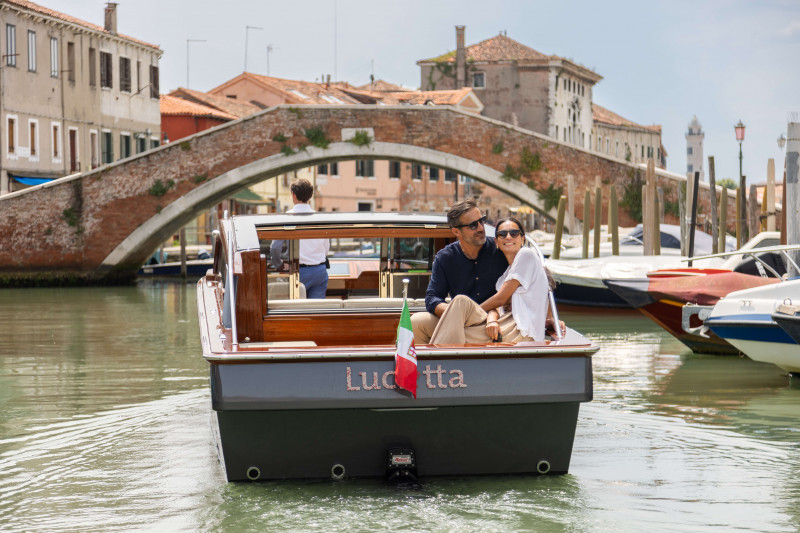
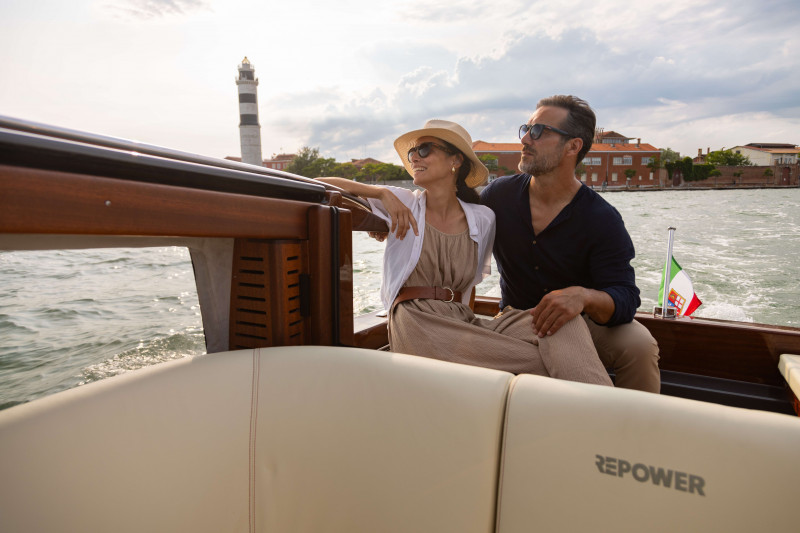
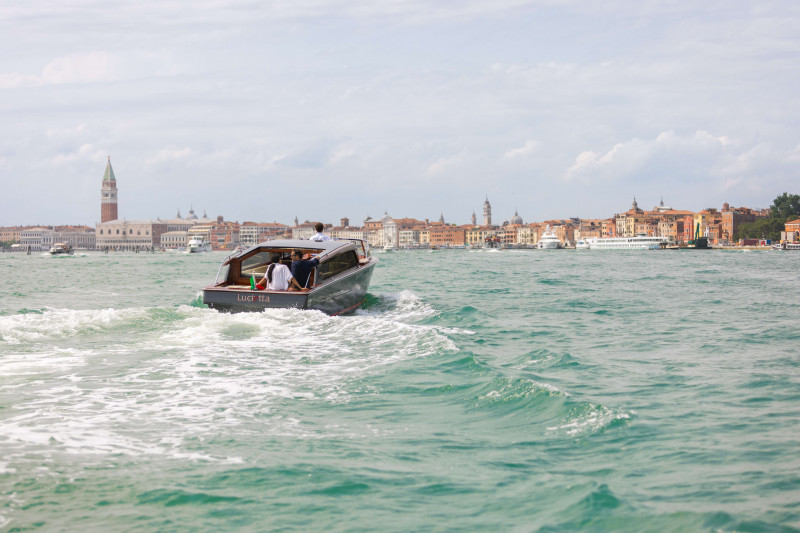
Electric propulsion made it possible to work above all on the distribution of volumes. Without the bulkier conventional combustion engine, the stern area is freed up, making room for aft-facing exterior seating. This is designed to give passengers a more informal space and encourage face-to-face conversation.
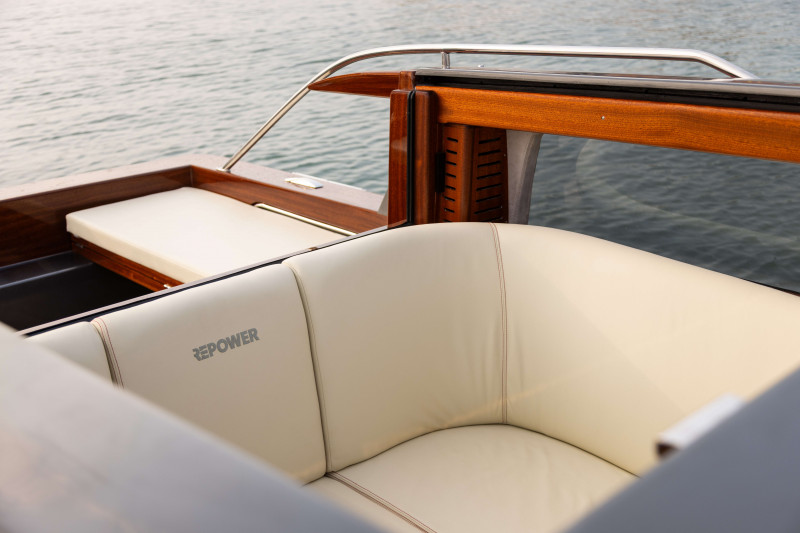
The solution responds to a functional need, but it also becomes a defining element of the design. The transom overhang breaks up the flat surface at the stern, lightens the profile and visually lengthens the hull. The design also keeps the propeller easily accessible, as it requires frequent cleaning and maintenance.
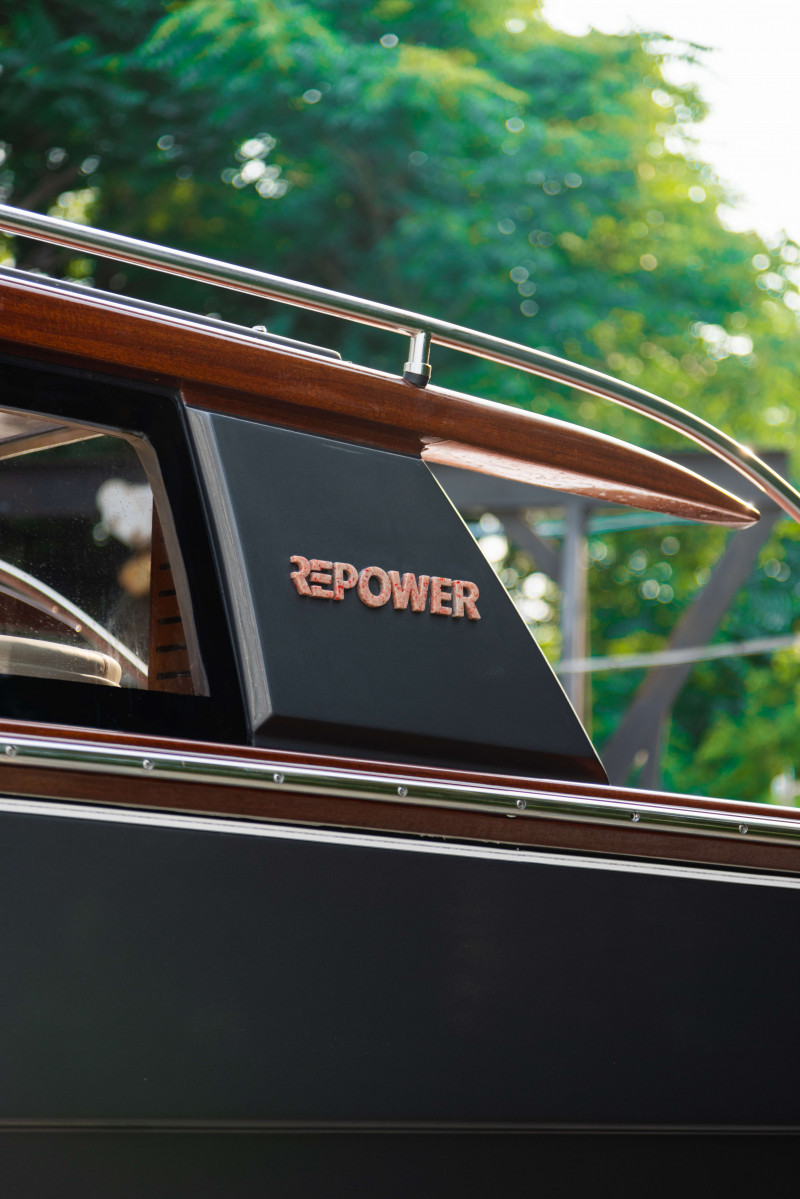
The same attention can be seen in the deckhouse, whose mahogany-effect cladding traces a reversed swoosh in side view. This dynamic line suggests speed and echoes the visual language of electric mobility. It creates a calibrated contrast between the reference to traditional boatbuilding and the contemporary character of the project.
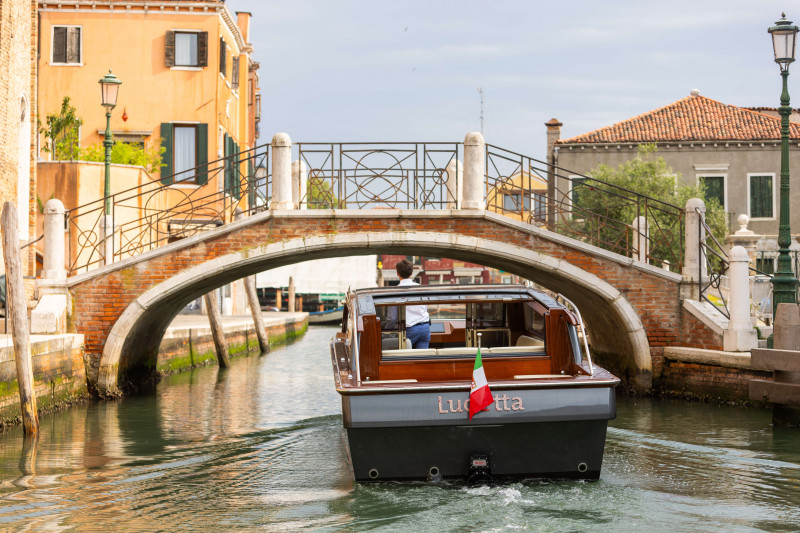
The optimised use of space also allows the boat to carry up to 14 passengers, more than traditional taxis, without changing its external dimensions. This is one of the most significant aspects of “Lucietta”: technology becomes a tool for making the boat more practical to use.
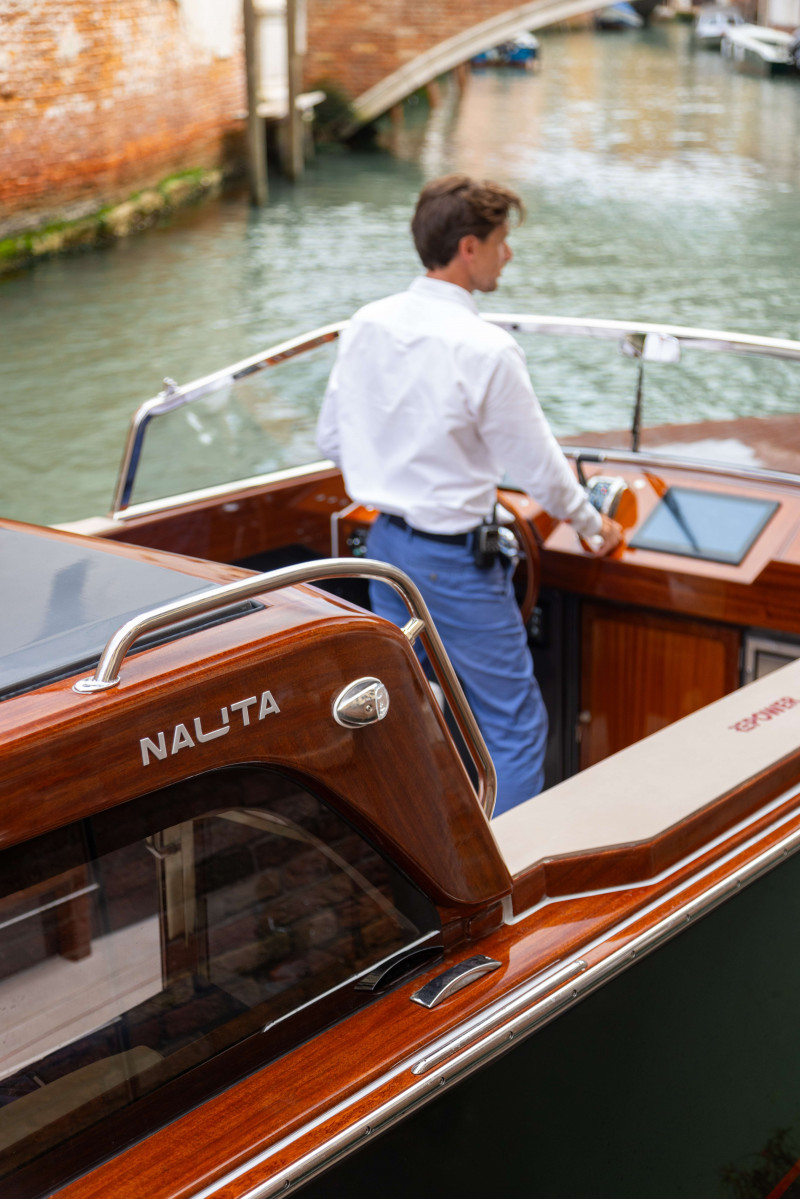
From power system to boat architecture: everything is consistent
The propulsion system consists of a 200 kW full-electric motor powered by a 180 kWh battery pack, giving a top speed of 30 knots.
For a boat intended for professional service, however, the most relevant figure is operating range. At the speeds regulated in the lagoon, between 7 and 20 km/h, “Lucietta” can cover a full working day without recharging. This makes the electric solution compatible with the pace of the service as well as with environmental targets.
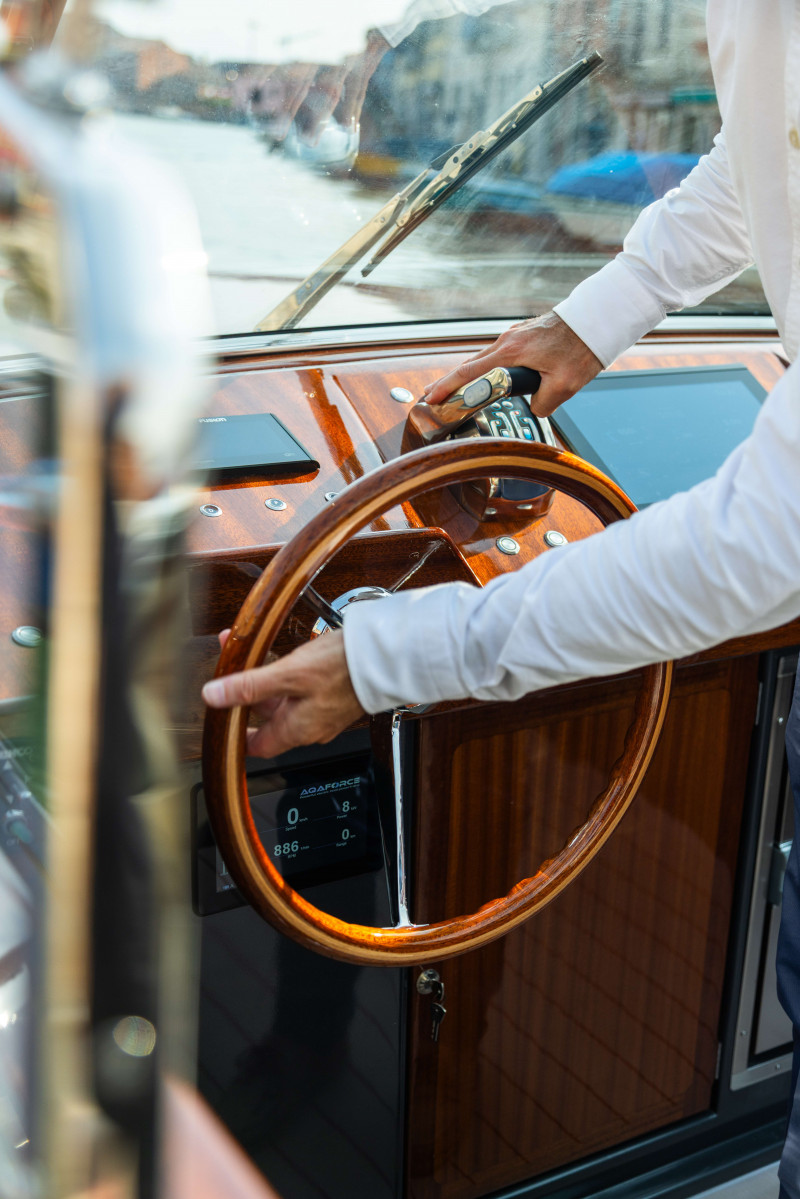
The choice to design around electric propulsion therefore has consequences that go beyond the power system: it changes the architecture of the boat, frees up space and makes it possible to rethink the relationship between engineering and comfort.
The research extended to materials, selected to combine performance, environmental awareness and references to the local area. The hull is built in recycled carbon fibre, while the mahogany-effect cladding recalls boatbuilding tradition through a contemporary finish.
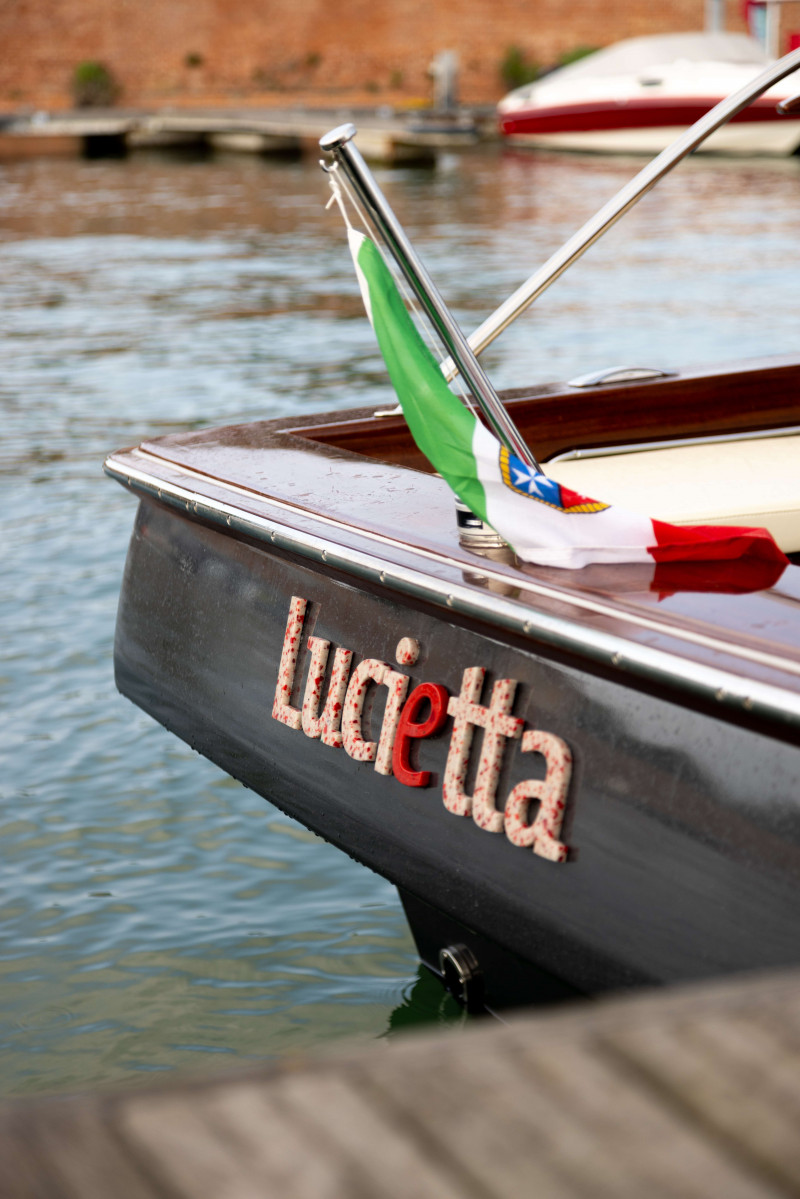
Another distinctive element is regenerated glass from the Murano furnaces. It is recovered and transformed using technology developed by Rehub, a local start-up that won the Repower Special Prize for Innovation in 2023. The material is used for the cabinet tops and the onboard lettering, integrating into the build an element deeply tied to Venice’s manufacturing culture.
Recovering the glass therefore has a twofold value: it reduces the waste of resources and gives a new function to a material that is part of the city’s identity. Sustainability becomes a design choice that connects technological research, craftsmanship and the local area without sacrificing aesthetic quality.
“For Nauta, the main challenge was to preserve the recognisability of the Venetian taxi, while identifying the elements that could evolve,” Luca Pedol, head of communications and marketing, told us. “This approach reflects the studio’s philosophy, which is oriented towards timeless beauty and a design in which form never prevails over function.”
The result is a boat that does not try to impress with special effects but with the precision of its choices: from the new stern configuration to the profile of the deckhouse, and from the selection of materials to the layout of the spaces. Each detail helps define a contemporary identity while keeping a direct relationship with the nautical type from which the project originates.
The double Compasso d’Oro recognition
The value of this research was also recognised by the Compasso d’Oro jury. After an Honourable Mention at the Compasso d’Oro International Award in Osaka in 2025, “Lucietta” received an Honourable Mention in May 2026 at the 29th edition of the ADI Compasso d’Oro Award, promoted by ADI, the Association for Industrial Design.
The national award also brought the boat into the ADI Compasso d’Oro Historical Collection, which the Ministry of Cultural Heritage and Activities has declared of exceptional artistic and historical interest. The result highlights a project in which innovation is not entrusted to technology alone. Instead, it emerges from the relationship between naval architecture, everyday use, materials and formal quality.
For Nauta, the award is part of a path that also includes the Honourable Mention given to the Southern Wind 94 “Kiboko Dos”, a sailing yacht with very different characteristics and purposes. These are two very different projects, united by attention to the balance between form and function and to the quality of the experience on board.
With “Lucietta”, this approach is put to the test on one of the most recognisable types in the Venetian tradition. The result is not simply an electric version of the existing taxi. It is a reinterpretation that uses the possibilities offered by technology to improve the passenger experience and bring a new sensibility to mobility in the lagoon.
Désirée Sormani
©PressMare - All rights reserved