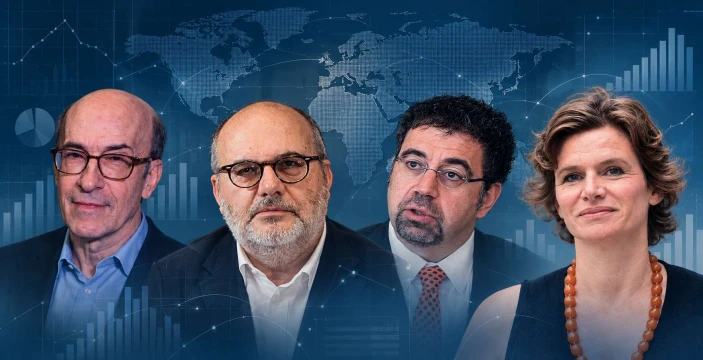
From left: economists Kenneth Rogoff, Branko Milanović, Daron Acemoglu and Mariana Mazzucato
Beyond the Horizon: Economics as a Key to Understanding Yachting


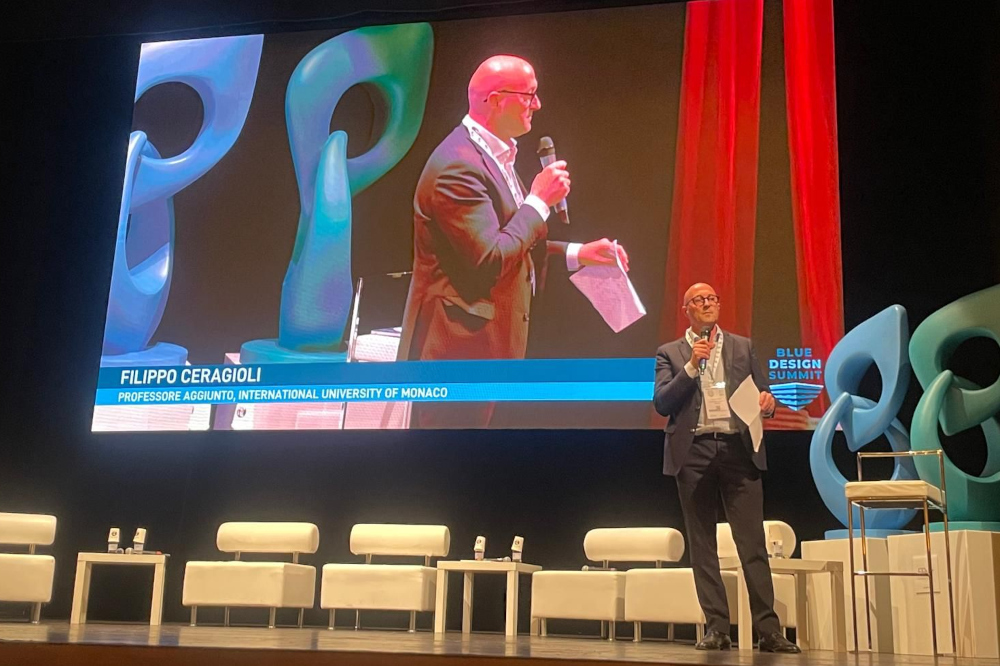
PressMare launches “Beyond the Horizon”, a series of in-depth articles by Filippo Ceragioli, a lecturer at the International University of Monaco and Politecnico di Milano, offering an analysis of the transformations taking place in the yachting market through the theories of four contemporary economists.
The series draws on the work of Branko Milanović to examine the distribution and concentration of wealth; Kenneth Rogoff to explore the relationship between financial markets and the propensity to purchase; Daron Acemoglu to understand the role of technology and productivity in the competitiveness of shipyards; and Mariana Mazzucato to assess the influence of investment and industrial policies on innovation processes.
The aim is not to attribute forecasts about the yachting market to these economists, but rather to use their theoretical frameworks as analytical tools, comparing them with industry data to identify the dynamics that could shape the evolution of yachting in the coming years.
The Future of Yachting Through Four Lenses of Contemporary Economics
Wealth, finance, technology and industrial policy: four economic frameworks for understanding the yachting market in the years ahead
How many yachts will be sold in 2027? Perhaps that is not the right question.
To understand where the yachting market is heading, it may be more useful to ask where new wealth is being created around the world, how dependent that wealth is on financial markets, which economies and companies will be able to turn technology and expertise into production capacity, and how industrial and environmental policies will shape the next generation of products.
These questions may seem far removed from the docks of Monaco, Cannes, Genoa or Fort Lauderdale. Yet they may tell us more about the future of yachting than today’s order book.
Industry data naturally remains essential. Orders, deliveries, fleet size, brokerage, charter, refit and production capacity allow us to assess the state of the industry. But they largely provide a snapshot — or, in some cases, the consequences — of decisions already made.
Looking further ahead means examining the conditions that will shape tomorrow’s decisions.
This is the starting point for a series of articles with a deliberately different aim: to interpret the evolution of yachting through some of the leading perspectives in contemporary economics.
One Market, Four Ways of Looking at It
The exercise begins with four economists: Branko Milanović, Kenneth Rogoff, Daron Acemoglu and Mariana Mazzucato.
They were not chosen because they have specifically studied the yachting market. Quite the opposite: that is precisely what makes the exercise interesting.
Their work offers different ways of examining economic developments that may also have significant consequences for yachting.
Milanović has devoted a substantial part of his research to the global distribution of income and wealth and to inequality, a field in which he continues to work, including through the Stone Center on Socio-Economic Inequality.
His perspective immediately raises a first question for our industry: not simply how much wealth will be created worldwide, but where will it be concentrated, and who will own it?
For an industry producing exceptionally high-value goods for a tiny fraction of the world’s population, this may be a far more meaningful indicator than overall GDP growth.
Kenneth Rogoff offers a different lens. His work spans monetary policy, debt, financial crises and the international monetary system. In 2026, he has continued to explore subjects ranging from monetary policy and the future of the dollar to the potentially complex relationship between AI-driven growth and financial stability.
Applied to yachting, this perspective shifts the question: how much does the amount of wealth matter, and how much does its stability matter?
Financial markets, the cost of capital, interest rates, currencies and perceptions of risk can influence purchasing decisions even when prospective buyers retain substantial nominal wealth.
With Daron Acemoglu, the focus gradually moves from the customer to the industrial system’s ability to meet demand.
The relationship between institutions, technology and prosperity is one of the central themes of his work. Research published in 2026 with Ufuk Akcigit and Simon Johnson specifically addresses technology adoption and diffusion, highlighting the importance of management capabilities, training, access to credit and companies’ ability to absorb new technologies.
The question for yachting then becomes: will access to technology be enough, or will the real difference lie in the ability to integrate it into industrial processes?
Artificial intelligence, automation, the digitalisation of design and production, new propulsion systems and the growing complexity of yachts could change not only the product itself, but also the competitive balance between shipyards and national industrial systems.
Finally, Mariana Mazzucato introduces a fourth dimension: the state and industrial policy.
Her approach to mission-oriented innovation views public institutions not merely as bodies tasked with correcting market failures, but as actors capable of directing investment, innovation and the development of new markets. Mazzucato continues to develop this line of research in 2026, with particular attention to public finance, industrial policy and the green transition.
For yachting, this means examining decarbonisation, infrastructure, alternative fuels, electrification, environmental regulation, research and industrial policy.
In other words: how much of yachting’s technological future will be decided by the market, and how much by the direction set through public policy?
Not Four Forecasts, but Four Interpretations
The methodology needs to be made clear.
The economists featured in this series are not being asked to express opinions on the yachting market, nor will any forecasts about yachting be attributed to them.
The approach is exactly the opposite.
We will start from the concepts and models developed in their published work and independently apply them to a common set of information about the global economy and the yachting industry.
The same market will therefore be examined four times.
First, through the distribution of wealth.
Second, through finance, interest rates, debt and the stability of wealth.
Third, through technology, productivity and industrial capacity.
Fourth, through industrial policy, innovation and the role of institutions.
The lens will change. The underlying data will not.
Building a Common Dataset
The series will therefore be based on a single shared body of information.
It will include macroeconomic indicators such as growth, inflation, interest rates, financial markets and currencies, alongside the geographical distribution of wealth and how it is changing.
These will be complemented by geopolitical variables: US–China relations, conflicts and regional instability, sanctions, trade policies, international capital flows and the growing economic importance of regions such as the Middle East and Asia.
The third layer will focus directly on yachting: order books, deliveries, brokerage, charter, refit, production capacity, yacht sizes and the geography of demand.
Finally, we will consider industrial change: the availability of skills, labour and energy costs, supply chains, automation, artificial intelligence, propulsion and environmental regulation.
It will also be important not to treat “yachting” as a perfectly uniform market. A change in interest rates or a financial-market correction could have very different consequences for a 15-metre boat and a superyacht over 60 metres.
Two Time Horizons
Each analysis will also consider two different time horizons.
The first will cover the short term, broadly 12–24 months. Financial markets, interest rates, confidence, geopolitics, existing order books and available production capacity will carry greater weight here.
The second will look at the following three to five years.
Over this longer horizon, slower-moving developments become more important: intergenerational wealth transfer, the emergence of new economic centres, technological transformation within shipyards, the availability of skilled people, environmental policies and infrastructure.
And the two perspectives may lead to very different conclusions.
A market may appear strong in the short term because it is supported by orders already secured, while simultaneously showing signs of structural change. Conversely, it may experience a weak cyclical phase even as the conditions for a new period of growth are taking shape.
The Question We Will Seek to Answer
The aim of this series will therefore not be to determine whether the yachting market will rise or fall.
That would probably be too simple a question for a system that has become far more complex.
Instead, we will try to understand which forces could drive its next transformation.
Viewed through Milanović’s lens, the starting point becomes the concentration of wealth.
Through Rogoff’s, the financial foundations on which that wealth rests.
Through Acemoglu’s, the industry’s ability to turn technology and knowledge into productivity.
Through Mazzucato’s, the direction that institutions, investment and industrial policy can give to innovation.
Four economists. Four interpretative frameworks. The same market.
And perhaps four at least partly different futures for yachting.
In the next article, which will be published online on Friday, 23 October, we will begin with wealth: not how much the global economy will grow, but who will own the wealth generated by that growth. This is where Branko Milanović’s perspective may offer a particularly interesting way of understanding where the next generation of yacht owners could come from.
Filippo Ceragioli
©PressMare - All rights reserved