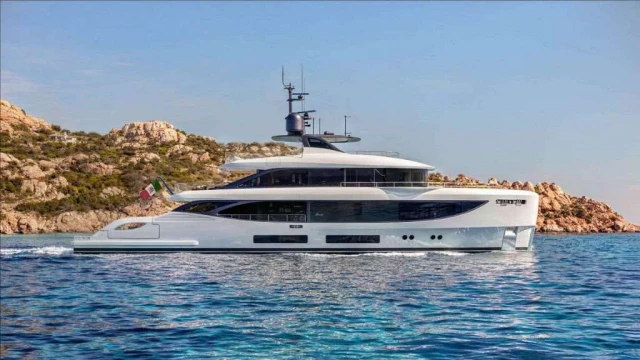
Benetti Oasis: a new approach to space, materials and yacht design
For Benetti’s Oasis line, architect and designer Enrico Bonetti, co‑founder of Bonetti/Kozerski Architecture, has brought to yachting a sensibility forged outside the traditional nautical world. A language of calm spaces and refined simplicity complemented by timeless materials.
After the success of the Oasis 34M, the smaller sister of the Oasis 40M, Bonetti was asked to reinterpret and evolve the concept on a new platform. The result is a yacht that maintains the spirit and philosophy of the original Oasis, yet is completely redesigned in proportions, layout, and spatial flow. In this conversation, Bonetti explains how the new Oasis carries forward a recognizable identity while offering fresh solutions in space planning and long‑term value.
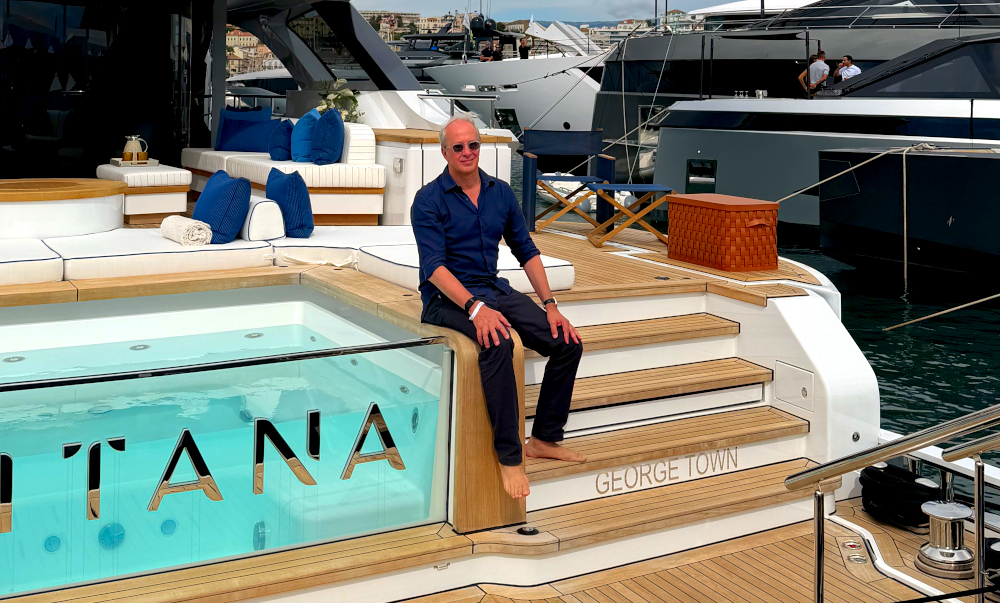
PressMare - The new Oasis is officially an evolution of the previous model. How would you describe the relationship between the two?
Enrico Bonetti - It’s important to say that this is not a simple restyling or a minor update, as we are talking about a completely new boat. From a design point of view, the dimensions have changed, the layout has been transformed, and the way spaces are organized is different.
What remains is the philosophy that we developed with the first Oasis 40‑meter: a project that, in many ways, was our first “real” boat. We came from architecture and interior design, and we tried to propose a new language.
PM - You often speak about calm and elegant simplicity. How did you translate that into the interior layout and circulation on this boat?
EB - Our goal was to create a continuous, serene experience for the owner and guests. We see the yacht as a series of “mini‑episodes” that flow one into another. You move from outside to inside, from one area to the next, and the rhythm becomes progressively calmer.
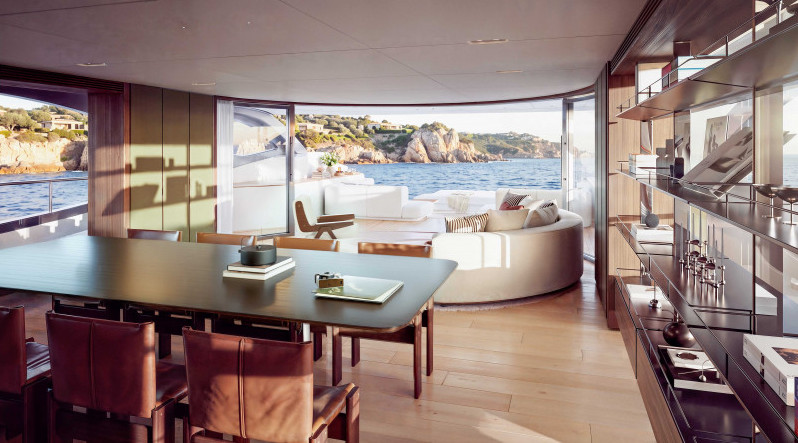
One key move was separating the main staircase from the central living area. On previous layouts, circulation and stairs often competed for space; here we have freed the main spaces, so they feel more generous and fluid. At the same time, we have re‑studied the crew and service circulation so that galleys, pantries, and guest areas work more logically and discreetly.
We also worked on storage. For example, using the wall along the staircase as a large, integrated storage surface. That allows us to keep the spaces clean and refined without sacrificing practicality. The idea is that movement through the yacht should feel natural and relaxed, almost intuitive, with no abrupt interruptions.
PM - You mentioned continuity. Many owners today are very sensitive to the “mood” of a yacht. How did you ensure a consistent aesthetic from area to area?
EB - Owners are very aware of mood and continuity. One frequent criticism they have of some charter or series yachts is that each space feels like a different story, with no single identity tying everything together.
Here we wanted a clear and coherent atmosphere. So, we worked around a warm wood tone as a constant: a specific temperature of color that appears in the main living areas and cabins. Compared with the previous model, we’ve opened with more windows and light, but we have maintained that same warmth, so the yacht remains recognizable from space to space.
At the same time, we wanted to give each client a degree of personalization without breaking the identity of the Oasis line. So instead of allowing heavy changes in the core architecture, we created specific surfaces that can be customized, such as lateral panels that in the standard version are in a pale, bleached wood finish. These areas can be reinterpreted with fabrics, printed patterns, or different textures.
PM - You used some very substantial materials, such as stones, in strategic areas. What were the main technical challenges in integrating them on board?
EB - Using heavy, natural materials on a yacht is always a challenge. On this project we wanted to bring in real stone in bathrooms and on certain main‑deck surfaces, as something with presence and authenticity.
Many of these elements are thick pieces of stone, sometimes 2-3 centimeters, which must be engineered so they are both safe and visually light. We had to develop special support systems, with hidden structures that can carry the weight without deforming, and that also respect all the constraints of movement and vibration at sea.
PM - You placed strong emphasis on materials that “age well”. How does that influence your choices and the long‑term value of the boat?
EB - For us, long‑term value is inseparable from material quality. We prefer to work with natural, proven materials, like solid woods, stones like travertine or Pietra di Luserna and fabrics that are designed to last. These are materials with a history, used for decades or centuries in architecture, so we know how they age, how they behave, and how they can be maintained.
When we select stones, we often look at specific regions - Versilia, Piedmont, the Luserna area - to give the yacht a kind of “terroir”, a geographical identity. It’s a subtle thing, but it adds depth: you are using a material that has roots and culture behind it.
We are very careful with new, experimental materials that look exciting but have no proven track record. In yachting, the worst thing is to discover after a few years that a surface discolors, or a finish doesn’t resist the marine environment. So, we try to combine innovation with a certain classical discipline: the yacht must feel contemporary today, but still correct and beautiful ten or twenty years from now.
PM - Coming from outside the traditional nautical world, how has that influenced your way of designing boats like the Oasis line?
EB - Not having a background in yacht design, we approached the Oasis line as we would approach a high‑end residence or a hospitality project, always asking: How does the person live here? How do they move, relax, entertain?
We listen a lot to feedback from owners. Very often, the gap between what a client says they want and what they need is hidden in the images they respond to, the atmospheres they are drawn to but cannot fully explain. Our job is to decode that and to understand why a certain space or material attracts them and then build a coherent story around it.
PM - Looking ahead, what parts of this project do you feel are most important to carry forward in future evolutions of the Oasis family?
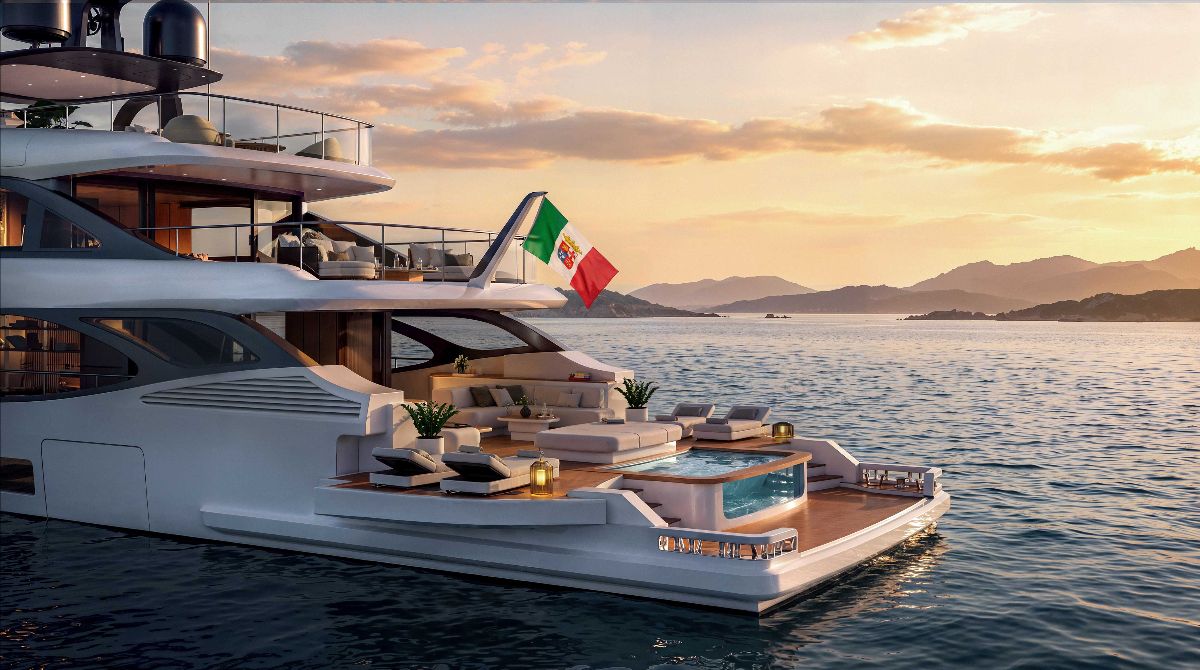
EB - I think there are three key elements. First, the idea of spatial flow. Meaning the continuous sequence of experiences, from open decks to interiors, with no hard breaks. Second, the material language: warm woods, natural stones, and fabrics that create a sense of calm and authenticity. And third, the possibility of measured personalization which allows each owner to express themselves through specific, well‑chosen areas without compromising the core identity of the line.
In the end, the Oasis line is our way of translating the idea of elegance into lifestyle on the water.
Rebecca Gabbi
©PressMare - All rights reserved