Farewell to Carlo Borlenghi, the eye that told the story of sailing
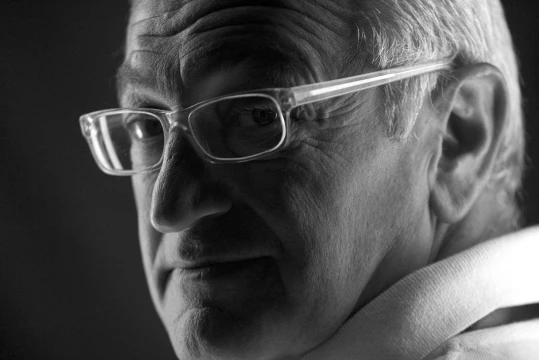
Carlo Borlenghi did not simply photograph yacht racing. He knew how to tell its stories, anticipating where something was about to happen and turning a manoeuvre, a wave or the expression on a sailor’s face into an image destined to endure. With his passing, the sailing world has lost the photographer who, more than any other, shaped its visual memory over almost half a century.
Born in Bellano, on Lake Como, Borlenghi began his career covering local regattas. His breakthrough came in 1983, when, at the age of 27, he travelled to Newport to document Italy’s first America’s Cup challenge with Azzurra. From then on, his professional life became closely intertwined with the world’s most important regattas and with both Italian and international America’s Cup campaigns: from Il Moro di Venezia and Luna Rossa to Alinghi’s victorious challenge. He covered every edition of the America’s Cup from 1983 onwards, becoming one of the competition’s leading photographers.
His archive, however, encompasses a much broader world. The greatest international regattas, the major Rolex-sponsored classics, round-the-world races, Giovanni Soldini’s ocean-going achievements, the Barcolana in Trieste, classic yachts and superyachts: Borlenghi photographed every expression of the relationship between people, sailing and the sea. He was not interested solely in the spectacular image. His photographs gave equal importance to effort, anticipation, the concentration of the crews and those details that allow sports photography to transcend mere reporting and become storytelling.
His talent also stemmed from an intimate understanding of what he was observing. Photographing a regatta requires an ability to read the wind, the manoeuvres, the positions of the boats and what might happen a few seconds later. It means finding the right position without interfering with the racing, working from a moving platform and rapidly delivering images capable of meeting both editorial and communications requirements. Borlenghi turned all this into a distinctive working method, founded on preparation, experience, punctuality and an unwavering commitment to the final result.
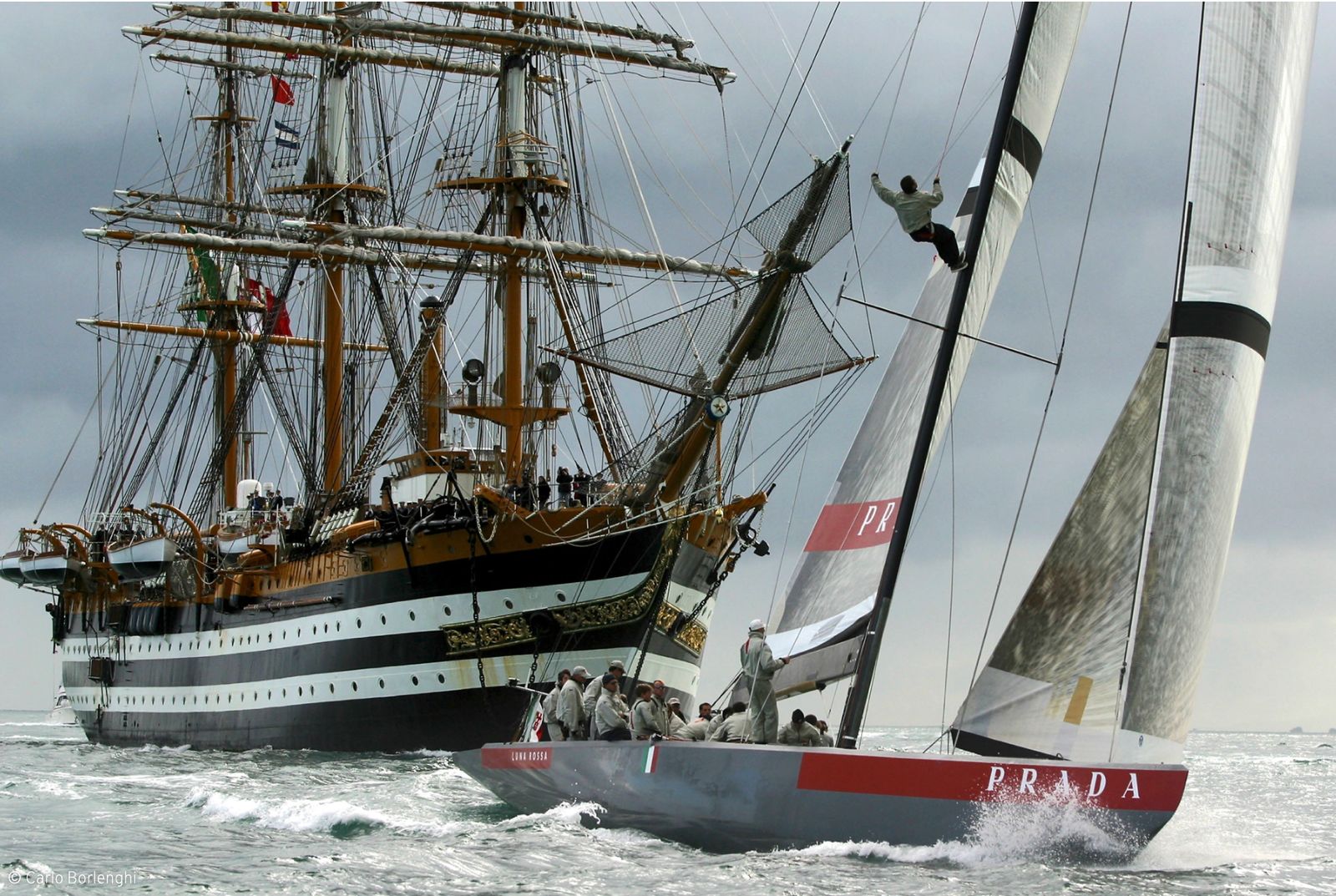
It is precisely this method that represents a fundamental part of his legacy. Alongside his immense body of images, Carlo leaves behind Studio Borlenghi and his “boys”, the photographers whom he took with him onto racecourses over the years, teaching them how to work and take photographs at sea.
He never tried to create copies of himself. He passed on his knowledge and a way of thinking, while giving each photographer the freedom to develop their own sensitivity and express themselves through a personal style. The Studio Borlenghi name thus became the product of a collective effort, based on a shared approach but open to different perspectives. Some of the professionals who make up the studio worked alongside him for almost twenty years, helping to build an identity that extends beyond the contribution of any single photographer.
For this reason, Carlo Borlenghi’s work will not end with his passing. It will live on in the photographs preserved in archives, books and magazines, and in the images that introduced sailing to people who had never experienced it themselves. Above all, however, it will continue through those he trained: the photographers who will still set out aboard a RIB or a helicopter, or fly a drone, study the wind and the racecourse, and try to be in the right place at the decisive moment.
Sailing has lost one of its best-known and most cherished figures, a professional who moved through profoundly different eras, from film to digital photography, while retaining an undiminished ability both to feel emotion and to convey it. His vision of the sea and his teachings remain. They will continue to live through the work of Studio Borlenghi and through the care with which his wife Alessandra, always at Carlo’s side both personally and professionally, will undoubtedly preserve his memory and the images he has left us.
Giuliano Luzzatto
©PressMare - All rights reserved