
Global Superyacht Review 2026: Superyachts and AI, how value is reshaped through data and personalisation #4
Global Superyacht Review 2026: Superyachts and AI, how value is reshaped through data and personalisation


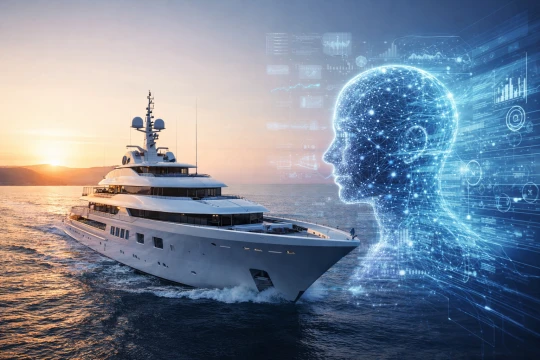
If charter today represents the main entry point to the market and the first testing ground for the experience, it is technology — and particularly artificial intelligence — that is shaping the next phase of yachting’s evolution.
In the Global Superyacht Review 2026, Fraser clearly identifies an ongoing trajectory: the transition from a model based on direct relationships and intuition to a system increasingly driven by data. This is not simply a matter of digitalising processes, but a deeper transformation affecting how value is created, delivered and perceived.
The starting point is the growing complexity of demand. As highlighted in previous analyses, yachting clients are no longer seeking just a yacht, but an integrated experience, consistent with their lifestyle and perfectly aligned with their preferences. Meeting this demand in a systematic way requires new tools.
This is where artificial intelligence comes into play. According to the report’s estimates, by 2030 around 70% of charter bookings in the ultra-high-net-worth segment will involve AI-based systems. This figure, rather than indicating a future trend, reflects a process that is already underway.
AI enables a shift from reactive to predictive personalisation. It does not simply respond to client requests, but anticipates them, suggesting yachts, destinations and services based on behavioural data and established preferences.
This fundamentally changes the role of industry operators. The broker, for instance, does not lose relevance but evolves: from intermediary to data interpreter, capable of combining technology and human interaction to deliver a more precise and coherent experience.
At the same time, the entire ecosystem is moving towards greater integration. Yachting is no longer a closed system, but part of a broader network that includes private aviation, hospitality and concierge services. AI becomes the connection point between these sectors, enabling seamless experiences across sea, land and air.
Another important aspect concerns operational efficiency. The management of yachts, routes, crews and maintenance can benefit from predictive tools capable of optimising time and costs, while improving overall service quality.
The real shift, however, is cultural. Value no longer lies solely in the quality of the yacht or the level of service, but in the ability to build a system that dynamically adapts to the client. In this sense, technology does not replace human expertise, but amplifies it.
This transition requires investment, new skills and a rethinking of organisational models. Not all operators are ready for this shift, and this is where a new line of separation will emerge in the market: between those who can integrate technology and service, and those who remain anchored to traditional models.
While technology is redefining how experience is built, one key factor remains: who truly influences client decisions. Between family offices, brokers, captains and lifestyle advisors, the decision-making system in yachting is evolving. This new balance of power will be the focus of the next analysis.
Cristina Bernardini
©PressMare - All rights reserved