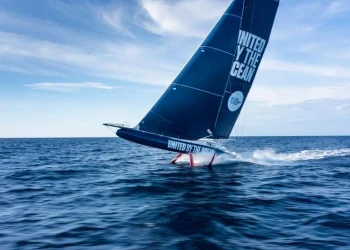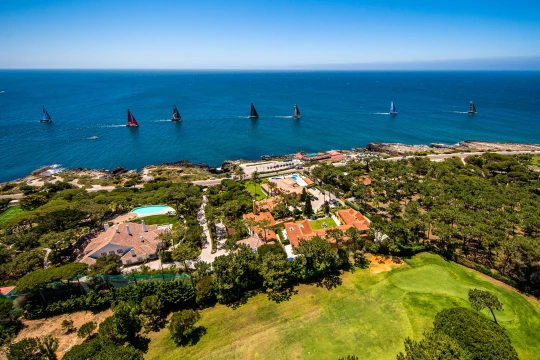
Cascais, Portugal hosts The Ocean Race Europe. © Sailing Energy/The Ocean Race
The Ocean Race reveals a landmark new transatlantic leg for 2027 event
The Ocean Race, the iconic fully-crewed offshore sailing race, is adding a thrilling new chapter in its storied history: a spectacular transatlantic leg departing from St. Pete-Clearwater, Florida, and arriving in Cascais, Portugal, as part of the landmark 15th edition of the race in 2027.
This is the first time in the event's 54-year history that the Sunshine State’s Gulf Coast will serve as a race departure port, and the leg will connect two of the world's most celebrated sailing destinations across some 4,500 nautical miles of open Atlantic Ocean.
"The Ocean Race has always been defined by the cities and communities that embrace it, and this new transatlantic leg showcases everything the race stands for,” said Richard Brisius, Race Chairman of The Ocean Race. “Departing from the shores of St. Pete-Clearwater and arriving in the historic sailing waters of Cascais is a way to connect two coastal cities with enormous passion for the ocean. Florida has welcomed this race five times before; now it does so in a way that will bring the event to a whole new audience on the Gulf Coast. And to arrive in Cascais, where Portugal's maritime heritage is felt on every cobblestone, is the best way to complete an epic transatlantic journey."
Florida returns to The Ocean Race
Florida has long been woven into the fabric of this great race and has previously hosted the event five times - with Fort Lauderdale welcoming the fleet in the 1989–90, 1993–94, and 1997–98 editions, and Miami doing so in 2001–02 and 2011–12. Now, for the first time, the race's American chapter turns to the Gulf Coast, with the award-winning beaches and vibrant cultural hub of St. Pete-Clearwater stepping into the spotlight as the arrival port for the third leg of the around the world race, with the fleet racing to Florida from Itajai, Brazil.
The arrival of The Ocean Race will bring global attention to St. Pete-Clearwater, Florida, one of America's most dynamic coastal destinations. With a long history of competitive sailing and tremendous growth in participation, St. Pete-Clearwater provides the perfect setting for another major international event. The destination combines picturesque natural beauty with a Michelin Guide-rated culinary scene and a lively downtown arts and entertainment district, anchored by the world famous Dalí Museum.
The Ocean Race will be based at the St. Petersburg Yacht Club, right along the downtown waterfront from 4 to 16 May 2027 and has the support of the University of South Florida (USF), home to one of the United States leading marine science programmes and ocean health research efforts. The IMOCA fleet will be berthed at the waterfront by USF during the stopover.
“The Ocean Race embodies much of what our community already represents: a deep tradition of ocean racing and a strong commitment to ocean science, sustainability, marine innovation, STEM education, and tourism,” said Rob Britts, the Stopover Director for St. Pete-Clearwater. “We’re incredibly excited to welcome this event and the global spotlight it brings, but we're even more excited about the lasting legacy it can create for our community for years to come.”
Heritage and history in the world-class coastal city of Cascais
Portugal's relationship with The Ocean Race is equally deep. Lisbon hosted the race as a major stopover city in three consecutive editions: 2011–12, 2014–15, and 2017–18, becoming one of the most celebrated and warmly received host cities in the event's history in the process. Cascais itself hosted The Ocean Race Europe in 2021, the first time an Ocean Race event had been held at the famous marina town, and Porto-Matosinhos was a Fly-By destination in the 2025 edition. Now, for 2027, Cascais takes centre stage on the global around the world race.
Cascais is a destination renowned for sailing. Located just 30 kilometres west of Lisbon, the historic coastal town boasts a world-class marina that has hosted national, European and World Championship regattas and is set against a dramatic Atlantic coastline flanked by the Sintra mountains. The Ocean Race will be in Cascais at the end of May with teams expected to arrive as early as 26 May with the restart scheduled for 6 June.
“Welcoming the arrival of this new transatlantic leg of The Ocean Race in Cascais further reinforces Portugal’s position as a destination for nautical sports, while showcasing internationally the quality of our territory, our natural conditions and our tourism offer. Portugal has a deep and historic connection with the ocean, and this is an event that inspires and connects cultures through the sea. Turismo de Portugal considers it a privilege to host this leg,” highlighted Carlos Abade, President of Turismo de Portugal.
“For a coastal community like Cascais, the ocean is part of our identity. Welcoming The Ocean Race and receiving the teams after a transatlantic crossing is a powerful moment that celebrates our historic connection to the sea. Cascais is proud to share its world-class sailing conditions, its commitment to ocean sustainability and the spirit of a community that has always lived side by side with the Atlantic. We look forward to welcoming sailors and fans from around the world to Cascais - The Charm of the Atlantic Coast,” said Nuno Piteira Lopes, Mayor of Cascais.
The town enjoys 260 rainless days a year on average, and its waters, where the Tagus estuary meets the open ocean, provide a fitting arrival stage for a transatlantic leg. Beyond its sailing pedigree, Cascais enchants visitors with royal palaces, cobblestone streets, some of Portugal's finest seafood, and proximity to the UNESCO World Heritage Site of Sintra.
An epic transatlantic leg
"As an American sailor who has had the honour of winning this race, I can tell you that bringing grand prix racing in foiling IMOCA boats to the USA is a fantastic initiative,” said Charlie Enright, the winning skipper of the 2023 edition of the race and the current CEO of US Sailing. St. Pete-Clearwater is a sailing and sporting community with real energy, and launching a transatlantic leg from the Gulf Coast is going to be something special. Thinking about racing out of those beautiful Florida waters and driving hard across the Atlantic to Cascais… that is a leg I would race in a heartbeat. I might have to dig out my sea boots!"
"I cannot think of a more emotional moment for a Portuguese sailor than to race into Cascais at the end of a transatlantic leg,” said Mariana Lobato, the Portuguese sailor who has raced in The Ocean Race 2023 and The Ocean Race Europe. “I grew up knowing these waters, and the Marina de Cascais is a place where the love of sailing runs deep. Portugal has always had a profound connection to the sea, and having The Ocean Race come to Cascais is a source of immense national pride. I hope this inspires a new generation of Portuguese sailors to dream of racing around the world."
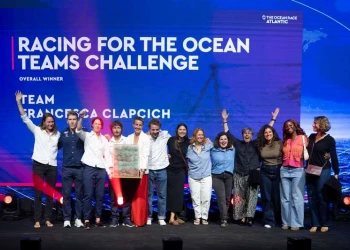
The Ocean Race is the world's premier fully crewed offshore race around the world, first sailed in 1973 as the Whitbread Round the World Race. Known as the toughest test of a team in sport, it has provided the ultimate human adventure at sea for over 50 years. Today, the race is also the reference point for the intersection of elite sport and ocean sustainability through its award-winning Racing for the Ocean programme, with a focus on ocean science and literacy and series of The Ocean Race Summits.
The 15th edition of The Ocean Race departs Alicante, Spain on 17 January 2027, sending the foiling IMOCA fleet on the longest opening leg in race history with an epic 14,000 nautical mile passage to Auckland, New Zealand. The route then returns to South America via Itajaí, Brazil, before heading north to the United States and the new transatlantic leg from St. Pete-Clearwater to Cascais. The race concludes with an exciting sprint down the Red Sea to AMAALA, marking the first time in race history that sailors have competed on the waters of the Red Sea.
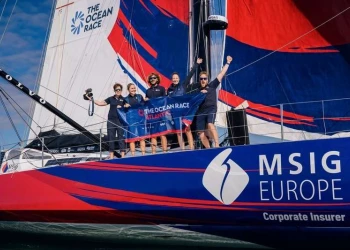
This will be the second edition to feature the cutting-edge, foiling IMOCA 60 fleet — the fastest fully-crewed offshore race boats ever built — and will require each team to include at least one female sailor at all times. The race continues its landmark Racing for the Ocean sustainability programme, using the global platform of the race to drive action for ocean health.