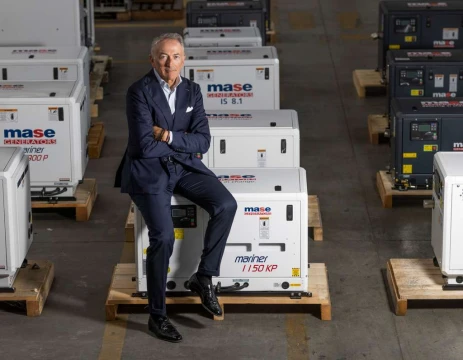
Stefano Campanelli, Mase Generators: The Generator Has Become the Yacht’s Primary Energy Hub
Stefano Campanelli, Mase Generators: The Generator Has Become the Yacht’s Primary Energy Hub


No longer just an “auxiliary machine”, the marine generator has become the balancing point of the entire onboard energy system. This is how Stefano Campanelli, Sales Director of Mase Generators, describes the transformation that has taken place over the past few years: from an auxiliary piece of equipment to the yacht’s primary energy hub, designed to interact with batteries, inverters and increasingly sophisticated energy management systems. This evolution is being supported by the Romagna-based company, which has been designing power generation solutions for the marine industry for more than fifty years, through the development of hybrid and variable-speed generators, alongside growing investment in dedicated services such as predictive maintenance.
PressMare – Mase Generators is today one of Italy’s leading manufacturers of generator sets for marine applications. How would you describe the company to those who may not yet be familiar with it? How large is the Marine Division today, and what sets it apart on the international market?
Stefano Campanelli – Mase Generators was founded more than fifty years ago in Romagna, a region where ingenuity and practicality are deeply rooted. From that first artisan workshop, the company has grown into an international benchmark in power generation. The Marine Division embodies this evolution, with a dedicated team, a comprehensive product range and a technical culture built around reliability, quality and customer focus. It is a world of designers, shipyards, owners and technicians who require dependable solutions every day, and we are there to develop them together.
PM – The needs of shipyards and owners have changed considerably in recent years. What are the most common requests you receive today, and how has the role of the generator evolved within the yacht?
SC – The way onboard energy is conceived has changed completely. Shipyards are no longer looking simply for a generator; they are looking for a system capable of interacting with the rest of the yacht. Owners and captains demand silence, efficiency and comfort. Once regarded as an “auxiliary machine”, the generator has become part of the yacht’s identity: it must be discreet, intelligent and capable of adapting to varying loads and onboard requirements. In a word, it must be integrated.
As a result, its role has evolved from auxiliary equipment into the yacht’s primary energy hub. It must guarantee continuity, safety and comfort while being ready for predictive maintenance. This is an area on which we have been working intensively for several years, with the aim of making our web portal a true reference point for the sector.
PM – Which product developments are currently receiving the greatest investment? Are there technologies or solutions that you believe could become game changers for the market in the coming years?
SC – For us, innovation is never theoretical; it always starts from a real need. We are developing more efficient generators compatible with lower-impact fuels, alongside hybrid systems combining generators and batteries within a single integrated platform. Alongside mechanical engineering, there is a rapidly expanding digital world involving control electronics, advanced diagnostics and predictive maintenance. This evolution enables shipyards to design better yachts while giving owners greater peace of mind at sea.
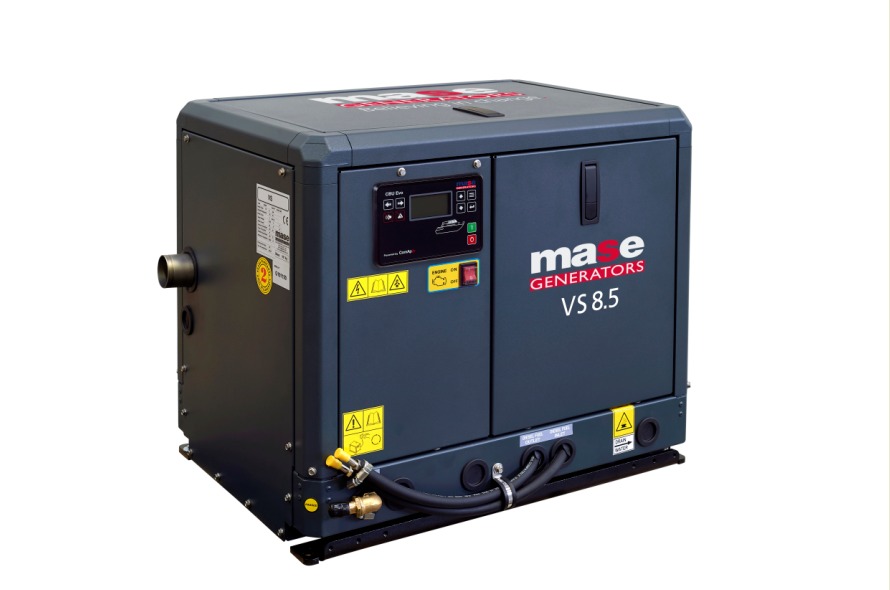
PM – Which generator families are currently delivering the strongest commercial results? What technical features are proving most attractive to shipyards and owners?
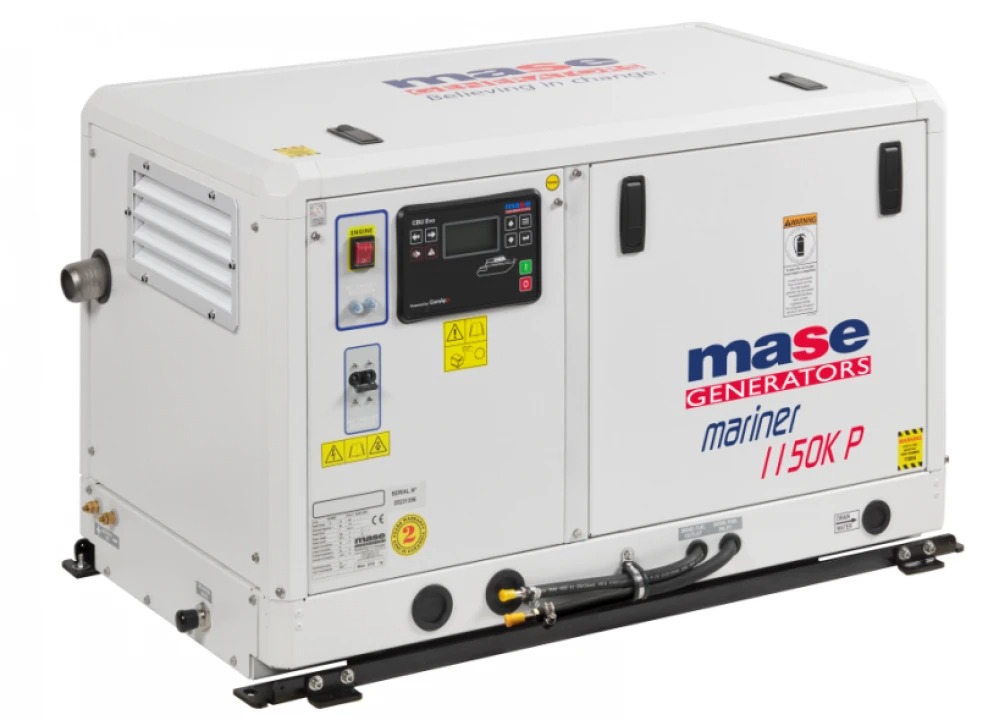
SC – Variable-speed generators and hybrid systems are currently attracting the greatest interest. These are generators that “sense” the yacht, modulate output and reduce both fuel consumption and noise. Designers appreciate their compactness, installers value their ease of installation, while owners benefit from improved comfort. It is a balance achieved through years of listening to customers and continuous technical refinement.
PM – From a geographical perspective, which markets are delivering the best results? Where do you see the greatest opportunities for growth, and which regions require a more cautious approach?
SC – The Mediterranean remains our natural home: it is still the most dynamic and strategically important market, with well-structured demand, clear vision from shipyards and constant interest in advanced technologies. We are also closely monitoring regions where demand for sustainable, high-tech solutions is maturing, including Europe as a whole, the Americas, parts of the Middle East and emerging markets where recreational boating is expanding rapidly. In other areas we prefer to move more cautiously. Selling products is not enough; you must build long-term relationships and have the organisation needed to support customers after the sale.
PM – We are now well past the halfway point of the year. How would you assess the first six months of 2026? How have orders, revenues and profitability performed compared with expectations at the beginning of the year?
SC – For us, 2026 is a year of consolidation following the strong post-pandemic growth phase. During the first six months, both orders and revenues have been in line with, or slightly above, expectations, with solid performance in both the leisure and professional sectors. Profitability has been supported by a product mix increasingly focused on higher value-added solutions and by strong attention to internal efficiency. It is a demanding path, but one that enables us to grow in a healthy and sustainable way.
PM – More and more yachts now integrate batteries, hybrid systems and increasingly sophisticated energy management. In this scenario, how does the role of the generator change? Does it become just another component, or does it remain the true heart of the onboard energy system?
SC – In a world where batteries, inverters and advanced energy management are becoming standard, the generator does not lose importance; it simply changes role. Today it is the balancing point of the entire system, ensuring continuity, stability and autonomy. It operates less frequently, but more efficiently, acting as the component that keeps the entire onboard energy platform in harmony. The challenge is to make it efficient, quiet, sustainable and connected, capable of communicating with the rest of the onboard systems while being monitored remotely.
PM – In September you will attend the major European boat shows. Which products will you be showcasing, and what objectives have you set for this exhibition season?
SC – September’s boat shows are special for us because they are not just exhibitions; they are opportunities to meet people. We will present a carefully selected range of models from across our Marine portfolio, with particular emphasis on hybrid solutions and variable-speed generators. These events are opportunities to listen, observe, identify trends and, above all, build relationships, because boating is first and foremost a community before it is an industry.
Our objectives are clear: strengthen relationships with partner shipyards, establish new collaborations in the large-yacht segment, reinforce Mase’s position as a technology company rather than simply a generator manufacturer, and gather direct market feedback to guide future product development.
PM – Does METSTRADE Amsterdam still represent Mase’s most important event of the year, or have yacht shows such as Cannes, Genoa and Monaco become increasingly significant? What are your expectations for the 2026 edition?
SC – METSTRADE remains the place where the industry discusses technology, standards and the future. The major yacht shows - Cannes, Genoa and Monaco - are where ideas become projects. This is where owners, captains and project managers meet, and where decisions are made about what will be installed onboard tomorrow’s yachts. The 2026 edition will once again be a key opportunity for us to present our vision and reinforce our leadership in advanced onboard energy systems.
PM – If you had to identify the three priorities that will guide the Marine Division over the next three to five years, what would they be?
SC – The first is responsible innovation: continuing to invest in hybrid solutions, high-efficiency systems, digital integration and lower fuel consumption and emissions, in line with the expectations of the most advanced shipyards and owners. The second is strengthening our global after-sales network, providing technical training, workshop support, remote monitoring and predictive maintenance. Perceived quality depends on our ability to remain alongside customers throughout the life of the product. The third is growing in markets that generate real value. It is a long-term strategy based on a simple principle: developing solutions that work, last and genuinely make a difference onboard.
PM – After the exceptional growth experienced during the post-pandemic years, many say the shipbuilding industry is entering a period of normalisation. Would you describe the current situation as a crisis, or simply as a return to more sustainable market conditions? What is the mood among the shipyards you work with every day?
SC – I would describe it as normalisation rather than a crisis. The sector is not slowing down dramatically; it is simply returning to a healthier rhythm. Following the extraordinary post-pandemic years, when demand and order books reached exceptional levels, shipyards are bringing production volumes back to more balanced and sustainable levels. Some have slowed new investments, but they are doing so strategically, focusing on higher-quality projects and more careful planning.
The mood we encounter every day is one of caution rather than concern. There is widespread awareness that growth cannot continue indefinitely and that sustainability - economically, environmentally and industrially - is becoming a fundamental criterion. For a company like Mase, built on innovation, service and long-term relationships, this environment may actually prove advantageous because it rewards businesses with solid foundations and a clear long-term vision.
©PressMare - All rights reserved