
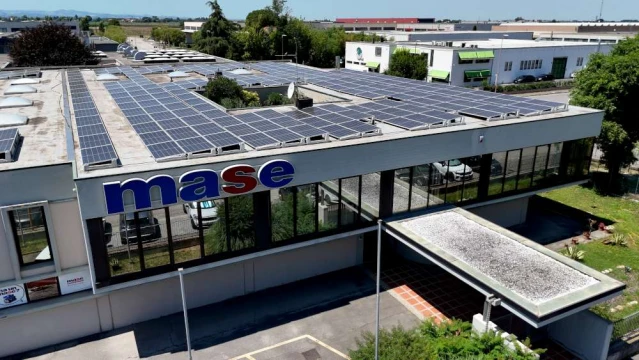
The headquarters of Mase Generators, Cesena
Mase Generators: a new concept of “primary” generator and predictive aftersales


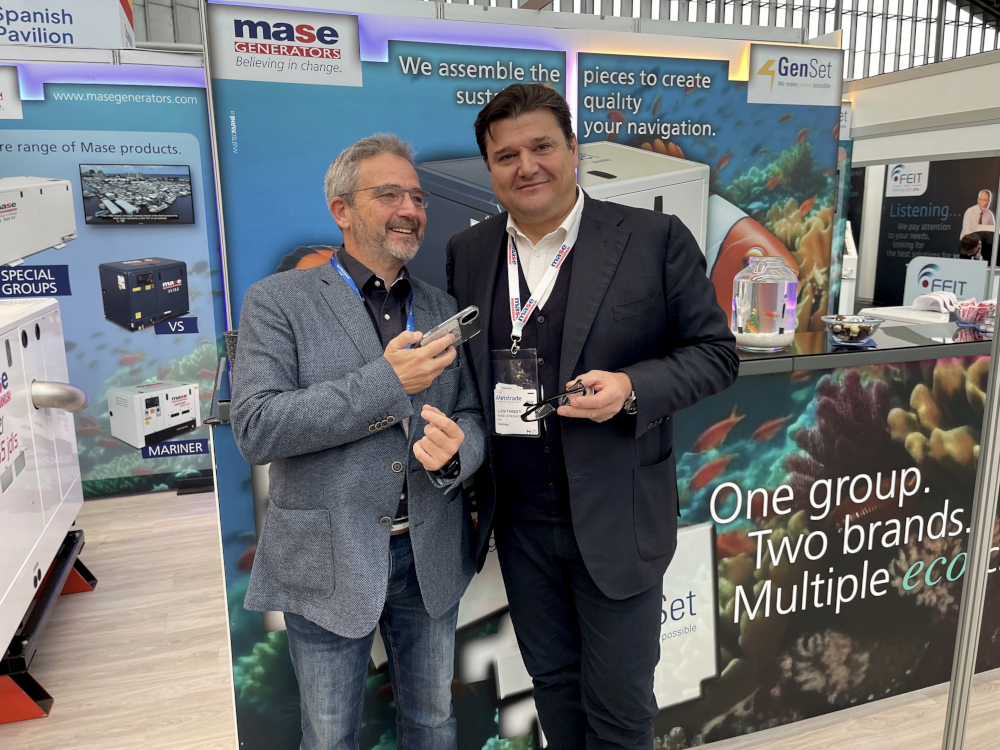
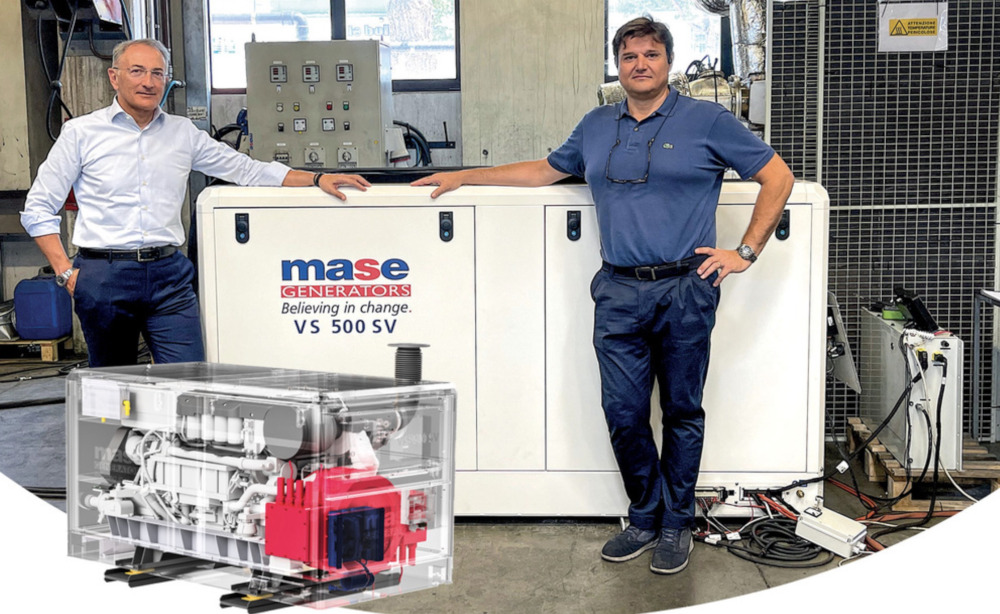
Angelo Colombo for PressMare met Luigi Foresti, President of Mase Generators, an Italian company founded in 1970 that has evolved from producing “compact” generators to offering a range from 2 to 500 kW, and today works with shipyards and owners worldwide.
In the interview that follows, they discussed product evolution, predictive maintenance, the electrification of onboard systems, and how the generator has evolved from an auxiliary unit into the vessel’s true primary energy core.
PressMare – Mase started as a small Italian company competing with American multinationals. How did you manage to carve out your space?
Luigi ForestiF – At the beginning we were indeed a very small company, competing with historic American brands perceived as the benchmark. We chose to push very hard on product technological innovation, positioning ourselves against a more traditional offering.
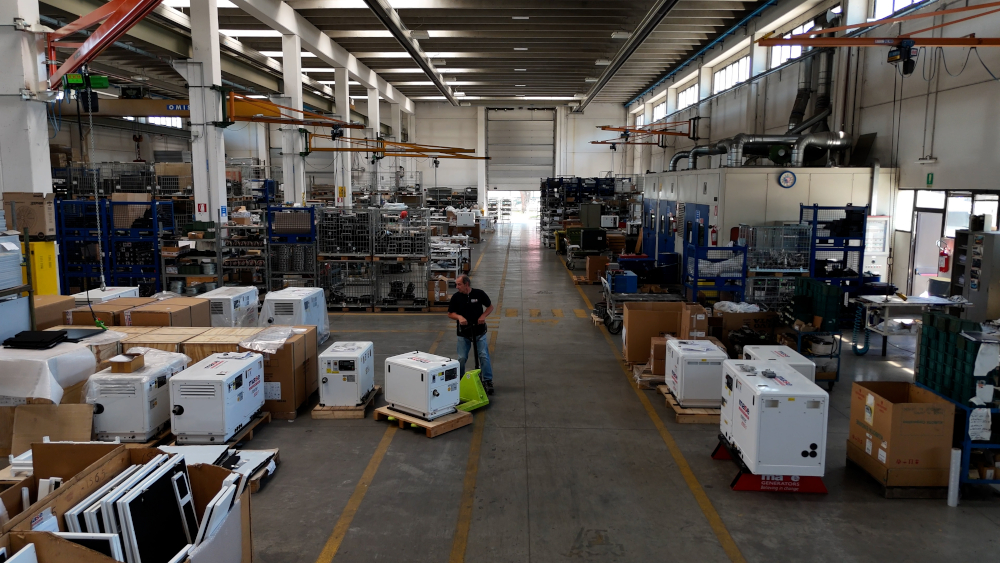
Over the last twenty years we have developed an extremely wide range: today our catalogue includes over 100 products, with outputs from 2 kW up to 500 kW for marine applications. We cover both the leisure segment, where we originated, and the professional market, with a completeness of range that is one of our key differentiators.
This evolution has led to our recognition by the international marine industry no longer as a “small company from Cesena”, but as a global player. And for this reason, today the focus can no longer be only on the product, but also – and above all – on aftersales.
PM – Once you reached this scale, you decided to invest structurally in aftersales. What does that mean in practice?
LF – It means that once the brand is recognized, the product range alone is no longer enough. You must also be present after delivery of the yacht.
About two years ago we launched a significant program structured around three clear pillars: support for workshops and the service network, structured technical training for installers, and direct information for the end customer.
For us, aftersales is the true measure of perceived product quality. It is what makes the customer come back and remain loyal. Once we know the owner, we have the tools to follow them and make them feel part of a service ecosystem, not just a buyer of a machine.
PM – From the perspective of an owner or a shipyard, why choose a Mase generator over others? What is your real technical and service “plus”?
LF – If I were a private customer, I would choose Mase for its aftersales mindset: those who know us are aware that the company is strongly oriented toward fast and concrete responses when needed.
From the OEM – Original Equipment Manufacturer – perspective, meaning the shipyard selecting our units for first installation on a new boat, the added value lies in the combination of product technology and installation and configuration support.
Our DNA is not just selling a generator, but supporting the shipyard: we provide very clear installation specifications, guidelines, training courses and an onboard commissioning phase, during which we verify that the generator set is installed and started up correctly.
A yacht is an extremely complex system – energy, water, propulsion, onboard systems – and supporting the yard during delivery is essential to avoid operational issues.
PM – You make an interesting point: the generator is no longer a secondary system but a primary one. In what sense?
LF – For years the generator was considered an auxiliary system, producing power only when needed. Today this is no longer the case. Yachts are increasingly dependent on energy to power everything: stabilizers, air conditioning, steering and control systems, onboard services and domotics.
If the generator stops, the owner notices immediately and the usability of the yacht is compromised. Think of a 40-foot boat that today installs a 10 kW generator, whereas in the past 2–3 kW were sufficient: energy dependency has grown significantly, just as in our homes with electric shutters, climate control and automated gates.
That is why we say the generator has become a primary system and must be treated with the same level of attention as propulsion systems.
PM – The problem is that contact between customer and manufacturer often happens only when a failure occurs. How are you trying to change this paradigm?
LF – That is exactly the case: in most situations, the first contact with the customer happens at the first generator failure, which is almost always linked to missed maintenance.
We want to meet the customer when everything is working perfectly, during the months when they are enjoying the excitement of a new boat. The goal is to clearly explain maintenance programs, suggest when to carry them out and how to plan them to avoid downtime at the worst possible moment.
To achieve this, we developed a tracker that, via an integrated SIM, sends daily operating data from the generator set to our portal via Modbus – a widely used, reliable and secure industrial communication protocol for data exchange between electronic devices and sensors within a system. Parameters include voltage, current, engine speed, temperature, pressures, running hours and operating status.
On the portal, a combination of artificial intelligence and Mase operators analyzes the data and generates communications to the customer: “Your generator will require this maintenance within this timeframe; these are the activities to schedule; you can contact our service network to book an appointment.”
This is a service that has existed in the automotive sector for years, and we want to bring it onboard yachts, where the generator now plays a central role.
PM – This also involves privacy aspects and a structured service model. How did you approach this?
LF – The customer must register on the portal and accept the monitoring conditions. Only after consent can we provide the service. In return, in addition to monitoring and notifications, we offer a two-year warranty extension on the product.
It is a paid service, but with a very competitive cost compared to the value of the asset and the benefits in terms of reliability. For us it represents a significant investment, but we are convinced it will deliver a major return in terms of image: seeing a Mase generator operating correctly on the dock, supported by word of mouth, is worth more than many marketing campaigns.
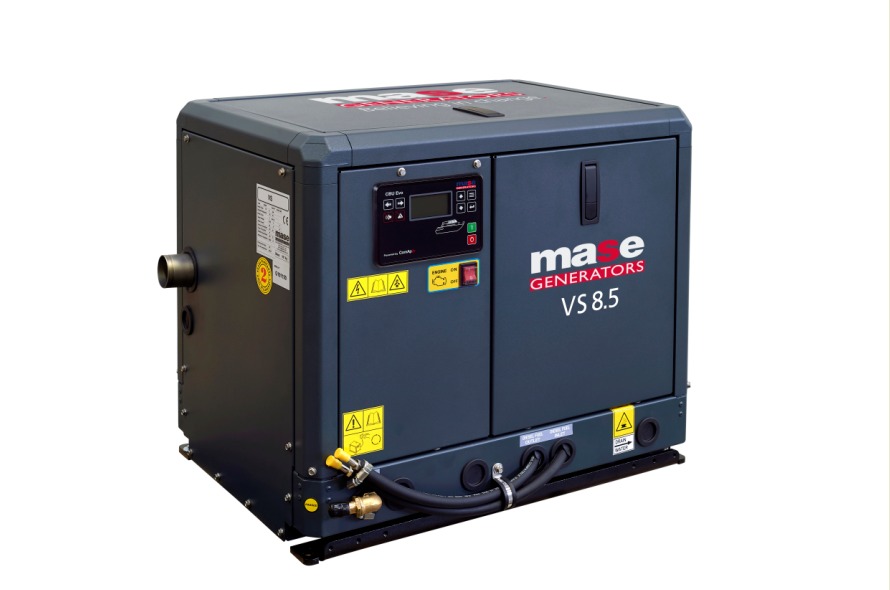
PM – Europe has declared “war” on internal combustion engines, yet you produce energy using thermal engines. How does this scenario align with Mase’s future?
LF – When talk about the end of internal combustion engines began – thinking of 2035 – some assumed our business would drastically shrink. In reality, the opposite is happening.
Not because we envision a future made only of generators, but because the generator is taking on a backup and range extender role within hybrid, diesel-electric and systems supported by solar panels and batteries.
We partner with several shipyards that are hybridizing or electrifying propulsion. In these systems, the generator cannot be the “standard” unit of twenty years ago: it must be more efficient, more compact and more easily integrable.
This is why we developed permanent magnet generator technology, far more efficient than traditional units thanks to higher efficiency and reduced fuel consumption. We then use conversion inverters to better manage the produced energy and integrate lithium battery storage when included in the yacht’s powertrain.
The efficiency gains of permanent magnet generators allow savings of over 20–25% compared to traditional generators, meaning lower fuel consumption and reduced emissions without radically changing the onboard system architecture.
PM – On the fuel side, one immediate lever is the adoption of biofuels such as HVO. How have you positioned yourselves?
LF – For years all our engines have been HVO-compatible. Today it is the closest and simplest solution to reduce environmental impact, because it does not require system overhauls.
Decarbonization cannot be addressed through slogans alone. You cannot say “from tomorrow we erase everything we have done so far”: it is a step-by-step path, based on technologies already available. Talking about hydrogen and future solutions is important, but in the meantime existing systems can be optimized, alternative fuels adopted where appropriate, and lighter generator sets designed.
Reducing the overall weight of a yacht means using less material, requiring less power and generating fewer emissions. Designing increasingly lighter and more efficient generator sets is our concrete contribution to this transition.
PM – Reducing emissions also means less noise and vibration, a crucial topic for many modern yachts. What are you working on?
LF – Gaseous emissions are primarily linked to engines and their efficiency. We use Stage V and EPA Tier 4 engines for higher power outputs, and Tier 3 up to 18 kW.
In many cases these emission levels are not even required by local regulations, but we have chosen engines with more stringent certifications regardless.
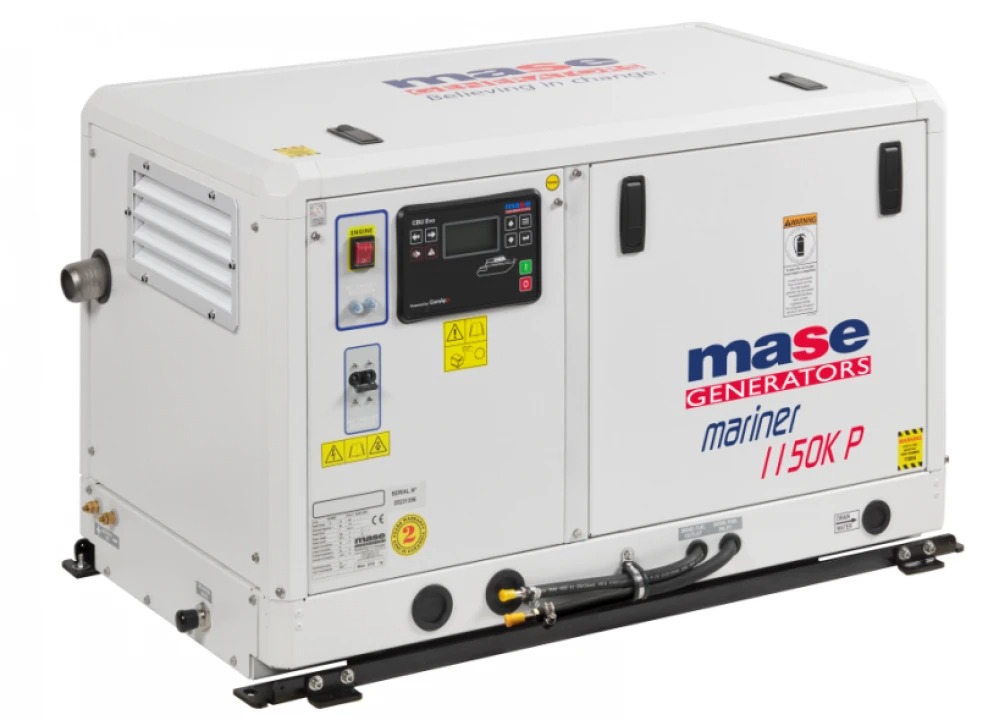
Noise and vibration, on the other hand, depend on generator design. We have always paid close attention to this aspect: we offer a double anti-vibration mounting system as standard and use soundproof enclosures with highly effective multilayer acoustic panels.
As a result, those switching from a competitor’s unit to a Mase generator immediately perceive lower noise levels, reduced vibration and therefore improved onboard comfort.
The little fish featured in our logo since the early 2000s symbolizes this focus on comfort and the environment, which is part of our DNA and will continue to guide our design choices.
PM – Today onboard systems are increasingly integrated. How does the generator fit into this digital context?
LF – We worked to ensure that the generator is no longer managed through a simple remote panel, but is fully integrated into the navigation bridge.
In practice, we create a dedicated page within the onboard system – on the plotter or control display – where the user can start and stop the generator, view operating status and hours, and monitor alarms and key parameters.
In this way the generator gains the status of a primary system: it is no longer hidden behind a marginal panel, but becomes an integral part of the yacht’s energy management, with an interface consistent with the rest of the systems.
PM – Let’s talk about the thermal engine. Which brands do you use and why?
LF – A high-quality generator starts with a high-quality engine. This is why we have built targeted partnerships over time. Yanmar and Kubota are the world’s leading producers of mini-diesel engines, with a level of reliability and range diversity that allows us to cover many configurations up to 45 kW.
Above 50 kW we adopt Perkins engines for the more commercial segment and John Deere for pleasure applications, where this brand is particularly appreciated. From 100 kW to 500 kW we have a strategic partnership with Volvo, which supplies engines already equipped with SCR after-treatment systems, making our applications unique in terms of performance and emissions.
In short, to offer the best you must start from the best: engine selection is a mandatory decision when building a high-end generator.
PM – From the engine room you can clearly read market trends. What is your view of the international boating market today?
LF – We see the market with a slight delay, through the power outputs requested and service demands, but some trends are quite clear.
The mid-small boat segment has slowed after the Covid boom: this was physiological, as many boats were sold in a short time and users now need to use them rather than replace them immediately.
Conversely, the larger yacht segment remains very strong. And this is precisely where the push toward electrification is appearing first, much like in the automotive sector, where the first electric models were high-end vehicles.
At the same time, the market has become truly global: no longer just the Mediterranean and the United States. Today our generator sets are everywhere, even in regions that until a few years ago were only “potential”, such as China or the Dubai area, which is now growing rapidly.
An international shipyard can offset a slowdown in one region with growth in another. Overall, it seems to me a healthy market, with a growing global appetite for boating.
PM – Internationally, marine generators are still often perceived as an American product. How do you overcome this cultural legacy?
LF – It’s true: when people think of a marine generator, the first mental reference is often a historic American brand. This doesn’t apply only to the English-speaking world; it happens in Italy too.
That’s because US brands have been present worldwide for decades: when I first went boating, those names were already there. In many cases, products from twenty years ago are still very similar to today’s.
Meanwhile, boats have changed. Innovative, high-performance, comfortable yachts require a generator different from the traditional standard. This opens space for those offering quieter, less vibrating, more efficient machines designed for a typically European usage profile.
There is also a cultural difference in how boats are used: in the US many boats are constantly underway, doing crossings, offshore fishing, ocean routes. In Europe, you often leave the harbor and anchor in a sheltered bay, enjoying the boat differently, often in swimwear and with a strong focus on acoustic comfort.
I recently tested full-electric diesel-electric vessels built by partner shipyards: the level of silence and absence of vibration is impressive. You feel like you are on a “cloud” moving over water, with continuous glass surfaces and reflections that almost make you forget what you are sailing on. It is a new level of luxury, defined by silence and comfort, toward which many Italian shipyards are moving. The generator must be consistent with this leap in quality.
PM – How much has your personal boating experience influenced Mase’s philosophy?
LF – Enormously. When we acquired Mase in 1997, I came from years of sailing on schooners and cruising, with a very clear idea: I wanted to build a reliable product, create a strong service network and develop the company with genuine attention to the customer.
I carry with me an episode: many years ago, when transitioning from Loran to GPS, I bought a new device. Upon arriving in Sardinia, the GPS screen went completely black. I contacted the company and was told: “We are closed in August; if you want, the dealer has a new unit to sell you, but we cannot repair yours.”
That experience struck me deeply, almost offended me. I told myself that if I ever worked in boating, I could not allow myself to treat customers like that.
That is why we are open in August. We know that owners have more time to use their boats precisely then, so we must be available. Like restaurateurs or doctors, we do not choose when to work; we adapt to when the customer uses the product.
PM – Looking five to ten years ahead, what do you see in Mase’s future: more product evolution or more service evolution?
LF – I do not expect radical revolutions in the generator concept itself: we already have a very technological and efficient product. What will change profoundly is how we manage information.
With the tracker and portal, we will start receiving a huge amount of data from generators in operation. It will not be feasible to manage this solely through human intervention: we will necessarily need artificial intelligence to continuously process the data, generate automated communications to customers and support predictive maintenance and service planning.
Within the generator set, electromechanical content will remain predominant, but everything related to aftersales, failure prevention and user relationship will become increasingly digital and automated.
At the same time, we will continue working on efficiency, weight reduction, emissions and noise, using every available technology in line with what I would call an “eco-conscious” vision: not ideological, but practical, made of progressive and measurable improvements.
PM – In summary, what is Mase Generators’ mission today?
LF – I would say it is not simply to sell a generator, but to guarantee uninterrupted use of the yacht, without unnecessary downtime.
If we manage to ensure that the owner enjoys their boat without thinking about the generator – except to appreciate its silence – then we have achieved our goal: reliability, constant support and a relationship with the customer that begins before a failure occurs and continues throughout the entire life of the product.
Angelo Colombo
©PressMare - All rights reserved