Custom Line 50: Engineering and Bespoke Craftsmanship for a Sub-500 GT Yacht


In the world of superyachts, luxury is not only about exclusive aesthetics, noble materials, refined interior design solutions, or costly equipment. There is a less visible but equally decisive level of luxury: the engineering and design technology that makes the construction of every yacht possible, especially when a high degree of customization is required.
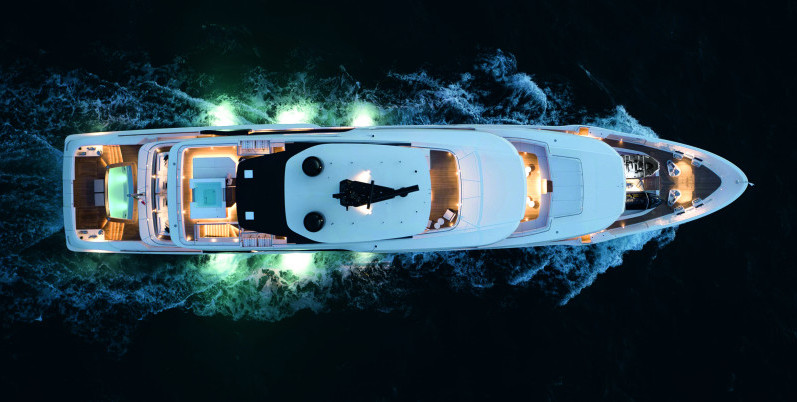
Behind the apparent simplicity of a beach area or a fold-out side terrace, a pool set into a deck, or a crane handling tenders and jet skis inside the yacht’s garage, lie complex engineering solutions, the result of advanced expertise and bespoke developments.
True exclusivity for an owner also means relying on a shipyard where such technical know-how is part of its DNA—a facility capable of delivering a design level that meets expectations in aesthetics, performance, and comfort, fully aligned with the owner’s lifestyle.
The Ferretti Group Superyacht Yard in Ancona is one of the best-equipped shipyards in the world in this respect. The technical infrastructure is supported by an in-house office of around 30 people, divided into eight engineering platforms, following all stages of design: from the fundamentals (power, stability, etc.) to the details (systems, furnishings, certifications).
Visiting the facility, seeing what it produces, and stepping aboard superyachts under construction offers the opportunity to experience first-hand the expertise that thrives within. In addition to the full Custom Line composite range—Planing Line (planing hull yachts), four models from 106 to 140 feet; Navetta Line (displacement hull yachts), four models from 30 to 42 meters—the shipyard is currently building nine metal yachts at the same time: five Riva in steel, one Pershing 140, one Custom Line 50, and CRN projects marked 147, 146, 145, and 144.
What makes these builds particularly complex is not only their size or construction materials—steel and/or aluminum—but also the high level of customization demanded by owners. Even semi-serial models, which benefit from shorter build times compared to full custom projects, become virtually unique. The interior layout, systems, surface finishes, and even entertainment and connectivity solutions are tailored to the client’s needs, with only hull and engines remaining unchanged.
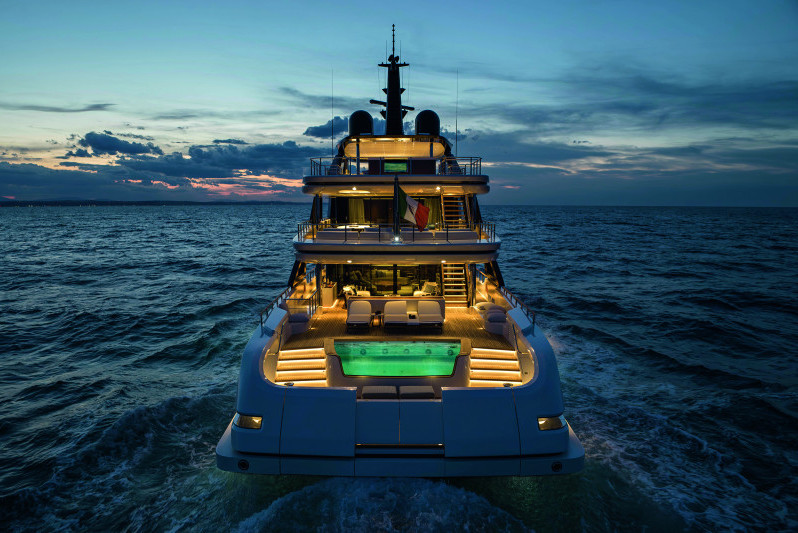
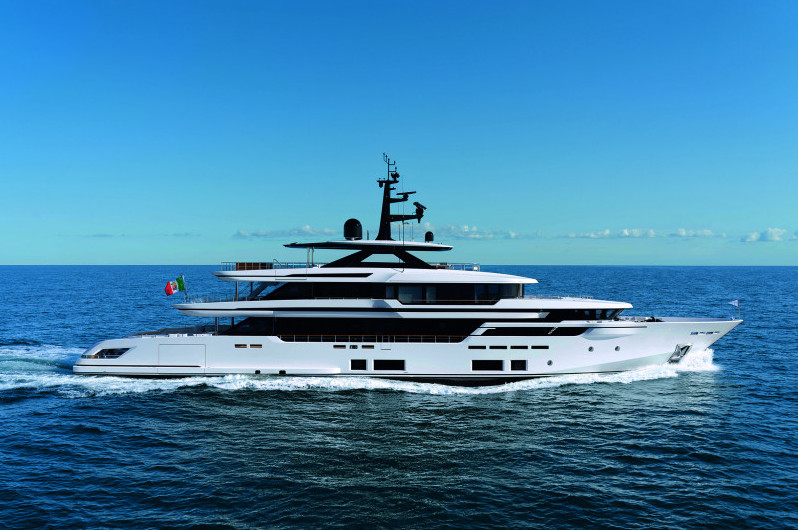
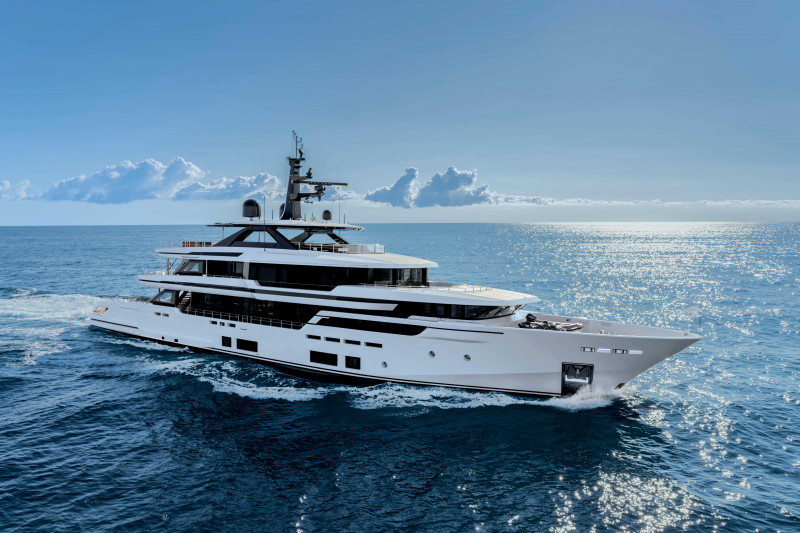
During our visit to Ancona, however, our focus was on the Custom Line 50, the second unit after the one unveiled exactly a year ago at the Monaco Yacht Show. This was the first metal-built superyacht—hull and superstructure in aluminum—produced under the Custom Line brand, of which it is also the new flagship. The yacht we saw in the yard is scheduled for launch in summer 2026.
The construction of a 50-meter yacht naturally begins with the design, developed to address multiple technical aspects. Although the living spaces and volumes recall those of a golden seaside residence, a true villa on the water, one must not forget that this is a yacht where naval engineering is the starting point. Specifically, the hull of this Custom Line 50 was developed after extensive CFD (Computational Fluid Dynamics) tests. These studies optimized the bulbous bow and waterlines for performance in terms of speed, seakeeping, stability, and efficiency, while also focusing on comfort. Immersed appendages—rudders, propellers, propeller shafts—can generate turbulence and vibrations, leading to resonance and noise. CFD was therefore meticulously applied to every submerged detail, including the engine room exhaust system.
The Custom Line 50 is equipped with SCR systems—Selective Catalytic Reduction—for NOx (nitrogen oxides) reduction. Implementing this technology required careful study of heat management and engine room ventilation. The system injects urea into the hot exhaust gases, where, in the presence of a catalyst, it chemically reacts with NOx to form harmless nitrogen and water vapor. This makes the yacht compliant with IMO Tier III standards and eligible to operate in ECAs (Emission Control Areas), where emission limits are stricter.
For comfort, the yacht also adopts an underwater exhaust system. CFD simulations shaped the underwater protection hood to generate natural depression, facilitating gas expulsion without hindering engine operation, while reducing fumes and odors.
The yacht measures 49.9 m in length with a beam of 9.60 m. Although below 500 GT, it features a high-volume “slug hull,” more typical of larger yachts, combined with a classic bulbous bow. This configuration reduces wave resistance, improves propulsion efficiency and range, lowers fuel consumption, and contributes to stability in rough seas.
Stability is further enhanced by electrically operated stabilizer fins, chosen after extensive testing. Installed in dual configuration, they are shorter and more responsive, quieter, and less bulky than hydraulic systems—an advantage given their location near guest cabins—and allow the yacht to maintain a shallow draft of only 2.2 m.
The use of aluminum also improves performance and comfort. In addition to reducing weight and increasing range—up to 4,500 nautical miles, enabling non-stop passages such as Ancona–Miami—the material offers superior soundproofing compared to fiberglass. This is reinforced by advanced acoustic and fireproof panels.
Aluminum is treated with meticulous care, both externally and internally, including non-visible areas, with anti-corrosion cycles and insulating materials between dissimilar metals to prevent galvanic corrosion. Thanks to precise cutting tolerances and advanced welding techniques, filler use is minimized. 3D scanning ensures perfect alignment of plates and openings. Less filler translates into weight savings and reduced labor hours.
Paint parameters—Gloss, DOI (Distinctness of Image), Orange peel, and Hardness—were constantly monitored with certified instruments to meet contractual specifications. The same level of compliance will be verified during sea trials, where weight distribution, stability calculations, and performance tests will confirm the project’s accuracy.
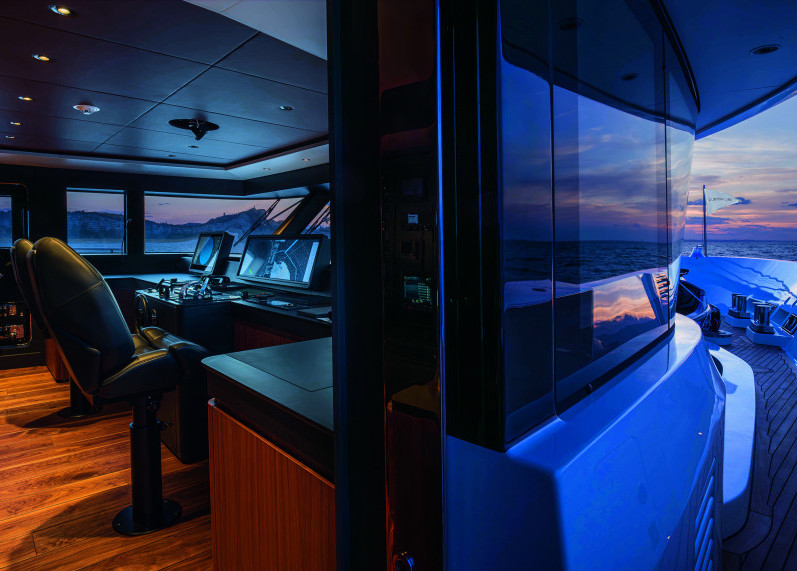
The bridge has been designed with particular attention to user interface. While integrating advanced digital systems, it also allows for traditional controls, preferred by captains with commercial backgrounds.
Connectivity, both onboard and external, is another fast-developing area. In addition to classic Vsat/TvSat antennas housed in radomes, the yacht is equipped with new broadband satellite systems such as Starlink and OneWeb. Cybersecurity is also ensured by advanced firewalls, with the option for further upgrades.
Network quality is essential for entertainment and home automation systems onboard, provided in this case by VideoWorks, allowing integrated control of lights, audio, and video through mini iPads. For instance, to install a Bang & Olufsen Harmony TV on the upper deck bridge, components were carefully redesigned and reassembled, including flooring to allow cable passage. Hidden projectors and TVs have been added in various areas.
Crew quarters include four double cabins and one captain’s cabin, for a total of nine crew members, designed to meet REG (Red Ensign Group) standards. This ensures compliance with stringent safety, construction, and habitability requirements, often applied to charter yachts.
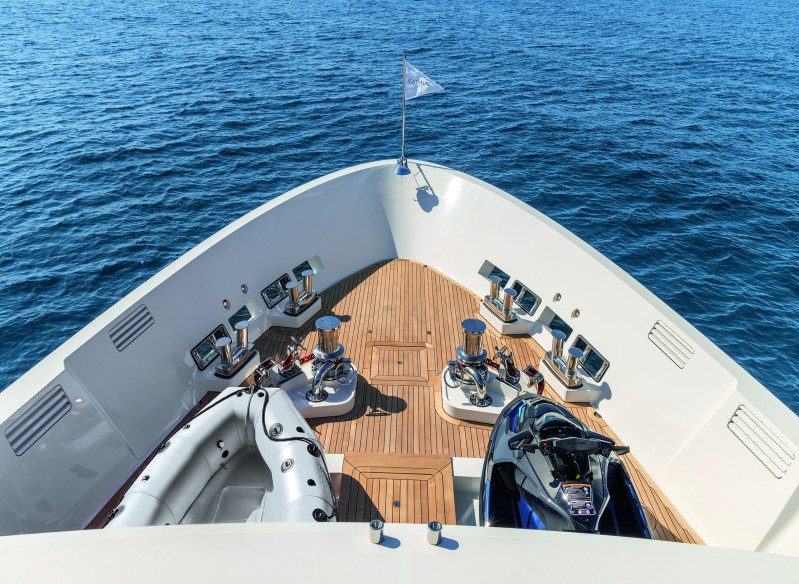
The garage is designed for optimal use of space while keeping the yacht under 500 GT. Aft, an aluminum door opens to house a Williams 625 tender, handled by a crane, while the forward hangar accommodates a 4.20 m rescue tender and two jet skis.
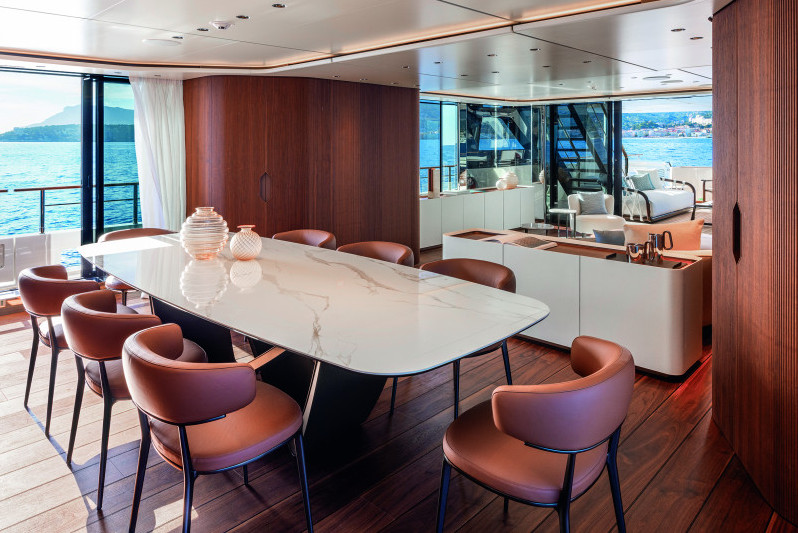
After our visit, accompanied by the project manager and engineers at the Ferretti Group Superyacht Yard, we concluded that this yacht is a benchmark in luxury yacht construction. It is the perfect synthesis of advanced naval engineering and bespoke craftsmanship, transforming every mile into an experience of comfort, efficiency, and safety.
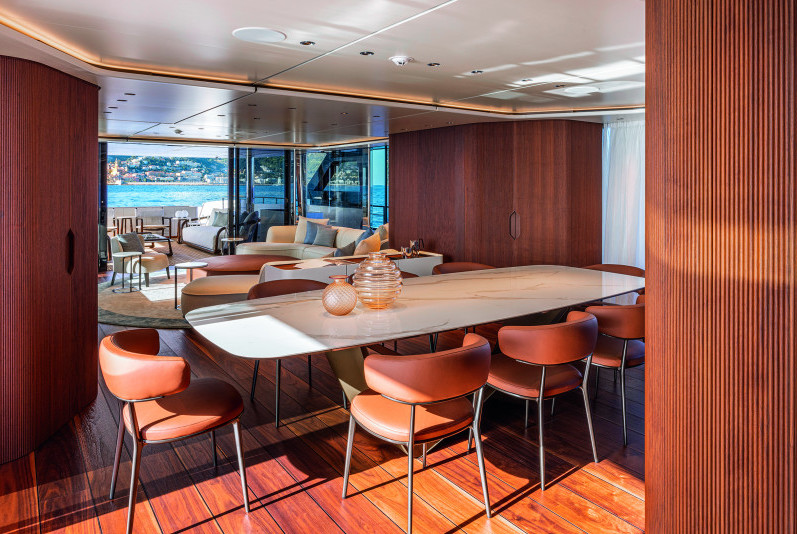
CUSTOM LINE 50
Shipyard: Ferretti Group Superyacht Yard – Hull/Superstructure Material: Aluminum – Hull Type: Displacement with bulbous bow
LOA: 49.94 m – Beam: 9.60 m – Draft (half load): 2.13 m (under keel and fins at rest) – Draft (full load): 2.23 m (under keel and fins at rest) – Displacement (full load): 445 t – Gross Tonnage: 499 GT
Guests: 12 (4 VIP/Guest Cabins + 1 Owner Suite) – Crew: 9 (4 Crew Cabins + 1 Captain’s Cabin)
Fuel capacity: 55,000 l – Freshwater capacity: 10,000 l – Black/Grey water capacity: 9,000 l – Watermakers: 12,000 l/day
Main engines (with SCR): 2 x CAT C32 ACERT, 1,081 kW @ 2050-2150 rpm, IMO Tier III – EPA Tier 4 – Generators: 2 x CAT C7.1, 118 ekW – 400V – 50 Hz
Max speed: 16 kn – Range at 10 kn: 4,000 nm
Naval Architecture: Ferretti Group Superyachts Division Engineering Department – Exterior Design: Filippo Salvetti – Interior Design: Antonio Citterio Patricia Viel
©PressMare - All rights reserved