
Radar Simrad HALO with Autotrack: Less Stress at the Helm, More Safety Underway


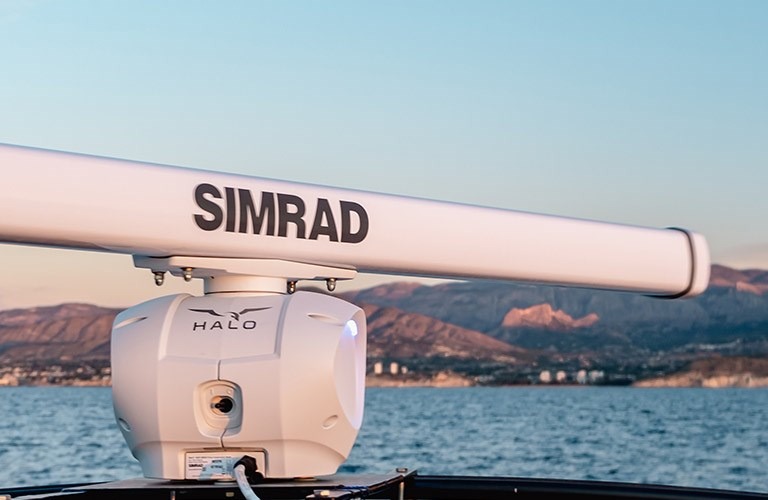
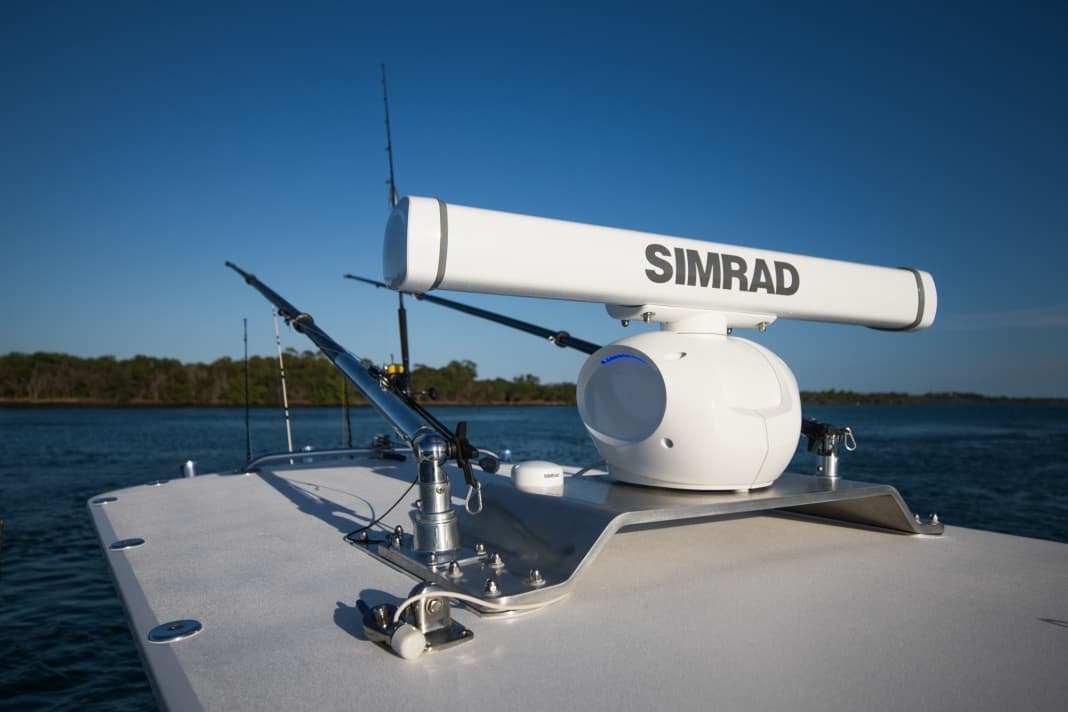
During a recent press event for the marine electronics sector, Simrad – a benchmark brand in navigation systems under Navico, itself part of the American Brunswick Group – officially unveiled Autotrack, a new feature that marks a major step forward in onboard radar technology. Designed for the HALO 2000 and HALO 3000 radars, Autotrack brings a quiet but significant revolution in the real-time perception of the vessel’s surroundings, introducing a new, automated, and highly useful way of interacting with radar targets.
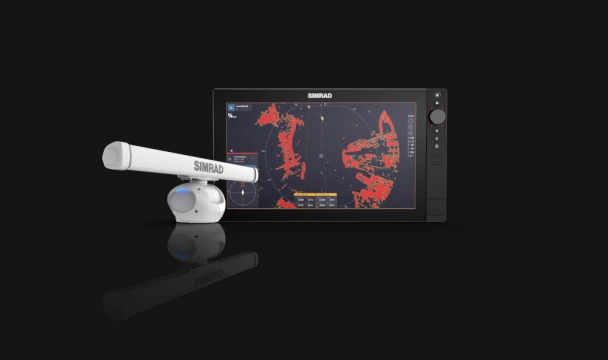
The goal is both clear and ambitious: allow the skipper to focus on navigation while the radar autonomously determines what to monitor, when to issue an alert, and how to communicate it. No more manual target tracking, no more complex zone setup, no more generic alerts or information overload. With Autotrack, Simrad’s radar continuously scans the surroundings, monitors up to 3,000 background objects, and actively tracks up to 50 targets—prioritizing only those that truly matter. This all happens automatically, with a level of precision and responsiveness previously reserved for commercial-grade navigation systems.
At the core of Autotrack are two familiar parameters: CPA (Closest Point of Approach) and TCPA (Time to CPA). In short, the system constantly calculates which targets may cross dangerously close to your course, and when. By default, an object is considered dangerous if it is expected to come within 300 meters of the vessel within three minutes. When this threshold is met, a visual alert is generated automatically.
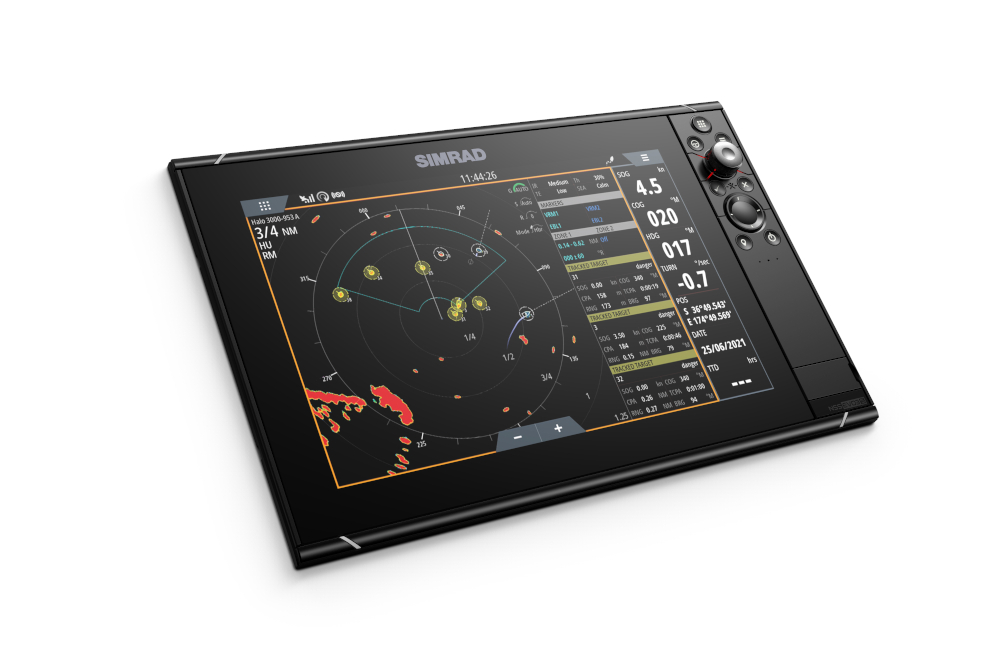
Autotrack's strength lies not only in its timely warnings, but in its ability to dynamically evaluate context. If a target changes course and is no longer a threat, it is automatically downgraded and removed from active tracking—mirroring how a good watch officer would behave: observing, evaluating, reacting, and moving on when appropriate.
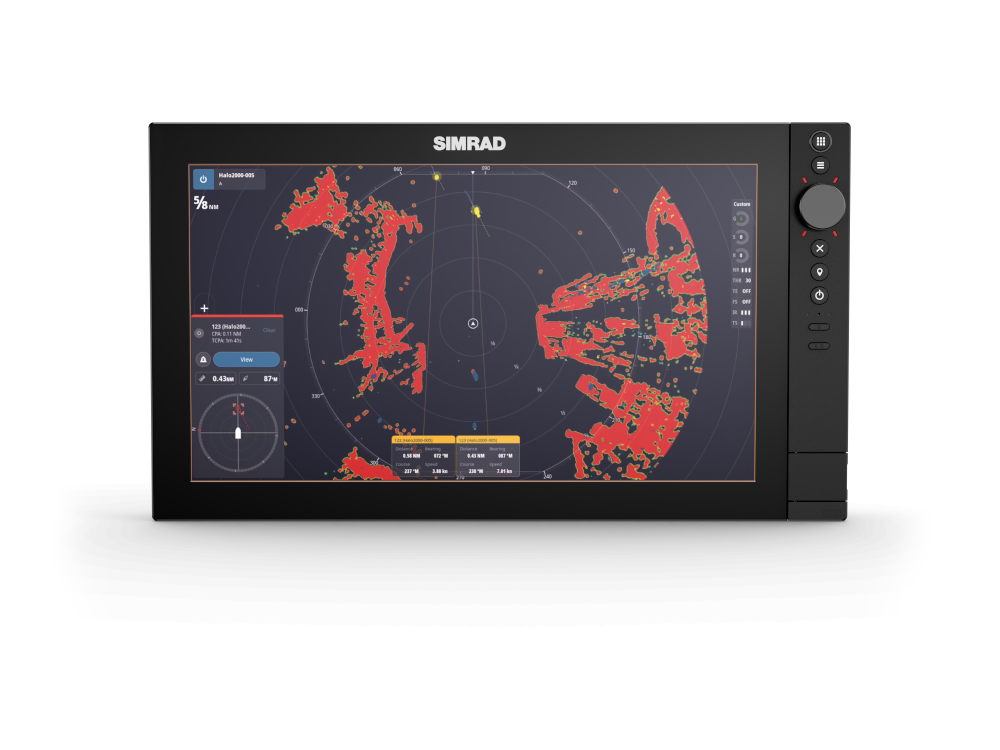
The result is a streamlined, intuitive user interface integrated into the Simrad ecosystem. A standout feature is the "dangerous vessel" pop-up, which appears on any screen—map, sonar, audio, or digital controls—providing all essential info: name (via AIS), distance, direction, course, speed, CPA, and TCPA. The alert can be repositioned, paused for five minutes (handy in congested areas), or temporarily dismissed. If the danger returns, or a new threat appears, the alert reactivates.
Advanced graphical representation also plays a role. The six most critical targets are displayed at the bottom of the radar screen in dynamic boxes with vector lines indicating their projected path. Color codes further enhance clarity: yellow for approaching targets, blue for receding ones, and static ones left unhighlighted. The PPI (Plan Position Indicator) shows trajectories in real time, giving the operator a predictive view of the area.
Target prioritization is another strength: the system ranks objects by distance and movement, starting with distant-moving ones, followed by close-moving, then close-static, and finally distant-static. When AIS is available, radar data is merged for greater accuracy.
Autotrack is compatible with Simrad units such as NSS, NSO Evo3, NSX, NSX Ultra Wide, and NSS 4. Software version 8.2.0.3.2 (available via SD card or Wi-Fi) includes Autotrack by default. Numerous settings can be customized: max targets (5–50), distance/speed thresholds, CPA/TCPA limits, alert behavior, and more.
Alerts are visible from any page, and a single tap redirects the user to the radar or chart screen with the cursor centered on the threat. This proves especially useful when switching between operating modes.
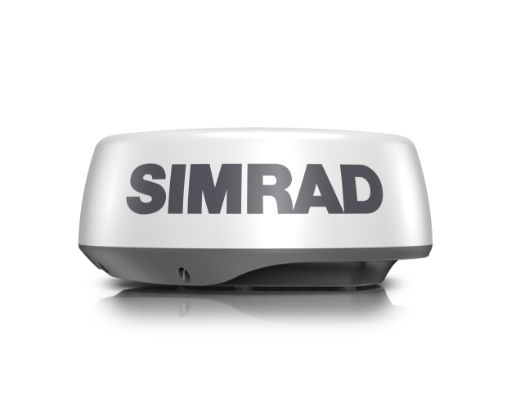
Good news for HALO 20+ and HALO 24 users: Navico has announced that Autotrack will be rolled out to these models by year-end—extending automation and intelligent radar prioritization to medium-sized vessels as well.
©PressMare - All rights reserved